

 Preview
 Send
Send Share
Share
 Details

 Download
 Similars
 X-Ray
X-Ray Diaporama
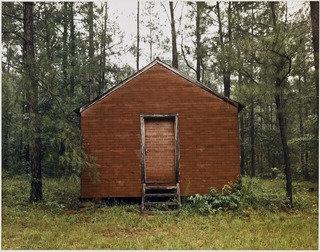
Red Building in Forest, Hale County, Alabama
 1983
1983 44.0 x 56.0 cm
 Read More
Purchase a high-resolution, enhanced digital image, far superior to the online preview.
Each file is meticulously prepared by our in-house specialists using advanced tools and expert manual retouching. We ensure every image has exceptional clarity, precise color accuracy, and fine detail.
The final file is delivered via email within 72 hours, optimized for immediate use in professional, editorial, and print environments. This is the same quality trusted by top-tier design studios, publishers, and galleries.
Digital Image
Download a high-resolution file for personal display, printing, and creative projects. ( Buy Print Buy Hand Made Painting)
Included in Every Digital Image Order
Expert Digital Delivery, Guaranteed
When you choose ArtsDot.com, you're not just getting an image - you're receiving a professionally enhanced digital artwork, crafted with precision and backed by a satisfaction guarantee. Here's everything that comes with your order, automatically:

Fast Email Delivery
Your high-resolution digital image file will be emailed to you within 72 hours of ordering - ready for immediate use.

AI-Enhanced Digital File
Your artwork is professionally optimized using advanced AI tools and manual editing, ensuring maximum detail, clarity, and color accuracy.

Free Lifetime Re-Delivery
Accidentally deleted or lost your file? No worries - we'll resend it to you anytime, free of charge.

No Import Fees - Ever
Enjoy your artwork instantly with zero customs, duties, or delivery fees - digital downloads are always tax-free.

Color Accuracy Guarantee
We ensure your digital image reflects the original colors as closely as possible using professional tools and color management.

60-Day Satisfaction Guarantee
If you're not satisfied with your digital image, we'll revise it or refund 100% within 60 days - no questions asked.

100% Money-Back Guarantee
Not satisfied? Get a full refund within 60 days of receiving your digital file - no questions asked.

Bulk Order Discounts
Buy 3 images, save 10% - Buy 5, save 15% - Buy 10+, save 20%. Great for creative projects, galleries, and agencies.
Related Artworks










Artist Biography
A Southern Requiem: The Life and Art of William Christenberry
William Andrew Christenberry Jr., born in Tuscaloosa, Alabama, in 1936, was an artist whose work became a poignant meditation on memory, place, and the slow decay of the American South. His artistic journey wasn’t one of immediate revelation but rather a gradual unfolding, deeply rooted in his childhood experiences within Hale County, Alabama—a landscape that would become both the subject and soul of his art. Growing up amidst family farms and witnessing the changing face of rural life instilled in him a profound sensitivity to the stories held within weathered structures and fading landscapes. A Brownie camera, gifted at Christmas 1944, wasn’t merely a toy; it was an instrument that would shape his vision, allowing him to capture fleeting moments and preserve a world on the cusp of transformation. His parents, though not artists themselves—his father a salesman, his mother a tax assessor and textile artist—provided a stable foundation and fostered a quiet appreciation for the beauty found in everyday life.From Abstraction to the Haunting Reality of Hale County
Christenberry’s formal training at the University of Alabama initially led him down the path of Abstract Expressionism, influenced by his professor Melville Price. However, this direction proved fleeting. A pivotal moment arrived with the discovery of James Agee and Walker Evans' collaborative masterpiece, Let Us Now Praise Famous Men. This unflinching portrait of sharecroppers during the Great Depression resonated deeply, shifting Christenberry’s focus toward a more grounded realism. Simultaneously, he found inspiration in the work of Jasper Johns and Robert Rauschenberg, artists who blurred the boundaries between painting and sculpture, paving the way for his own unique explorations. He began to return annually to Hale County starting in 1968, not as a detached observer but as someone intimately connected to the land and its history. These weren’t casual visits; they were pilgrimages undertaken with a photographer's eye and a sculptor’s heart. Initially using his childhood Brownie camera, he later adopted large-format photography for greater detail, yet never abandoned the simplicity of his original instrument. He wasn’t simply documenting what was *there*; he was excavating layers of memory and loss.Sculpting Memory: Buildings as Relics
Christenberry's artistic practice extended beyond photography into sculpture—a remarkable extension of his photographic vision. He didn’t create models, but rather meticulously reconstructed dilapidated buildings, capturing their textures, the patina of age, and the haunting beauty of decay. These weren’t replicas built from precise measurements; they were imbued with a sense of feeling, of lived history. Critically, he incorporated soil from the original locations into the bases of these sculptures, grounding them physically and symbolically in the land itself. This act transformed the structures from mere objects into relics—tangible embodiments of memory and loss. His most ambitious sculptural work, “The Klan Room,” a complex multimedia construction exploring the dark undercurrents of racial prejudice, was tragically burgled in 1979 but later painstakingly reconstructed, demonstrating his commitment to confronting difficult truths.Legacy and Influence
William Christenberry’s influence extends far beyond the American South. His pioneering use of color photography as a fine art medium challenged conventional notions and opened new avenues for artistic expression. He wasn't merely recording images; he was crafting visual poems that spoke to universal themes of time, loss, and identity. The impact of Walker Evans is undeniable—Evans encouraged Christenberry’s photographic pursuits after meeting him in Hale County in 1973—but Christenberry forged his own distinct path, blending observation with introspection. His work resides in prominent collections such as the Smithsonian American Art Museum, the Museum of Modern Art (New York), and the Whitney Museum of American Art (New York), solidifying his place within art history. Even after being diagnosed with Alzheimer’s disease in 2011, his artistic spirit endured until his death in Washington, D.C., in 2016. Christenberry leaves behind a body of work that serves as a powerful and enduring testament to the beauty and fragility of the American South—a visual requiem for a vanishing way of life, rendered with profound sensitivity and unwavering dedication.Key Themes & Artistic Style
- Memory and Place: Christenberry’s work is deeply intertwined with his personal memories of Hale County, Alabama, transforming the landscape into a repository of collective history.
- Decay and Transformation: He found beauty in the process of decay, capturing the textures and patterns of aging structures as symbols of time's passage.
- Identity and Belonging: His art explores themes of Southern identity, grappling with issues of race, class, and cultural heritage.
- Meticulous Detail & Quiet Observation: Christenberry’s style is characterized by a painstaking attention to detail and a contemplative approach to his subjects. He wasn't interested in grand gestures but rather in the subtle nuances of everyday life.
- Pioneering Color Photography: He elevated color photography to the level of fine art, challenging traditional notions of artistic expression.
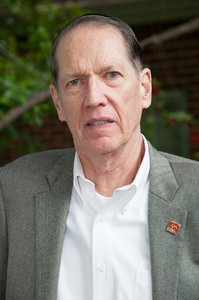
William Christenberry
1936 - 2016 , United States of America
Quick Facts
- Artistic Movement Or Style: Southern Photography
- Artists Who Influenced This Artist:
- Walker Evans
- James Agee
- Jasper Johns
- Date Of Birth: November 5, 1936
- Date Of Death: November 28, 2016
- Full Name: William Christenberry
- Nationality: American
- Notable Artworks:
- Rev. B. F. Perkins' House
- Red Soil and Kudzu
- Morning Glory Vine
- The Klan Room
- Place Of Birth: Tuscaloosa, USA

