

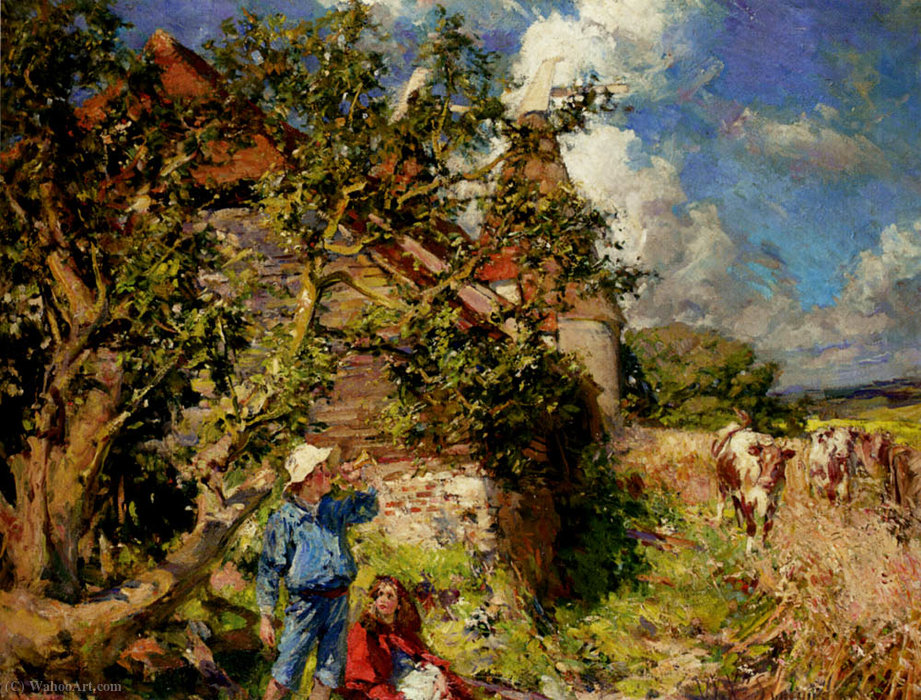
 Preview
 Send
Send Share
Share
 Details

 Download
 Similars
 X-Ray
X-Ray Diaporama
 Stats
StatsLittle boy blue and red riding hood
 Read More
Purchase a high-resolution, enhanced digital image, far superior to the online preview.
Each file is meticulously prepared by our in-house specialists using advanced tools and expert manual retouching. We ensure every image has exceptional clarity, precise color accuracy, and fine detail.
The final file is delivered via email within 72 hours, optimized for immediate use in professional, editorial, and print environments. This is the same quality trusted by top-tier design studios, publishers, and galleries.
Digital Image
Download a high-resolution file for personal display, printing, and creative projects. ( Switch to Print Buy Hand Made Painting)
Included in Every Digital Image Order
Expert Digital Delivery, Guaranteed
When you choose ArtsDot.com, you're not just getting an image - you're receiving a professionally enhanced digital artwork, crafted with precision and backed by a satisfaction guarantee. Here's everything that comes with your order, automatically:

Fast Email Delivery
Your high-resolution digital image file will be emailed to you within 72 hours of ordering - ready for immediate use.

AI-Enhanced Digital File
Your artwork is professionally optimized using advanced AI tools and manual editing, ensuring maximum detail, clarity, and color accuracy.

Free Lifetime Re-Delivery
Accidentally deleted or lost your file? No worries - we'll resend it to you anytime, free of charge.

No Import Fees - Ever
Enjoy your artwork instantly with zero customs, duties, or delivery fees - digital downloads are always tax-free.

Color Accuracy Guarantee
We ensure your digital image reflects the original colors as closely as possible using professional tools and color management.

100-Day Satisfaction Guarantee
If you're not satisfied with your digital image, we'll revise it or refund 100% within 100 days - no questions asked.

100% Money-Back Guarantee
Not satisfied? Get a full refund within 100 days of receiving your digital file - no questions asked.

Bulk Order Discounts
Buy 3 images, save 10% - Buy 5, save 15% - Buy 10+, save 20%. Great for creative projects, galleries, and agencies.
Related Artworks


Artist Biography
A Life Dedicated to Decorative Vision: William Christian Symons
William Christian Symons, born in Vauxhall, London, on November 28th, 1845, was a figure deeply immersed in the aesthetic currents of late Victorian and Edwardian England. Though perhaps not a household name today, his contributions to decorative arts – particularly stained glass and mosaic work – were significant, embodying a commitment to craftsmanship and artistic integration that resonated with the Arts and Crafts movement even as he navigated distinct stylistic paths. Symons’s early education at a private school in Penzance provided a foundation, but it was his time at Lambeth Art School under the tutelage of Sparkes that truly ignited his passion for visual expression. A silver medal from the Royal Academy's antique school in 1866 signaled an initial promise within more conventional artistic circles, and he intermittently exhibited paintings there until his death. However, Symons’s trajectory would soon lead him beyond the easel and into the realm of applied design.From Painting to Pattern: The Rise of a Decorative Artist
The year 1870 marked a pivotal shift in Symons's life with his conversion to Roman Catholicism, an event that profoundly influenced both his subject matter and professional direction. He began a long and fruitful association with the firm of Lavers, Barraud & Westlake, renowned for their ecclesiastical decoration. For them, he designed numerous stained glass windows, imbuing them with a delicate lyricism and narrative clarity. This work wasn’t merely illustrative; Symons understood how light itself could be manipulated to create atmosphere and spiritual resonance within sacred spaces. His paintings from this period, though less widely known, often served as studies for these window designs, revealing a meticulous approach to composition and color. He contributed regularly to exhibitions at the New English Art Club and the Institute of Painters in Oil, but it was his stained glass that established his reputation. Symons wasn’t solely focused on religious themes; he also undertook secular commissions, demonstrating a versatility that allowed him to adapt his skills to diverse aesthetic demands.A Rebel Spirit: The Royal Society of British Artists and Beyond
Symons's commitment to artistic independence led to his membership in the Royal Society of British Artists in 1881. However, this affiliation proved short-lived; he famously seceded with James McNeill Whistler in 1888, a testament to his willingness to challenge established norms and champion a more radical vision for art. This act underscores Symons’s belief in the autonomy of artistic expression and his rejection of overly academic constraints. While not as overtly flamboyant as Whistler, Symons shared a similar dedication to aesthetic principles and a refined sense of color harmony. His involvement in the celebrated dinner honoring Whistler in 1899 – where he served as secretary – further cemented his position within this circle of progressive artists. This period also saw him begin work on what would become his most significant commission: mosaic decorations for Westminster Cathedral.The Mosaics of Westminster and a Lasting Legacy
The mosaics at Westminster Cathedral, begun in 1899, represent the culmination of Symons’s artistic vision. These weren't simply decorative embellishments; they were integral to the architectural design, creating a shimmering tapestry of color and light that enhanced the spiritual atmosphere of the cathedral. The work demanded not only exceptional technical skill but also a deep understanding of Byzantine traditions and an ability to translate complex theological concepts into visual form. Though he remained relatively unknown to the wider public during his lifetime, a posthumous exhibition of his paintings and watercolors at the Goupil Gallery in 1912 finally brought broader recognition to his diverse body of work. Symons’s time spent working at Newlyn in Cornwall, while not resulting in full membership within the associated school, allowed him to contribute insightful articles on the locality to *The Art Journal* in 1890, demonstrating a keen observational eye and critical perspective. William Christian Symons died in 1911, leaving behind a legacy of exquisite craftsmanship and a dedication to decorative arts that continues to inspire. His work stands as a powerful example of how art can be seamlessly integrated into the fabric of everyday life, enriching both sacred spaces and private interiors with its beauty and spiritual depth.Influences and Historical Significance
Symons’s artistic development was shaped by a confluence of influences. The Pre-Raphaelites instilled in him a love for detailed observation and narrative clarity, while the Arts and Crafts movement fostered his appreciation for craftsmanship and the integration of art into daily life. Byzantine mosaics, encountered during his work on Westminster Cathedral, profoundly impacted his technique and aesthetic sensibility. He wasn’t merely copying historical styles; he was synthesizing them with his own unique vision, creating a distinctive decorative language that blended tradition and innovation. His significance lies in his ability to bridge the gap between painting and applied design, demonstrating how art could be both beautiful and functional. Symons's work also reflects the broader Victorian fascination with religious symbolism and spiritual themes, offering a glimpse into the cultural anxieties and aspirations of the era. He represents a generation of artists who sought to elevate the aesthetic quality of everyday life through meticulous craftsmanship and a commitment to artistic excellence, leaving an indelible mark on British decorative arts.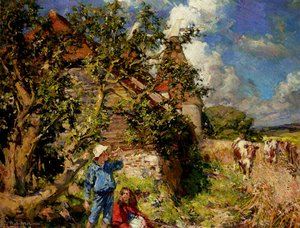
william christian symons
1845 - 1911
Quick Facts
- Artistic Movement Or Style: Decorative Arts
- Date Of Birth: November 28, 1845
- Date Of Death: 1911
- Full Name: William Christian Symons
- Nationality: English
- Notable Artworks:
- Portrait of his sister
- Interior of Downside Abbey
- Place Of Birth: Vauxhall, England