 Preview
 Send
Send Share
Share
 Details

 Download
 Similars
 X-Ray
X-Ray Diaporama
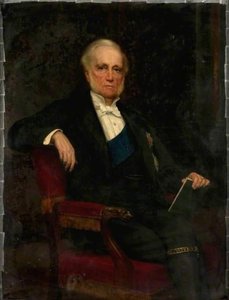
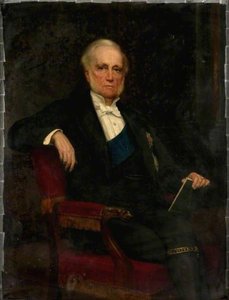
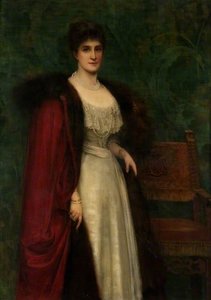
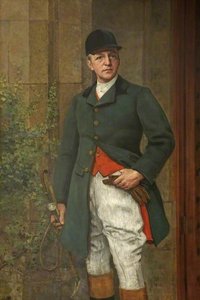
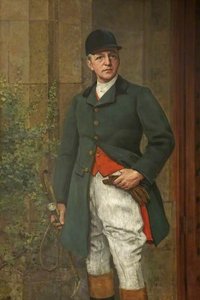
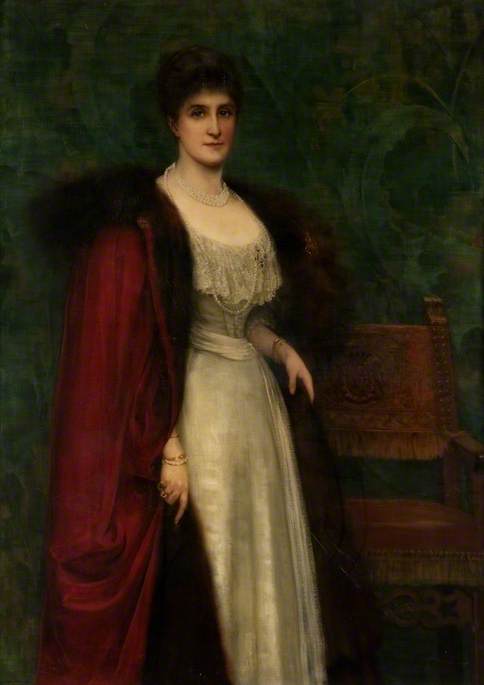
Ina Campbell (d.1925), Duchess of Argyll
 1897
1897 160.0 x 112.0 cm
 Read More
Giclée / Art Print
Museum-quality giclée or canvas print with fast production and flexible finish options. ( Buy Hand Made Painting Buy Image)




































Pick from our preset sizes that match the artwork's original proportions.

You may enter your own dimensions to fit a specific frame or space. If your selected size does not match the original image's proportions, we will either crop the artwork or extend the image with a mirrored or solid-fill edge. A digital mockup will be sent for your approval before production begins.
Please note that the on-screen preview does not reflect the actual cropping or extension. Only the mockup will accurately show the final composition.
While custom sizes are available, we recommend selecting a dimension from the predefined list to preserve the original proportions.
Worldwide Delivery () in 2 weeks instead of standard 4/5 weeks. (25 August)

Free Worldwide Express Shipping

High-Quality Linen Canvas

Full Shipping Insurance

Customs Tax Refund Guarantee

True Color Matching Guarantee

60-Day Return Policy (Defects Only)

100% Money-Back Guarantee

Bulk Discount Offer
 Glass option is only available in size under 110 CM

Ina Campbell (d.1925), Duchess of Argyll
Giclée / Art Print
Reproduction Size
-


Total Price
$ 63
Related Artworks








Artist Biography
The Painter of Exotic Grace: The Life and Legacy of William Clarke Wontner
In the twilight of the Victorian era and the dawn of the Edwardian age, a period defined by both rigid social structures and an burgeoning fascination with the exotic, the works of William Clarke Wontner offered a window into a world of timeless, idealized beauty. Born on January 17, 1857, in Stockwell, Surrey, Wontner was destined for a life steeped in the aesthetics of form and design. As the son of William Hoff Wontner, an accomplished architect and designer, the young artist received his earliest lessons not merely in the application of pigment, but in the very structural essence of beauty. This foundational understanding of proportion and architectural grandeur would later become the hallmark of his most celebrated canvases.
Wontner’s artistic evolution was profoundly shaped by his association with the luminaries of the St John’s Wood Art School. Most notably, he worked under the guidance of John William Godward, a master of the Greco-Roman style. This mentorship was more than a mere professional apprenticeship; it was a shared devotion to the principles of Academic Classicism and Romanticism. Together, they breathed life into scenes that evoked the splendor of ancient civilizations, absorbing the meticulous realism championed by Lawrence Alma-Tadema. Through this lineage, Wontner refined a technique capable of rendering the most delicate textures—the cool smoothness of polished marble, the heavy drape of luxurious silks, and the soft, luminous glow of skin—with an almost tactile precision.
A Vision of Orientalism and Classical Splendor
The true magic of Wontner’s oeuvre lies in his ability to blend the classical with the exotic, creating a dreamlike atmosphere that transcends historical boundaries. His compositions frequently feature languid, idealized women positioned against backdrops of opulent marble or settings reminiscent of ancient Persia and Rome. While his models were often European, the inclusion of richly patterned fabrics and Eastern motifs infused his work with a captivating sense of Orientalism. This stylistic choice allowed him to explore themes of virtue, beauty, and a certain seductive mystery that captivated the late 19th-century imagination.
To observe a Wontner painting is to enter a space of stillness and elegance. His mastery of light and shadow serves to highlight the architectural stability of his backgrounds, providing a stark yet harmonious contrast to the organic, flowing lines of his subjects. There is a deliberate sense of nostalgia in his work—a longing for a lost era of grandeur and sophistication. Whether depicting a solitary figure draped in fine cloth or a more complex scene of classical repose, Wontner maintained a consistent focus on the harmony between human grace and monumental surroundings.
Recognition, Achievement, and Enduring Influence
Wontner’s career was marked by significant milestones that cemented his status within the British art establishment. He was a regular presence at some of the most prestigious exhibition venues of his time, including:
- The Royal Academy: Where he began exhibiting as early as 1879, gaining vital exposure to critics and collectors alike.
- The Society of British Artists: A platform that allowed him to showcase his evolving mastery of the neo-classical style.
- The Royal Institute of Painters in Water Colours: Demonstrating his versatility across different mediums and techniques.
Beyond these formal accolades, Wontner’s ability to secure commissions from prominent patrons spoke to the widespread appeal of his aesthetic vision. Even as the art world began to shift toward more modern, fragmented movements, Wontner remained a steadfast guardian of classical ideals. His passing in 1930 in Worcester marked the end of an era, yet his contribution to the neo-classical movement remains indelible. Today, his works continue to be admired for their technical brilliance and their ability to transport the viewer to a realm of eternal, exotic grace, reminding us of a time when art sought to capture the very pinnacle of human elegance.
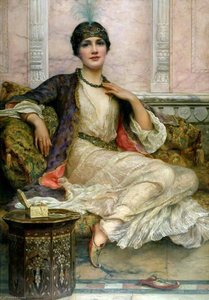
william clarke wontner
1857 - 1930
Quick Facts
- Artistic Movement Or Style: Neo-Classical
- Artists Or Movements Influenced By This Artist: Alma-Tadema
- Artists Who Influenced This Artist: John William Godward
- Date Of Birth: 1857
- Date Of Death: 1930
- Full Name: William Clarke Wontner
- Nationality: British
- Notable Artworks:
- Lady of Baghdad
- The Dancing Girl
- Place Of Birth: England