 Preview
 Send
Send Share
Share
 Details

 Download
 Similars
 X-Ray
X-Ray Diaporama
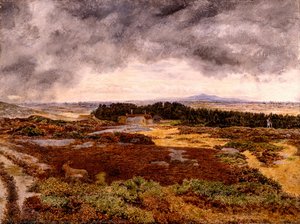
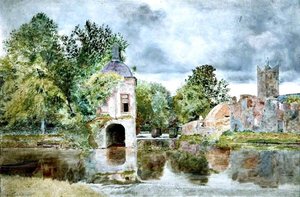
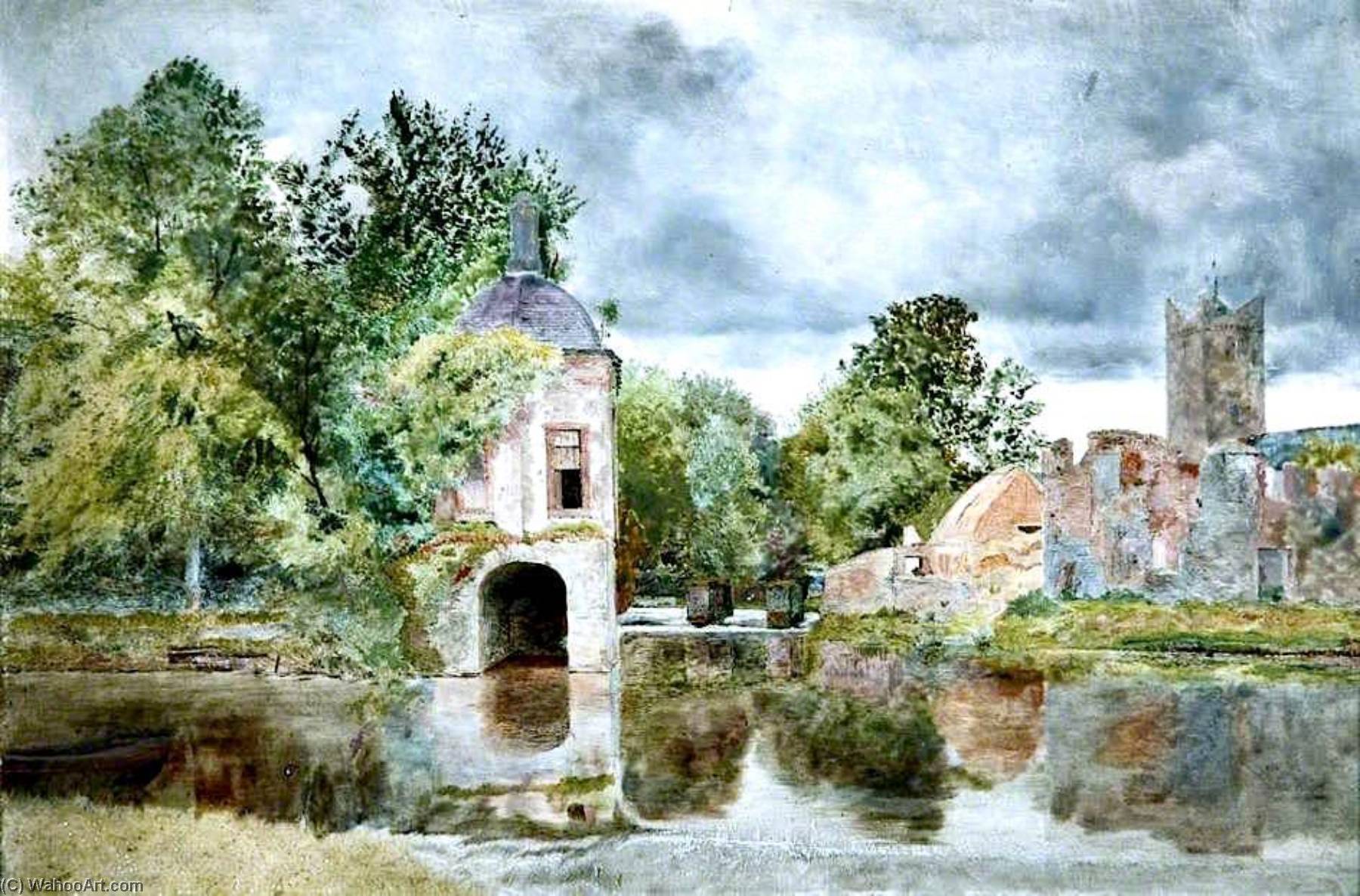
Junction of the Liffey and Rye, near Leixlip
 1857
1857 20.0 x 30.0 cm
 Read More
Giclée / Art Print
Museum-quality giclée or canvas print with fast production and flexible finish options. ( Buy Hand Made Painting Buy Image)




































Pick from our preset sizes that match the artwork's original proportions.

You may enter your own dimensions to fit a specific frame or space. If your selected size does not match the original image's proportions, we will either crop the artwork or extend the image with a mirrored or solid-fill edge. A digital mockup will be sent for your approval before production begins.
Please note that the on-screen preview does not reflect the actual cropping or extension. Only the mockup will accurately show the final composition.
While custom sizes are available, we recommend selecting a dimension from the predefined list to preserve the original proportions.
Worldwide Delivery () in 2 weeks instead of standard 4/5 weeks. (28 August)

Free Worldwide Express Shipping

High-Quality Linen Canvas

Full Shipping Insurance

Customs Tax Refund Guarantee

True Color Matching Guarantee

60-Day Return Policy (Defects Only)

100% Money-Back Guarantee

Bulk Discount Offer
 Glass option is only available in size under 110 CM

Junction of the Liffey and Rye, near Leixlip
Giclée / Art Print
Reproduction Size
-


Total Price
$ 63
Related Artworks









Artist Biography
The Atmospheric Soul of the Victorian Landscape
Born in Dublin in 1812, William Davis emerged as a painter whose vision bridged the gap between meticulous observation and the profound emotional resonance of the mid-Victorian era. While his roots were Irish, his artistic identity was inextricably linked to the vibrant, industrial, and culturally shifting landscapes of Liverpool and London. His journey began with the disciplined study of portraiture and still life, yet he soon found himself drawn toward a much grander stage: the sweeping vistas of the British Isles. This transition marked the birth of an artist capable of capturing not just the topography of a place, and its physical features, but its very spirit—a quality often described as the Victorian Sublime.
Davis’s evolution was deeply shaped by his immersion in the burgeoning Pre-Raphaelite movement. Unlike some of his contemporaries who sought an almost microscopic, hyper-realistic precision that could feel clinical, Davis developed a more nuanced, tonalist approach. He absorbed the movement's reverence for nature and its rejection of stale academic conventions, yet he infused his work with a soft, atmospheric haze. His landscapes, particularly those centered around the Mersey Estuary, possess a certain melancholic beauty, where heavy, moisture-laden air and pearlescent clouds create a sense of quiet contemplation and spiritual yearning.
A Nexus of Influence and Artistic Community
The trajectory of Davis’s career was significantly propelled by his relocation to Liverpool in 1842. This move placed him at the heart of a thriving artistic ecosystem, allowing him to participate actively in the Liverpool Academy and eventually gain prestigious recognition at the Royal Academy of Arts in London. His presence in these circles was not merely as an observer but as a participant in the intellectual ferment of the age. The establishment of the Hogarth Club in 1851 provided him with a vital nexus for experimentation, where he could engage in deep dialogue with the leading lights of his time.
It was within these influential circles that Davis cultivated relationships with true luminaries of the Pre-Raphaelite movement, such as Dante Gabriel Rossetti and Ford Madox Brown. These connections were transformative, instilling in his work a shared fascination with themes rooted in medieval aesthetics and symbolic imagery. Through these interactions, Davis’s landscapes began to transcend simple scenery; they became imbued with a sense of mythic narrative. Even when depicting a common field or a distant hill, there remains an underlying tension between the tangible world and a deeper, more symbolic reality—a hallmark of his mature style.
Legacy of the Mersey and Beyond
The enduring significance of William Davis lies in his ability to capture the delicate balance between the natural world and the encroaching shadows of industrial progress. His works, such as the monumental View from Bidston Hill, serve as windows into a period of profound transition. In these paintings, the use of muted tones—deep mossy greens, earthy ochres, and silvery grays—works in harmony with his masterful brushwork to evoke the tactile quality of the earth itself. He mastered the art of using small, human elements, such as distant figures wandering through a meadow, to act as anchors for the viewer’s empathy, reminding us of our own connection to the vastness of nature.
Throughout his life and following his death in 1873, Davis's reputation has been preserved through both his contributions to major exhibitions and the continued appreciation of his works in prestigious collections. His legacy is defined by several key artistic pillars:
- The Synthesis of Styles: The unique blending of Pre-Raphaelite detail with an expressive, atmospheric tonalism.
- Geographic Resonance: A profound ability to translate the specific light and mood of the Liverpool and Mersey landscapes into universal emotional experiences.
- Symbolic Depth: The transformation of landscape painting from mere documentation into a medium for spiritual and symbolic exploration.
Ultimately, William Davis remains a vital figure in 19th-century art, an artist who looked upon the changing face of Britain and found within its landscapes a timeless, haunting beauty that continues to resonate with collectors and historians alike.
william davis
1812 - 1873
Quick Facts
- Artistic Movement Or Style: Pre-Raphaelite
- Artists Or Movements Influenced By This Artist: ['Romanticism']
- Artists Who Influenced This Artist:
- Dante Gabriel Rossetti
- Ford Madox Brown
- Date Of Birth: 1812
- Date Of Death: 1873
- Full Name: William Davis
- Nationality: Irish
- Notable Artworks:
- The Shepherdess
- Liverpool Landscape
- Place Of Birth: Dublin, Ireland