

 Preview
 Send
Send Share
Share
 Details

 Download
 Similars
 X-Ray
X-Ray Diaporama
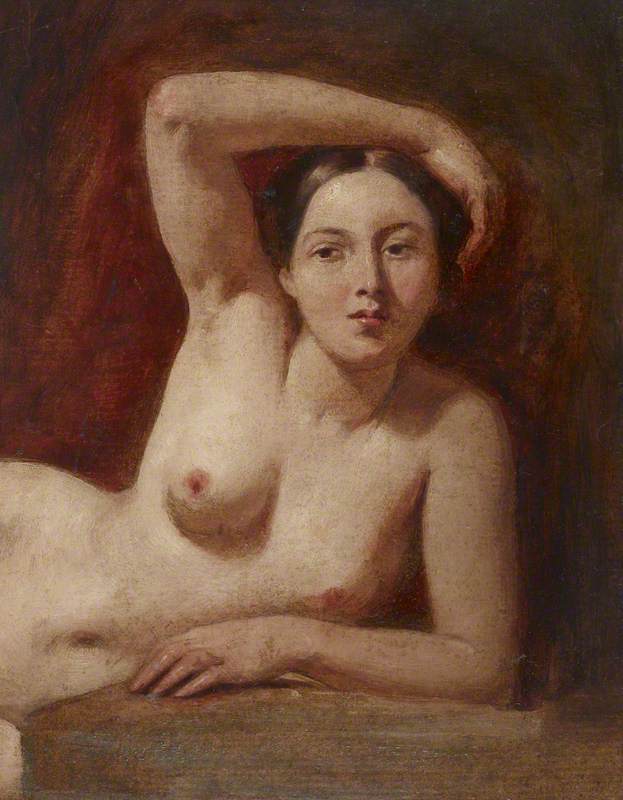
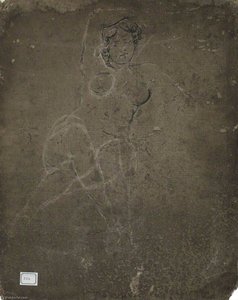
Half Figure of a Female Nude Reclining
 Acrylic On Canvas
- WallArt
- Victorian Sensibility
 30.0 x 24.0 cm
 National Trust
 Read More
Purchase a high-resolution, enhanced digital image, far superior to the online preview.
Each file is meticulously prepared by our in-house specialists using advanced tools and expert manual retouching. We ensure every image has exceptional clarity, precise color accuracy, and fine detail.
The final file is delivered via email within 72 hours, optimized for immediate use in professional, editorial, and print environments. This is the same quality trusted by top-tier design studios, publishers, and galleries.
Digital Image
Download a high-resolution file for personal display, printing, and creative projects. ( Buy Print Buy Hand Made Painting)
Included in Every Digital Image Order
Expert Digital Delivery, Guaranteed
When you choose ArtsDot.com, you're not just getting an image - you're receiving a professionally enhanced digital artwork, crafted with precision and backed by a satisfaction guarantee. Here's everything that comes with your order, automatically:

Fast Email Delivery
Your high-resolution digital image file will be emailed to you within 72 hours of ordering - ready for immediate use.

AI-Enhanced Digital File
Your artwork is professionally optimized using advanced AI tools and manual editing, ensuring maximum detail, clarity, and color accuracy.

Free Lifetime Re-Delivery
Accidentally deleted or lost your file? No worries - we'll resend it to you anytime, free of charge.

No Import Fees - Ever
Enjoy your artwork instantly with zero customs, duties, or delivery fees - digital downloads are always tax-free.

Color Accuracy Guarantee
We ensure your digital image reflects the original colors as closely as possible using professional tools and color management.

60-Day Satisfaction Guarantee
If you're not satisfied with your digital image, we'll revise it or refund 100% within 60 days - no questions asked.

100% Money-Back Guarantee
Not satisfied? Get a full refund within 60 days of receiving your digital file - no questions asked.

Bulk Order Discounts
Buy 3 images, save 10% - Buy 5, save 15% - Buy 10+, save 20%. Great for creative projects, galleries, and agencies.
Collectible Description
William Etty’s Pioneering Vision of Victorian Sensibility
William Etty (1787-1849) stands as a singular figure in the annals of British art – a Royal Academician who dared to confront societal conventions and champion an uncompromising aesthetic rooted in observation and psychological depth. Unlike his contemporaries, Turner and Constable, whose landscapes captivated the public imagination with sublime grandeur, Etty focused intently on the human form, specifically the female nude, achieving renown for his exquisitely rendered depictions that challenged prevailing moral sensibilities of Victorian England. This painting, “Half Figure of a Female Nude Reclining,” exemplifies Etty’s distinctive approach and offers a fascinating glimpse into the artistic landscape of his time.A Bold Departure from Convention
Etty's work was considered scandalous by many during his lifetime due to its explicit representation of female anatomy – a deliberate provocation intended to unsettle viewers accustomed to idealized portrayals. He rejected the prevailing Romantic preoccupation with emotion and imagination, favoring instead a meticulous study of the human body informed by anatomical precision and scientific accuracy. This commitment to realism distinguishes him from other artists of the era who prioritized decorative beauty over truthful depiction. The artist’s decision to pose his subject in repose—a woman reclining on her side—was itself significant; it allowed for a nuanced exploration of posture, gesture, and facial expression, conveying subtle psychological states that transcended mere visual spectacle.Technical Mastery: Color and Texture
The painting's execution reveals Etty’s masterful technique. Employing oil paints on canvas, he achieved remarkable tonal gradation—particularly noticeable in the red background—creating a sense of depth and luminosity that enhances the sculptural quality of the nude figure. Careful attention to detail is evident throughout the composition; the artist painstakingly rendered every curve and contour of the woman's body, utilizing subtle brushstrokes to capture the texture of skin and muscle. The deliberate choice of color contributes to the overall mood—the dominant red hue evokes passion and vulnerability, mirroring the subject’s exposed breast and torso.Historical Context: Challenging Victorian Morality
“Half Figure of a Female Nude Reclining” emerged during a period marked by intense moral debate surrounding depictions of nudity in art. The Royal Academy Schools, where Etty studied under Thomas Lawrence, fostered an environment that encouraged artistic experimentation but also demanded adherence to certain standards of propriety. Despite facing criticism from conservative factions within the establishment, Etty persevered in his pursuit of artistic truth—a conviction fueled by a profound belief in the importance of confronting uncomfortable realities and stimulating intellectual discourse. His refusal to compromise on his vision solidified his reputation as an innovator and cemented his legacy as one of Britain’s most influential artists.Symbolism: Beyond Mere Representation
Beyond its technical brilliance, the painting possesses symbolic resonance. The reclining nude embodies ideals of feminine beauty and grace—yet simultaneously confronts viewers with the complexities of human sexuality and vulnerability. Etty's portrayal transcends mere anatomical accuracy; he seeks to capture the essence of female experience, conveying a sense of quiet contemplation and inner strength. The pose itself suggests both repose and alertness, hinting at an unspoken narrative that invites interpretation.Emotional Impact: A Moment Frozen in Time
Ultimately, “Half Figure of a Female Nude Reclining” succeeds in capturing a powerful emotional moment—a glimpse into the human condition stripped bare of artifice. It compels viewers to confront questions about beauty, desire, and morality, prompting reflection on the role of art in challenging societal norms and illuminating the depths of human psychology. This painting remains a testament to Etty’s artistic courage and his unwavering commitment to portraying the human form with unflinching honesty—a legacy that continues to inspire admiration and provoke discussion centuries after its creation.Related Artworks
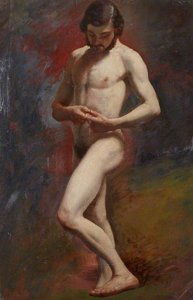
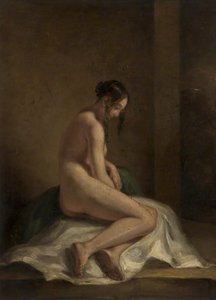
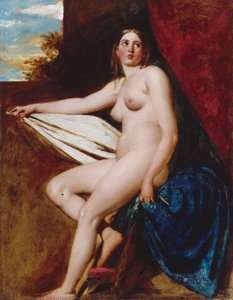
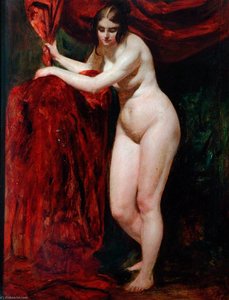
Artist Biography
A Pioneer of the British Nude: The Life and Art of William Etty
William Etty, a name perhaps less instantly recognizable than his contemporaries like Turner or Constable, nevertheless occupies a pivotal position in 19th-century British art. Born in York on March 10, 1787, above his father’s bakery, Etty's journey from humble beginnings to Royal Academician was one marked by relentless dedication, artistic innovation, and no small measure of controversy. His early life offered little indication of the path he would forge. Apprenticed at age twelve to a printer in Hull, seven years were spent immersed in the practicalities of typography – a world far removed from the canvases that would eventually bear his signature. Yet, even amidst the mechanical demands of printmaking, Etty nurtured a burgeoning passion for drawing, an impulse that ultimately propelled him towards London and the hallowed halls of the Royal Academy Schools in 1807. There, under the tutelage of Thomas Lawrence, he honed his skills through diligent copying, laying the foundation for a career defined by masterful depictions of the human form.The Rise to Prominence: Nudes and Controversy
Etty’s breakthrough arrived in 1821 with Cleopatra's Arrival in Cilicia, a painting that immediately ignited both admiration and scandal. The work, teeming with nude figures, was exhibited to widespread acclaim, yet simultaneously earned him a reputation for indecency. This duality would become a defining characteristic of his career. He wasn’t merely depicting nudity; he was exploring the human form with an unprecedented realism and anatomical precision for a British artist of that era. His commitment to accurately rendering flesh tones, light, and shadow – influenced by his study of Venetian masters like Titian and Rubens during travels in Italy and France – set him apart. He continued to produce historical scenes populated with nudes, often drawn from classical mythology or literature, such as The Sirens and Ulysses. These works were commercially successful, allowing Etty to thrive despite the constant criticism leveled against his subject matter. In 1828, he was elected a Royal Academician, solidifying his position within the established art world, even as whispers of impropriety followed him.Beyond the Nude: Portraits and Still Life
While Etty is most celebrated for his nudes, his artistic range extended beyond this controversial domain. Recognizing the need to broaden his appeal – and perhaps secure a more stable income – he ventured into portraiture during the 1830s. Though not as groundbreaking as his figure paintings, these portraits demonstrate his technical skill and ability to capture character. Furthermore, Etty became one of the first English painters to seriously engage with still life, demonstrating an eye for detail and a sensitivity to texture that rivaled the Dutch masters he admired. This diversification reveals a pragmatic side to Etty’s artistic practice, a willingness to adapt to market demands while remaining true to his core aesthetic principles. He continued, however, to return to the nude form throughout his life, driven by an unwavering fascination with its beauty and expressive potential.Legacy and Rediscovery
William Etty died in York on November 13, 1849, leaving behind a substantial body of work that initially enjoyed considerable popularity. However, tastes shifted in the decades following his death, and his paintings fell into relative obscurity. By the late 19th century, his once-celebrated works were largely forgotten, dismissed as outdated or simply too shocking for Victorian sensibilities. A remarkable rediscovery began in the early 21st century. His inclusion in Tate Britain’s landmark Exposed: The Victorian Nude exhibition (2001–2002) sparked renewed interest in his art, prompting critical reevaluation and a reassessment of his place in British art history. The restoration of The Sirens and Ulysses in 2010 further cemented this revival, revealing the brilliance of his technique and the enduring power of his vision. Today, William Etty is recognized as a pioneering figure who challenged artistic conventions, celebrated the human form with unparalleled realism, and left an indelible mark on the landscape of British art. His works stand as testaments to his skill, dedication, and unwavering commitment to capturing the beauty and complexity of the human experience.Key Works
- Cleopatra's Arrival in Cilicia (1821): The painting that launched Etty’s career and established his reputation for depicting nudes.
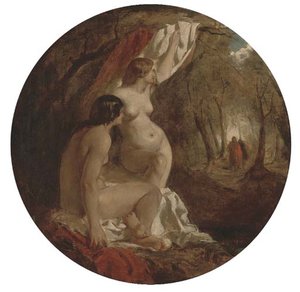
- The Sirens and Ulysses (1837): A dramatic depiction of Homer’s epic, showcasing Etty's mastery of composition and anatomy.
- Reverend William Jay (c. 1836-40): An example of his portraiture work, demonstrating a keen eye for character.
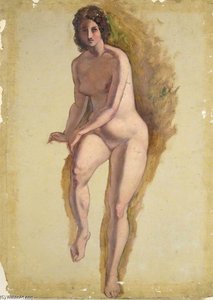
- Standing Female Nude (date unknown): A study showcasing Etty’s exceptional skill in rendering realistic flesh tones and form.
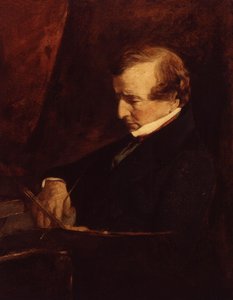
William Etty
1787 - 1849 , United Kingdom
Quick Facts
- Artistic Movement Or Style: Romanticism
- Artists Who Influenced This Artist: ['Thomas Lawrence']
- Date Of Birth: March 10, 1787
- Date Of Death: November 13, 1849
- Full Name: William Etty
- Nationality: British
- Notable Artworks:
- Cleopatra's Arrival
- The Sirens and Ulysses
- Standing Female Nude
- Place Of Birth: York, United Kingdom

