

 Preview
 Send
Send Share
Share
 Details

 Download
 Similars
 X-Ray
X-Ray Diaporama
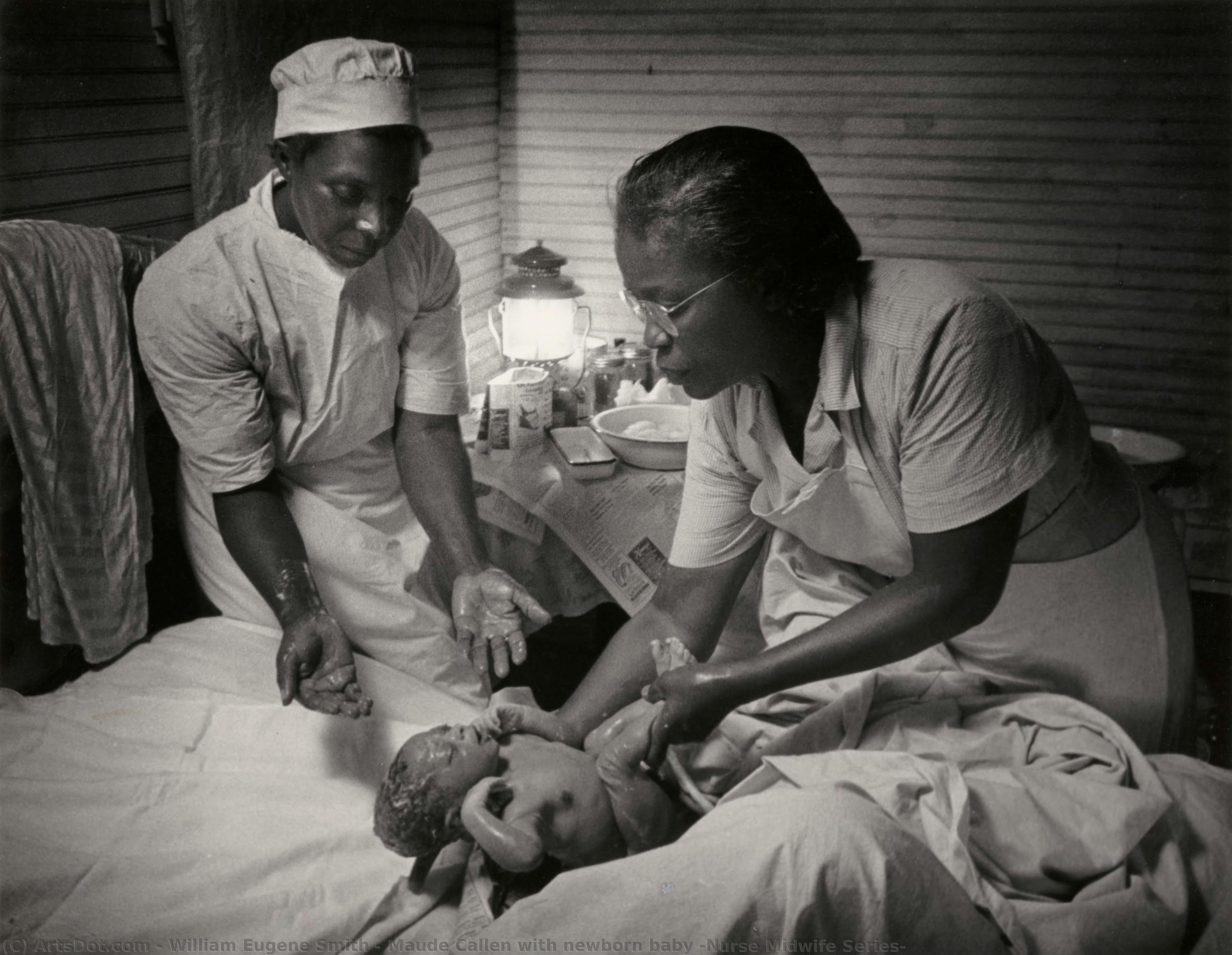
Maude Callen with newborn baby (Nurse Midwife Series)


 Read More
Purchase a high-resolution, enhanced digital image, far superior to the online preview.
Each file is meticulously prepared by our in-house specialists using advanced tools and expert manual retouching. We ensure every image has exceptional clarity, precise color accuracy, and fine detail.
The final file is delivered via email within 72 hours, optimized for immediate use in professional, editorial, and print environments. This is the same quality trusted by top-tier design studios, publishers, and galleries.
Digital Image
Download a high-resolution file for personal display, printing, and creative projects. ( Buy Print Buy Hand Made Painting)
Included in Every Digital Image Order
Expert Digital Delivery, Guaranteed
When you choose ArtsDot.com, you're not just getting an image - you're receiving a professionally enhanced digital artwork, crafted with precision and backed by a satisfaction guarantee. Here's everything that comes with your order, automatically:

Fast Email Delivery
Your high-resolution digital image file will be emailed to you within 72 hours of ordering - ready for immediate use.

AI-Enhanced Digital File
Your artwork is professionally optimized using advanced AI tools and manual editing, ensuring maximum detail, clarity, and color accuracy.

Free Lifetime Re-Delivery
Accidentally deleted or lost your file? No worries - we'll resend it to you anytime, free of charge.

No Import Fees - Ever
Enjoy your artwork instantly with zero customs, duties, or delivery fees - digital downloads are always tax-free.

Color Accuracy Guarantee
We ensure your digital image reflects the original colors as closely as possible using professional tools and color management.

60-Day Satisfaction Guarantee
If you're not satisfied with your digital image, we'll revise it or refund 100% within 60 days - no questions asked.

100% Money-Back Guarantee
Not satisfied? Get a full refund within 60 days of receiving your digital file - no questions asked.

Bulk Order Discounts
Buy 3 images, save 10% - Buy 5, save 15% - Buy 10+, save 20%. Great for creative projects, galleries, and agencies.
A Moment of Grace: William Eugene Smith’s “Maude Callen with Newborn Baby”
William Eugene Smith's "Maude Callen with Newborn Baby," created in 1951, isn’t merely a photograph; it’s a poignant distillation of compassion and the quiet heroism found within everyday life. Captured during a time of profound social change in America – a period grappling with racial inequality and burgeoning concerns about healthcare access – this image transcends its documentary roots to become a timeless meditation on motherhood, vulnerability, and the enduring strength of community. The photograph, part of Smith’s “Nurse Midwife” series, offers a rare glimpse into the world of rural South Carolina, where Maude Callen, a dedicated nurse midwife, provided essential care often overlooked by mainstream medicine.
Smith's approach to photojournalism was revolutionary for his time. He eschewed the slickness and sensationalism prevalent in many contemporary publications, instead favoring a deeply empathetic style that prioritized storytelling over mere representation. “Nurse Midwife” exemplifies this commitment; Smith spent months immersing himself in Callen’s world, documenting her tireless efforts with an intimacy rarely seen in photographic essays. The resulting images aren't staged or posed; they capture genuine moments of connection and care – a scene unfolding organically within the confines of a humble hospital room.
Technical Mastery & Photographic Language
The photograph itself is a masterclass in tonal control and compositional balance. Shot using a large-format camera, Smith meticulously controlled light and shadow to create a dramatic yet warmly inviting atmosphere. The grayscale palette emphasizes texture and form, drawing the viewer’s eye to Callen's face – etched with concern and determination – and the infant nestled securely in her arms. The shallow depth of field skillfully isolates the central figures, blurring the background into a soft, indistinct haze that further directs attention to the intimate scene before us.
Notice the deliberate use of lines: the verticality of the nurse’s uniform and the hospital architecture provides a grounding element, while diagonal lines – subtly present in the baby's posture and the mother’s gaze – inject a sense of dynamism into the composition. The grainy texture of the silver gelatin print adds to the photograph’s authenticity, evoking the feel of a vintage document and reinforcing its historical significance.
Symbolism & Human Connection
Beyond its technical brilliance, “Maude Callen with Newborn Baby” is rich in symbolic meaning. Callen's role as a nurse midwife represents a vital link between tradition and progress – a bridge connecting ancient practices of childbirth with the advancements of modern medicine. Her dedication to serving marginalized communities speaks volumes about her character and commitment to social justice. The image powerfully conveys the profound bond between mother and child, capturing a moment of tenderness amidst hardship.
The photograph’s historical context is crucial to understanding its emotional resonance. In 1951, access to healthcare was profoundly unequal in America, particularly in rural areas like South Carolina. Black communities faced systemic discrimination and limited resources. Callen's work challenged these inequalities, providing essential care to those who were often denied it. The image serves as a quiet testament to her courage and the importance of accessible healthcare for all.
A Legacy of Humanistic Storytelling
William Eugene Smith’s “Maude Callen with Newborn Baby” remains a profoundly moving work of art, demonstrating his ability to capture not just images but also the essence of human experience. It's a photograph that invites reflection on themes of compassion, resilience, and the enduring power of community. Reproductions of this iconic image offer a valuable opportunity to connect with a pivotal moment in American history and appreciate Smith’s legacy as one of the most influential photojournalists of the 20th century. Its quiet dignity and intimate portrayal continue to resonate deeply today, reminding us of the importance of empathy and social responsibility.
Related Artworks

Artist Biography
The Architect of the Photo Essay: The Life and Legacy of W. Eugene Smith
In the vast landscape of twentieth-century photography, few figures loom as large or as compassionately as William Eugene Smith. Born in Wichita, Kansas, in 1918, Smith did not merely observe the world through a lens; he sought to translate the very heartbeat of human struggle and resilience into a visual language. Often hailed as perhaps the single most important American photographer in the development of the editorial photo essay, his work moved beyond the static boundaries of traditional journalism. He pioneered a method of storytelling that utilized the camera not just to record events, but to weave complex, multi-layered narratives that resonated with the profound depths of the human condition.
Smith’s artistic soul was shaped by the humanist traditions of his predecessors, drawing deep inspiration from the pioneering spirits of Alfred Stieglitz and Lewis Hine. From Stieglitz, he inherited a reverence for the expressive potential of the photographic medium, while from Hine, he adopted a fierce commitment to social advocacy. This fusion of aesthetic sensitivity and moral purpose became the cornerstone of his career. His early years were marked by a growing conviction that photography could serve as a powerful instrument for illuminating societal realities, a belief that would eventually lead him to the front lines of history's most poignant moments.
A Revolution in Narrative: The Birth of 'Country Doctor'
The year 1948 marked a seismic shift in the history of photojournalism with the publication of ‘Country Doctor’ in Life magazine. This collaborative masterpiece, created alongside writer Ron Hooker, redefined what a photographic assignment could achieve. Rather than presenting a series of disconnected snapshots, Smith constructed an extended narrative that breathed life into the rural landscapes of Iowa. Through his lens, the daily existence of Dr. John Henderson and his wife, Maude Callen, became a window into the triumphs and tribulations of healthcare in underserved communities. It was a work brimming with tenderness, yet it possessed the grit to confront the harsh realities of medical practice in isolation.
This breakthrough established the photo essay as a legitimate and potent genre, capable of conveying nuanced emotional arcs that text alone could never capture. Smith’s ability to find the universal within the particular allowed his subjects to transcend their geographic boundaries, inviting readers worldwide to empathize with the intimate struggles of the human spirit. His technique relied heavily on a masterful use of light and shadow, employing a dramatic black-and-white palette that heightened the emotional gravity of every frame.
The Humanist Lens: Compassion and Social Reform
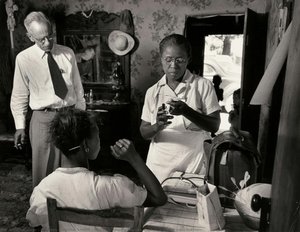
As his career progressed, Smith’s lens turned toward the most vulnerable corners of society, championing human dignity through unflinching documentation. His legendary work featuring Nurse Midwife Maude Callen remains a pinnacle of documentary achievement. In series such as ‘Nurse Midwife (new dresses)’ and ‘Midwife Maude Callen (with sick child),’ Smith captured the profound intimacy of maternal care and the heavy responsibility of medical service in rural South Carolina. These images, characterized by their meticulous attention to detail and raw emotional honesty, serve as a testament to his ability to capture the vulnerability inherent in life and death.
Beyond the domestic and the clinical, Smith’s work expanded to address global crises and environmental catastrophes. His documentation of the devastating effects of mercury poisoning in Minamata stands as one of the most significant pieces of social documentary ever produced. Through his imagery, the invisible became visible, forcing a global audience to confront the consequences of industrial negligence. This unwavering commitment to social reform ensured that his work was never merely art for art's sake, but a vital, breathing part of the global conscience.
A Lasting Impression on Visual History
The legacy of W. Eugene Smith is etched into the very fabric of modern photojournalism. He taught the world that a photographer could be both an artist and an activist, a witness and a storyteller. His influence can be seen in every documentary project that seeks to find the soul within the struggle. By blending the technical mastery of composition with an unshakeable empathy, Smith transformed the photographic medium into a profound vessel for truth.
To look upon a Smith photograph is to encounter the weight of history and the lightness of hope simultaneously. His life’s work remains a monumental achievement, reminding us that even in the darkest chapters of human experience, there is a dignity worth capturing and a story worth telling.
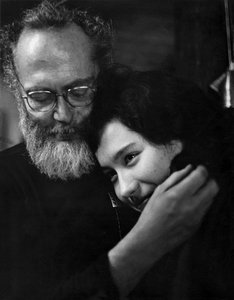
william eugene smith
1918 - 1978 , United States of America
Quick Facts
- Artistic Movement Or Style: Photojournalism
- Artists Who Influenced This Artist:
- Dorothea Lange
- Henri Cartier-Bresson
- Date Of Birth: December 30, 1918
- Date Of Death: October 15, 1978
- Full Name: William Eugene Smith
- Nationality: American
- Notable Artworks:
- Country Doctor
- Nurse Midwife Maude Callen
- Minamata
- Place Of Birth: Wichita, United States

