 Preview
 Send
Send Share
Share
 Details

 Download
 Similars
 X-Ray
X-Ray Diaporama
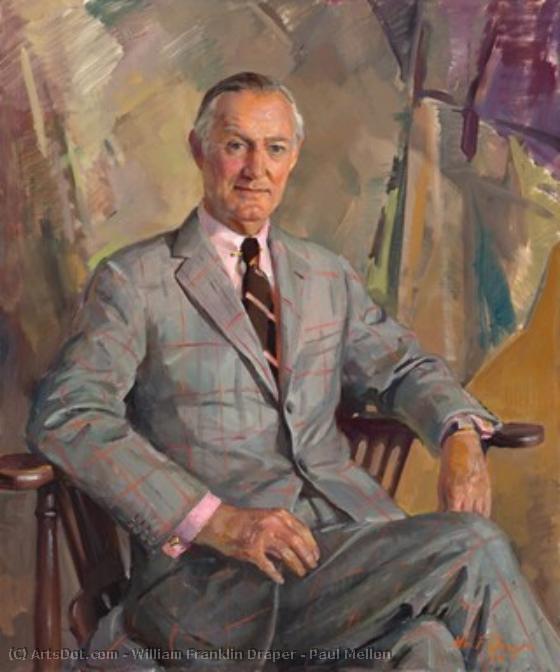
Paul Mellon
 1974
1974 129.0 x 119.0 cm
 Read More
Hand Made Oil Reproduction
Hand-painted oil on canvas in your size and frame, made to order by our artists. ( Buy Print Buy Image)




































Pick from our preset sizes that match the artwork's original proportions.

You may enter your own dimensions to fit a specific frame or space. If your selected size does not match the original image's proportions, we will either crop the artwork or extend the painting with additional hand-painted elements. A digital mockup will be sent for your approval before production begins.
Please note that the on-screen preview does not reflect the actual cropping or extension. Only the mockup will accurately show the final composition.
While custom sizes are available, we recommend selecting a dimension from the predefined list to preserve the original proportions.
After order, ArtsDot.com team will email client for instructions and provide a mockup preview
Worldwide Delivery () in 3/4 weeks instead of standard 5 weeks. (18 August). No compromise on quality.

Free Worldwide Express Shipping

High-Quality Linen Canvas

Full Shipping Insurance

Customs Tax Refund Guarantee

True Color Matching Guarantee

60-Day Return Policy (Defects Only)

100% Money-Back Guarantee

Bulk Discount Offer
 Glass option is only available in size under 110 CM

Paul Mellon
Reproduction Medium
Reproduction Size
-


Total Price
$ 263
Related Artworks




Artist Biography
A Life Dedicated to Canvas and Country: William Franklin Draper
William Franklin Draper, born on Christmas Eve in 1912 in Hopedale, Massachusetts, was a man whose life beautifully intertwined the worlds of fine art and dedicated military service. He wasn’t simply an artist who painted war; he was a naval officer who *lived* it, translating his experiences onto canvas with a unique immediacy and emotional depth. Draper's lineage itself hinted at a life of public duty – his father, Clare H. Draper, was the son of General William Franklin Draper, a Civil War veteran who later served as Ambassador to Italy. This heritage instilled in him a sense of responsibility and a connection to broader historical narratives, qualities that would profoundly shape both his artistic vision and his wartime contributions. His early life, though privileged – the Drapers owned the vast Draper Corporation, a leading textile machinery manufacturer – was marked by an early inclination towards artistry, specifically music. He initially pursued concert piano at Harvard University before shifting his focus to painting, recognizing in it a more potent medium for self-expression and observation.From Studio to Shipboard: The Path of a Combat Artist
Draper’s formal artistic education was extensive, encompassing studies at the Pomfret School, Harvard, the National Academy of Design, and the Cape Cod School of Art. He further honed his skills abroad, spending time in Spain with Harry Zimmerman, a protégé of Paul Sacks, and then immersing himself in the vibrant art scene of France at the Académie de la Grande Chaumière. However, it was the outbreak of World War II that irrevocably altered the course of his career. In 1942, Draper volunteered for naval service, receiving a commission as a Lieutenant (junior grade). His initial assignment with the Anti-Submarine Warfare Unit in Boston proved to be a stepping stone towards a far more significant role: becoming an official war artist. Transferred to the Naval Art Section, Draper was dispatched to the Aleutian Islands, a remote and unforgiving landscape that would become his first crucible as a combat artist. He spent nearly six months documenting the harsh realities of life on the front lines, capturing scenes of military operations amidst brutal weather conditions – paintings often created while battling eccentric winds threatening to carry his canvases away or enduring arctic temperatures that necessitated wearing gloves simply to hold a brush.Witnessing History: Draper’s Wartime Portfolio
Draper's artistic contributions during the war were remarkable in their scope and immediacy. After Alaska, he was tasked with painting the portrait of Rear Admiral J.R. Beardall, Superintendent of the United States Naval Academy, a commission that led to further prestigious assignments. He painted portraits of iconic figures like Admirals Nimitz and Halsey, capturing not just their likenesses but also the weight of command and the anxieties of wartime leadership. However, it was his experiences in the Pacific Theater – aboard ships like the USS Yorktown (CV-10) and the USS Tennessee (BB-43) – that truly defined his legacy as a combat artist. He documented the air attacks on Palau, the landings at Hollandia, the airstrikes on Truk Island, and the invasions of Saipan and Guam. These weren’t sanitized depictions of heroism; they were raw, visceral portrayals of conflict, capturing the intensity of battle, the destruction wrought by war, and the courage – and vulnerability – of those involved. A particularly harrowing experience came during the invasion of Saipan and Guam aboard the USS Tennessee, where the ship was struck three times by enemy fire, forcing Draper to land under heavy bombardment and remain on the island for eighteen days, documenting the brutal struggle firsthand. His paintings from this period are imbued with a sense of urgency and authenticity that sets them apart.Beyond the Battlefield: A Lasting Artistic Legacy
Upon his return from service in 1945, having attained the rank of Lieutenant Commander and receiving the Bronze Star for his valor, Draper transitioned back to civilian life with a renewed sense of purpose. He married Barbara Natalia Cagiati and moved to New York City, establishing himself as one of America’s foremost portrait painters. His subjects were diverse and distinguished, including John F. Kennedy (1962), the Shah of Iran (1967), James Michener (1979), and Richard M. Nixon (1981). While his post-war work encompassed a broader range of themes, the influence of his wartime experiences remained palpable – a heightened sensitivity to human emotion, a masterful use of light and shadow, and an unwavering commitment to realism. Draper’s paintings are held in esteemed collections such as those of the Metropolitan Museum of Art and the National Gallery of Art, testaments to his enduring artistic skill and historical significance. He died in New York City in 2003, leaving behind a body of work that serves not only as a chronicle of World War II but also as a powerful meditation on courage, sacrifice, and the human condition. His art continues to resonate today, offering viewers a poignant glimpse into a pivotal moment in history through the eyes of a man who was both an artist and a soldier.Influences and Historical Significance
Draper’s artistic development was shaped by a diverse range of influences, from the classical traditions he encountered during his European studies to the American Realist movement that emphasized direct observation and emotional honesty. His early training with Charles Webster Hawthorne and Henry Hensche instilled in him a deep appreciation for capturing light and atmosphere, qualities evident in both his landscapes and portraits. However, it was his wartime experiences that truly forged his unique artistic voice. He wasn’t merely documenting events; he was *interpreting* them, conveying the psychological toll of war alongside its physical realities. His work stands as a valuable historical record, offering insights into the lives of sailors, marines, and commanders during World War II. Furthermore, Draper's paintings provide a counterpoint to more idealized depictions of conflict, presenting a nuanced and often unsettling portrayal of the human cost of war. The inclusion of his works in prominent museum collections underscores their artistic merit and historical importance, ensuring that his legacy as a combat artist will continue to inspire and inform generations to come. His work is also notable for its connection to Paul Mellon, whose patronage helped support and promote artists documenting significant events in American history.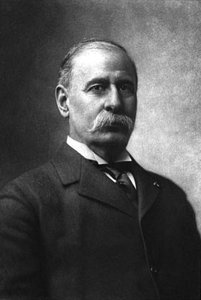
william franklin draper
1912 - 2003 , United States of America
Quick Facts
- Artistic Movement Or Style: Combat Art, Portraiture
- Artists Who Influenced This Artist:
- Charles Webster Hawthorne
- Henry Hensche
- Date Of Birth: December 24, 1912
- Date Of Death: October 26, 2003
- Full Name: William Franklin Draper
- Nationality: American
- Notable Artworks:
- Aleutian Islands series
- Portraits of Admirals Nimitz & Halsey
- Place Of Birth: Hopedale, USA