

 Preview
 Send
Send Share
Share
 Details

 Download
 Similars
 X-Ray
X-Ray Diaporama
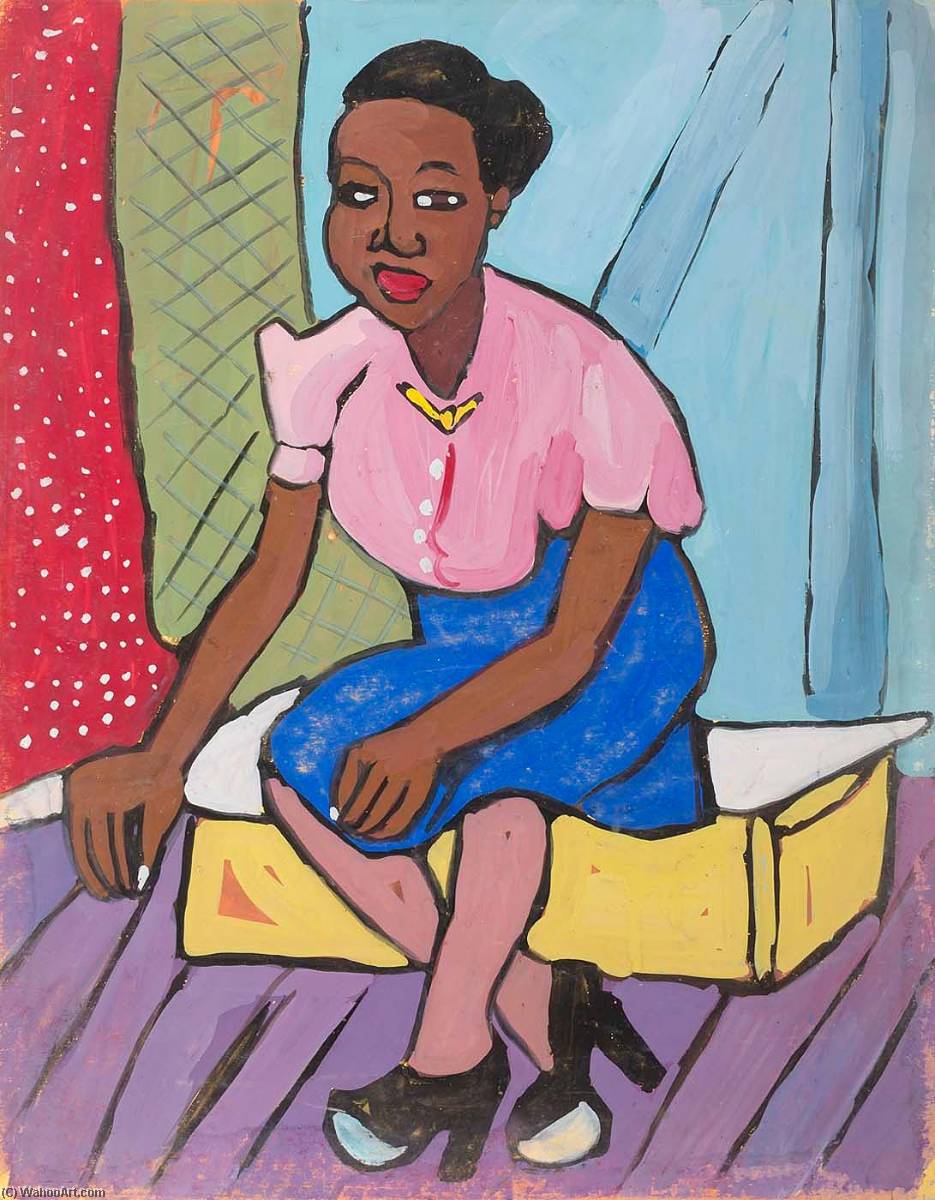
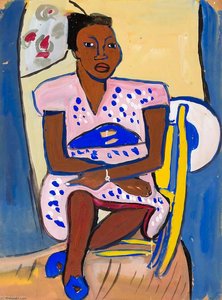
Woman in Pink Blouse and Blue Skirt Seated on Yellow Platform
 Oil
Oil- WallArt
- Harlem Renaissance
 1940
1940- Modern
 71.0 x 56.0 cm
 Read More
Purchase a high-resolution, enhanced digital image, far superior to the online preview.
Each file is meticulously prepared by our in-house specialists using advanced tools and expert manual retouching. We ensure every image has exceptional clarity, precise color accuracy, and fine detail.
The final file is delivered via email within 72 hours, optimized for immediate use in professional, editorial, and print environments. This is the same quality trusted by top-tier design studios, publishers, and galleries.
Digital Image
Download a high-resolution file for personal display, printing, and creative projects. ( Buy Print Buy Hand Made Painting)
Included in Every Digital Image Order
Expert Digital Delivery, Guaranteed
When you choose ArtsDot.com, you're not just getting an image - you're receiving a professionally enhanced digital artwork, crafted with precision and backed by a satisfaction guarantee. Here's everything that comes with your order, automatically:

Fast Email Delivery
Your high-resolution digital image file will be emailed to you within 72 hours of ordering - ready for immediate use.

AI-Enhanced Digital File
Your artwork is professionally optimized using advanced AI tools and manual editing, ensuring maximum detail, clarity, and color accuracy.

Free Lifetime Re-Delivery
Accidentally deleted or lost your file? No worries - we'll resend it to you anytime, free of charge.

No Import Fees - Ever
Enjoy your artwork instantly with zero customs, duties, or delivery fees - digital downloads are always tax-free.

Color Accuracy Guarantee
We ensure your digital image reflects the original colors as closely as possible using professional tools and color management.

60-Day Satisfaction Guarantee
If you're not satisfied with your digital image, we'll revise it or refund 100% within 60 days - no questions asked.

100% Money-Back Guarantee
Not satisfied? Get a full refund within 60 days of receiving your digital file - no questions asked.

Bulk Order Discounts
Buy 3 images, save 10% - Buy 5, save 15% - Buy 10+, save 20%. Great for creative projects, galleries, and agencies.
A Vibrant Encounter with Modernist Folk Tradition
In the evocative masterpiece Woman in Pink Blouse and Blue Skirt Seated on Yellow Platform, created in 1940, the legendary William H. Johnson invites us into a moment of profound stillness amidst a world of rhythmic color. The painting centers on a woman whose presence is both commanding and serene, perched upon a striking yellow platform that serves as a stage for her quiet contemplation. Clad in a soft pink blouse and a deep blue skirt, her figure acts as an anchor for the eye, drawing the viewer into a composition where every hue vibrates with life. Johnson’s unique ability to blend the sophisticated language of modern abstraction with the soulful, unpretentious charm of folk art is on full display here, making this piece a captivating centerpiece for any collection that values narrative depth and visual rhythm.
The technique employed by Johnson in this work is nothing short of transformative. Eschewing overly complex shading for bold, flat planes of color, he utilizes a deliberate simplicity to heighten the emotional resonance of the scene. The interplay between the warm yellow of the platform and the cool blue of the skirt creates a chromatic tension that is balanced by the dramatic presence of a red curtain in the background. This backdrop does more than provide depth; it suggests a theatricality, as if we are witnessing a private moment captured during a pause in a larger, unseen performance. The subtle inclusion of figures at the periphery adds a layer of social texture, hinting at a communal atmosphere that breathes life into the edges of the canvas.
The Soul of the Harlem Renaissance
To understand this painting is to understand the heartbeat of the Harlem Renaissance and the resilience of the African American experience. Born in South Carolina, William H. Johnson infused his canvases with the spiritual and cultural iconography of his heritage. In this 1940 work, we see the echoes of gospel rhythms and storytelling traditions translated into visual form. The geometric precision of the platform and the structured arrangement of the figures reflect a modernist sensibility, yet the warmth of the subject matter remains deeply rooted in the human connection. For the discerning collector or interior designer, this piece offers more than mere decoration; it provides a window into a pivotal era of American history, where art became a powerful tool for identity and reclamation.
Integrating such a work into a curated space allows for a sophisticated dialogue between historical significance and contemporary aesthetics. The bold primary and secondary colors—the pink, blue, yellow, and red—make it an ideal focal point for modern interiors that seek to balance minimalism with soulful character. Whether placed in a sunlit gallery or a refined residential setting, the painting radiates an emotional warmth that is both inviting and intellectually stimulating. It stands as a testament to Johnson's vision: a vision where color, shape, and culture converge to create a timeless narrative of grace and enduring strength.
Related Artworks
Artist Biography
A Tapestry of Resilience: The Soulful Vision of William H. Johnson
The story of William Henry Johnson is one of profound transformation, a journey that began in the humble landscapes of Florence, South Carolina, and ascended to the heights of the international modernist stage. Born in 1901 into a poor African American family during the era of Jim Crow, Johnson’s early life was shaped by the rhythms of the American South—the spiritual echoes of gospel music, the richness of oral storytelling, and the deep-seated traditions of his heritage. This foundational connection to Black culture would later serve as the heartbeat of his most enduring works, providing a wellspring of imagery that transcended mere representation to reach the realm of the universal.
His path toward artistic mastery was paved with immense personal determination. Moving to New York at the age of seventeen, Johnson worked tirelessly to fund his education at the prestigious National Academy of Design. In the halls of the academy, he mastered the rigorous, classical standards of European tradition, yet his spirit remained tethered to the vibrant textures of his roots. This tension between formal academic training and a yearning for cultural authenticity would become the defining characteristic of his evolving style.
From European Modernism to Folk Art Mastery
The late 1920s marked a pivotal departure in Johnson’s career as he traveled to Europe, immersing himself in the avant-garde movements of France. It was during this period of wandering and discovery that his brushwork began to shed its classical constraints, embracing the emotional intensity of Expressionism. His time in Scandinavia, particularly his marriage to the Danish artist Holcha Krake, introduced him to the aesthetics of primitivism and folk art. These influences acted as a catalyst, prompting him to simplify forms and utilize bold, unadorned colors to convey deeper psychological truths.
Upon returning to the United States in 1938, Johnson emerged as a vital voice of the Harlem Renaissance. He did not merely observe African American life; he celebrated it through a unique visual language that blended modernist abstraction with a soulful, folk-inspired aesthetic. His canvases became windows into the dignity of the Black experience, utilizing techniques such as impasto to create palpable textures that mirrored the grit and grace of his subjects. Whether depicting the rhythmic energy of dancers in works like Jitterbugs (III) or the serene stillness of a seated figure, Johnson’s work possessed an unmistakable emotional clarity.
A Legacy of Cultural Significance
The significance of William H. Johnson lies in his ability to weave together disparate worlds—the spiritual and the secular, the local and the global, the classical and the primitive. His oeuvre is a monumental archive of African American identity, featuring subjects that range from historical icons like Harriet Tubman to the everyday beauty of rural landscapes and social gatherings. Notable masterpieces such as The Black Christ demonstrate his profound use of Yoruba symbolism, bridging the gap between ancestral spirituality and contemporary struggle.
Though he faced periods of being overlooked by the mainstream art establishment during his lifetime, Johnson’s legacy has undergone a powerful reclamation. Today, he is recognized not just as a painter of his era, but as a visionary who transformed the language of modernism to honor the resilience of his people. His life remains a testament to the power of art to preserve history, celebrate identity, and find beauty within the most complex human experiences.
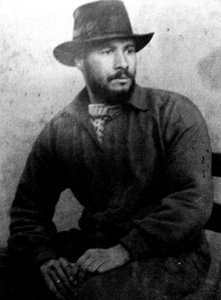
william h. johnson
1901 - 1970 , United States of America
Quick Facts
- Artistic Movement Or Style: Harlem Renaissance; Expressionism
- Artists Or Movements Influenced By This Artist: ['Expressionism']
- Artists Who Influenced This Artist: ['John Wollaston']
- Date Of Birth: 1901
- Full Name: William Henry Johnson
- Nationality: American
- Notable Artworks:
- Sir William Johnson Presenting Medals...
- William Johnson Fox
- Place Of Birth: Florence, United States of America

