 Preview
 Send
Send Share
Share
 Details

 Download
 Similars
 X-Ray
X-Ray Diaporama
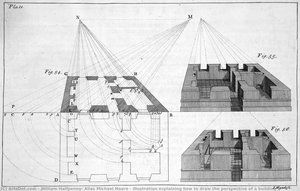
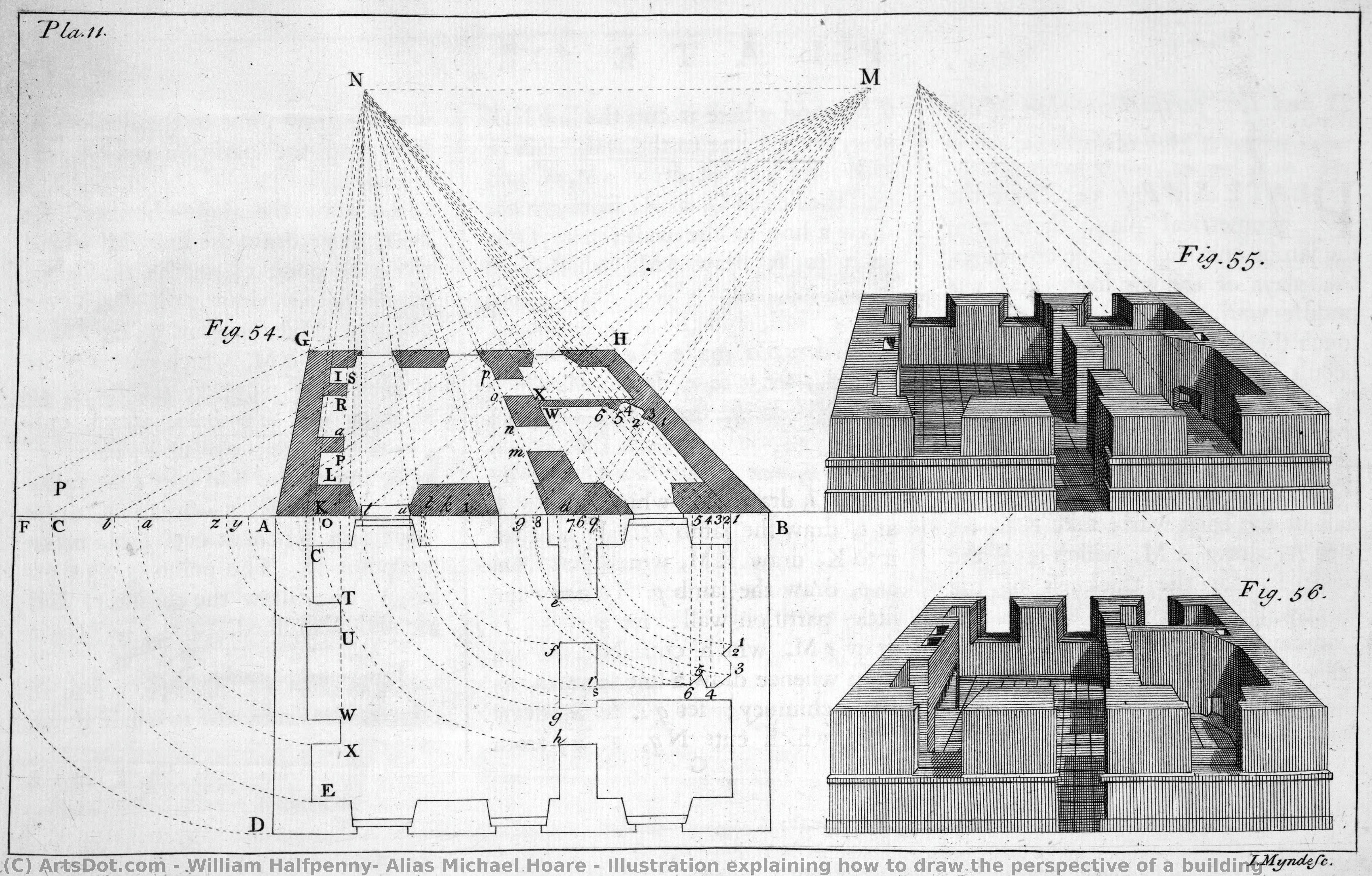
Illustration explaining how to draw the perspective of a building


 Read More
Giclée / Art Print
Museum-quality giclée or canvas print with fast production and flexible finish options. ( Buy Hand Made Painting Buy Image)




































Pick from our preset sizes that match the artwork's original proportions.

You may enter your own dimensions to fit a specific frame or space. If your selected size does not match the original image's proportions, we will either crop the artwork or extend the image with a mirrored or solid-fill edge. A digital mockup will be sent for your approval before production begins.
Please note that the on-screen preview does not reflect the actual cropping or extension. Only the mockup will accurately show the final composition.
While custom sizes are available, we recommend selecting a dimension from the predefined list to preserve the original proportions.
Worldwide Delivery () in 2 weeks instead of standard 4/5 weeks. (21 August)

Free Worldwide Express Shipping

High-Quality Linen Canvas

Full Shipping Insurance

Customs Tax Refund Guarantee

True Color Matching Guarantee

60-Day Return Policy (Defects Only)

100% Money-Back Guarantee

Bulk Discount Offer
 Glass option is only available in size under 110 CM

Illustration explaining how to draw the perspective of a building
Giclée / Art Print
Reproduction Size
-


Total Price
$ 63
Related Artworks


Artist Biography
A Practical Visionary: The Life and Legacy of William Halfpenny
William Halfpenny, a name perhaps less celebrated than his architectural contemporaries like Colen Campbell or James Gibbs, nevertheless occupies a vital position in the history of 18th-century British design. Active between roughly 1723 and 1755, Halfpenny wasn’t a builder of grand estates or imposing public structures; instead, he was a prolific author and disseminator of architectural knowledge, democratizing design through his meticulously illustrated pattern books. Describing himself as an “architect and carpenter,” he bridged the gap between the theoretical world of elite architects and the practical needs of builders, craftsmen, and even ambitious country gentlemen eager to shape their own surroundings. His influence extended far beyond England’s shores, reaching British North America and leaving a lasting mark on the architectural landscape.Early Life and the Rise of the Builder-Author
Details surrounding Halfpenny's early life remain elusive. He appears to have been based initially in Richmond, Surrey, then moving between London and Bristol, possibly even spending time in Ireland. This itinerant existence suggests a working architect actively seeking commissions rather than a scholar cloistered in an academy. What sets him apart is his decision to translate architectural principles into accessible publications. In 1723, he submitted a design for Holy Trinity Church in Leeds—a project that ultimately went unexecuted—but it was the publication of *Practical Architecture* in 1724 that truly launched his career. This wasn’t intended as a theoretical treatise; rather, it was a hands-on guide offering detailed instructions and illustrations for everything from doors and windows to entire buildings. He often published under the alias Michael Hoare, perhaps to differentiate between various aspects of his prolific output or to appeal to different audiences. The context is crucial: expensive architectural treatises by Palladio, Serlio, Campbell, and Gibbs were beyond the reach of many aspiring builders. Halfpenny’s books filled this void, providing a practical alternative that empowered those without formal training.Disseminating Design: The Pattern Books
Halfpenny's true legacy lies in his series of pattern books. These weren’t simply collections of designs; they were carefully crafted resources intended to be used and adapted. *Magnum in Parvo* (1722) offered foundational knowledge, while *The Art of Sound Building* (1725) delved into geometrical problems essential for construction. He wasn't merely copying existing styles but synthesizing them, offering variations on classical Palladian designs alongside increasingly popular Gothic and, significantly, Chinese motifs. His books were remarkably successful, undergoing multiple editions and reprints throughout the 18th century. They reached a broad audience, influencing domestic architecture across Britain and beyond. He addressed not only builders but also “gentleman draughtsmen,” acknowledging the growing trend of landowners designing their own homes. This accessibility was revolutionary, fostering a wider appreciation for architectural principles and contributing to the proliferation of fashionable designs.Collaboration and Evolving Styles
Later in his career, Halfpenny increasingly collaborated with his son, John Halfpenny. This partnership resulted in publications like *The Modern Builder's Assistant* (1742) and several books focusing on “Gothick” and “Chinese taste” architecture. The embrace of these styles reflects the broader cultural shifts occurring during the mid-18th century—a fascination with exoticism, a revival of medieval forms, and a growing interest in landscape gardening. While few buildings can be definitively attributed to Halfpenny, Coopers’ Hall in Bristol (constructed 1743-1744) stands as a notable example of his restrained classical style. His later explorations into Chinese architecture—embodied in *Rural Architecture in the Chinese Taste* (1750)—demonstrate his responsiveness to contemporary trends and his willingness to experiment with new forms.A Lasting Influence: Beyond Monumental Architecture
William Halfpenny’s significance isn't measured by grand monuments but by the widespread impact of his publications. He wasn’t a visionary in the same vein as Inigo Jones, but he was an astute observer and a remarkably effective communicator. His books empowered builders, inspired amateur architects, and contributed to the democratization of design during the Georgian era. He bridged the gap between theory and practice, making architectural knowledge accessible to a wider audience. While his personal life remains shrouded in mystery, his legacy endures through the countless buildings—and the imaginations they sparked—shaped by the patterns and principles he so diligently documented. He represents a crucial figure in understanding how architectural ideas were disseminated and adapted during a period of significant stylistic change, proving that influence can be as powerful as any stone or brick.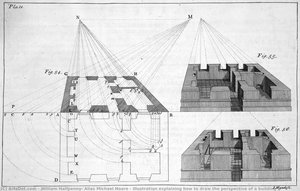
william halfpenny, alias michael hoare
United Kingdom
Quick Facts
- Artistic Movement Or Style: Georgian architecture
- Artists Or Movements Influenced By This Artist: British North America
- Date Of Death: 1755
- Full Name: William Halfpenny
- Nationality: English
- Notable Artworks:
- Practical Architecture
- The Art of Sound Building
- Useful Architecture
- Other Names: Michael Hoare
- Place Of Birth: Richmond, UK