 Preview
 Send
Send Share
Share
 Details

 Download
 Similars
 X-Ray
X-Ray Diaporama
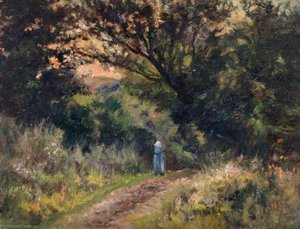
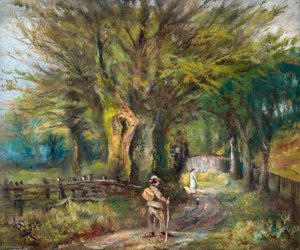
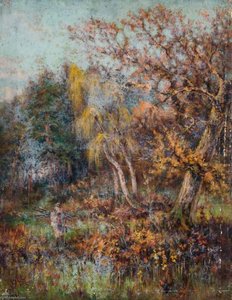
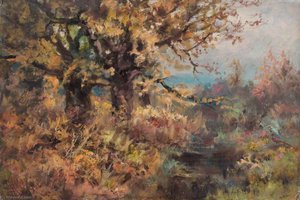
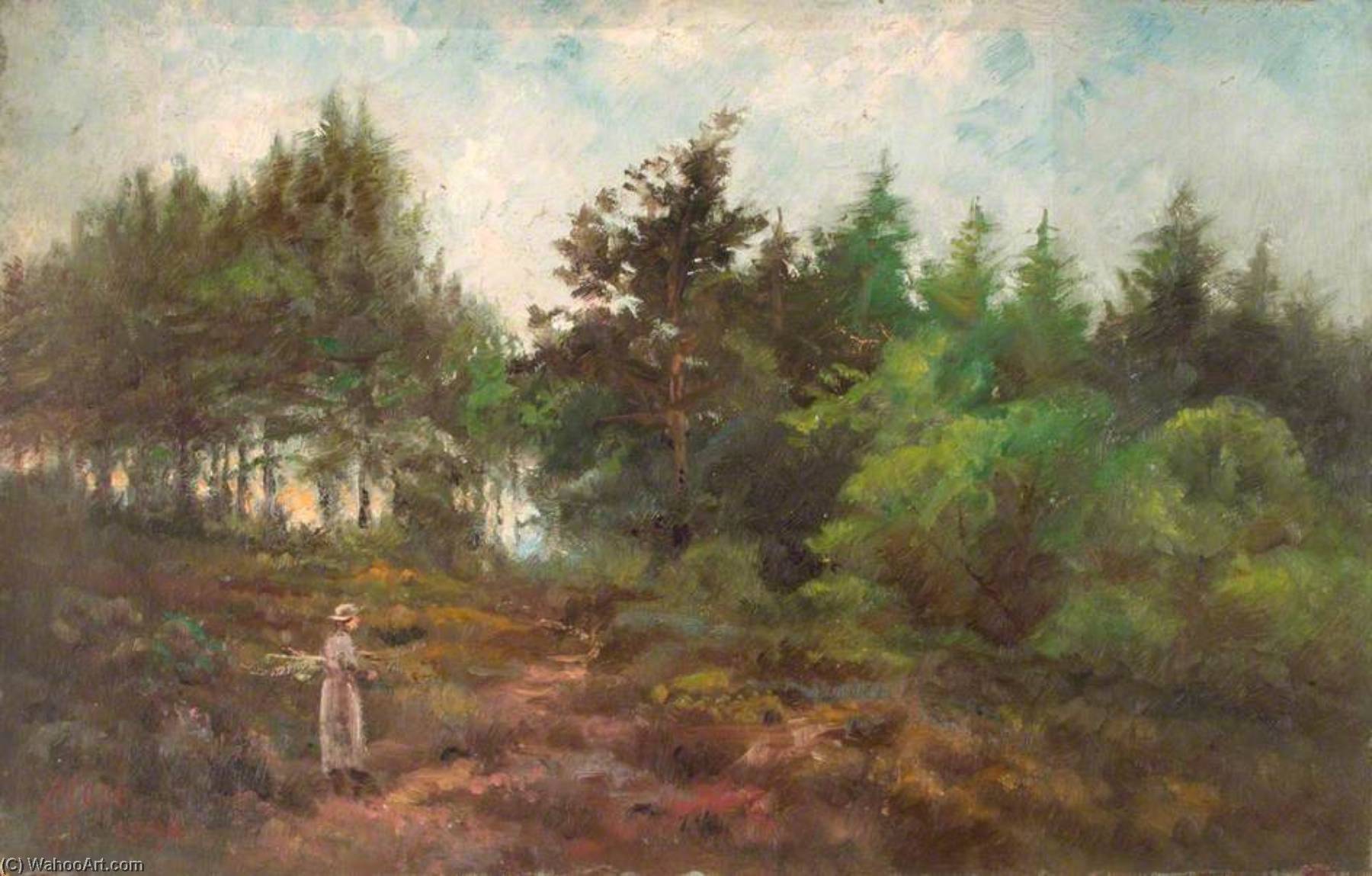
On Croham Hurst, Croydon, Surrey
 1894
1894 23.0 x 36.0 cm
 Read More
Hand Made Oil Reproduction
Hand-painted oil on canvas in your size and frame, made to order by our artists. ( Buy Print Buy Image)




































Pick from our preset sizes that match the artwork's original proportions.

You may enter your own dimensions to fit a specific frame or space. If your selected size does not match the original image's proportions, we will either crop the artwork or extend the painting with additional hand-painted elements. A digital mockup will be sent for your approval before production begins.
Please note that the on-screen preview does not reflect the actual cropping or extension. Only the mockup will accurately show the final composition.
While custom sizes are available, we recommend selecting a dimension from the predefined list to preserve the original proportions.
After order, ArtsDot.com team will email client for instructions and provide a mockup preview
Worldwide Delivery () in 3/4 weeks instead of standard 5 weeks. (21 August). No compromise on quality.

Free Worldwide Express Shipping

High-Quality Linen Canvas

Full Shipping Insurance

Customs Tax Refund Guarantee

True Color Matching Guarantee

60-Day Return Policy (Defects Only)

100% Money-Back Guarantee

Bulk Discount Offer
 Glass option is only available in size under 110 CM

On Croham Hurst, Croydon, Surrey
Reproduction Medium
Reproduction Size
-


Total Price
$ 263
Artwork Description
A Glimpse into the Artist's Style
William Henry Hope's work is characterized by his ability to capture the serenity and tranquility of nature. In "On Croham Hurst, Croydon, Surrey", he masterfully depicts a woman walking through a forest, surrounded by trees that seem to stretch up to the sky. The scene is peaceful, with the woman appearing to be lost in thought as she strolls along the winding path. Key Features of the Painting Some notable features of this painting include:- The use of warm colors to create a sense of comfort and relaxation
- The delicate brushstrokes that bring the trees and foliage to life
- The way the light filters through the leaves, casting dappled shadows on the forest floor
Discovering More of William Henry Hope's Work
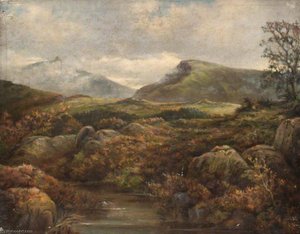
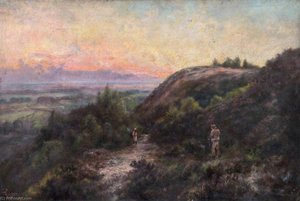
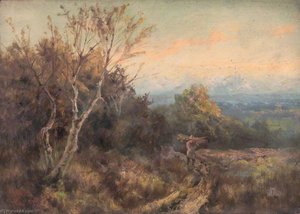
For those interested in exploring more of William Henry Hope's artwork, On Croham Hurst, Croydon, Surrey is just one of several pieces available to view. Other notable works include At the Foot of Addington Hills, Croydon, Surrey and In Addington Park, Croydon, Surrey. To learn more about the Museum of Croydon and its collection, visit Discovering the Artworks of Museum Of Croydon (United Kingdom).The beauty of "On Croham Hurst, Croydon, Surrey" lies not only in its technical skill but also in its ability to evoke a sense of peace and tranquility in the viewer. As a masterpiece of William Henry Hope, it is a testament to the enduring power of art to capture the essence of the natural world.
Related Artworks










Artist Biography
Early Life and Artistic Beginnings
William R. Hope, born in Montreal in 1863, emerged from a privileged background that afforded him the opportunity to pursue his passion for art on an international scale. Unlike many artists of his era who faced financial constraints, Hope was able to travel extensively throughout Europe during the 1880s, immersing himself in the artistic traditions of Paris, the Netherlands, and Italy. These formative years were crucial in shaping his aesthetic sensibilities and technical skills. He wasn’t merely absorbing techniques; he was cultivating a deep appreciation for landscape painting, particularly drawn to the atmospheric qualities of the French countryside around Fontainebleau. This early exposure laid the foundation for his later work, which would become synonymous with capturing the serene beauty of the Canadian landscape. His family's wealth allowed him not only to study abroad but also to return to Montreal and quickly establish himself as a central figure in the burgeoning art community.A Champion of Realism and the Canadian Identity
Upon his return from Europe, William Hope dedicated himself to portraying the unique character of Canada’s natural environment. He wasn't interested in grand historical narratives or idealized depictions; instead, he focused on capturing the subtle nuances of light, texture, and atmosphere within the Quebec countryside. This commitment to realism set him apart from many of his contemporaries who favored more conventional styles. Hope believed that true artistic expression lay in faithfully representing the world around him, and he approached his subjects with a meticulous attention to detail. He travelled extensively throughout rural Quebec, sketching harbors, boats, mountains, and interiors—scenes that resonated deeply with a growing sense of national identity. His paintings weren’t simply landscapes; they were evocative portraits of a country finding its voice.Founding the Pen and Pencil Club & Community Influence
Hope's influence extended beyond his own artistic practice. In 1890, he founded the Pen and Pencil Club of Montreal, an organization dedicated to “social enjoyment, and the promotion of arts and letters.” This club quickly became a vital hub for artists, writers, and intellectuals in the city, fostering a vibrant creative community. The initial meetings were held at Hope’s home on Dorchester Street within the prestigious Golden Square Mile, reflecting his social standing and commitment to nurturing artistic talent. The Pen and Pencil Club provided a platform for collaboration, critique, and camaraderie, playing a significant role in shaping the direction of Canadian art during the late 19th and early 20th centuries. Even after Hope’s death in 1931, the club continued to thrive, testament to his lasting legacy as a cultural leader.Recognition and Major Achievements
Throughout his career, William Hope received numerous accolades for his artistic achievements. He was awarded a bronze medal at the Canadian exhibition held at the Louisiana Purchase Exposition in St. Louis, Missouri, in 1904, recognizing his exceptional skill and contribution to Canadian art. Perhaps most significantly, his painting *The Sand Bar*, completed in 1924, was acquired for the permanent collection of the National Gallery of Canada—a testament to its artistic merit and enduring cultural value. He became a member of the Royal Canadian Academy of Arts in 1902, further solidifying his position as a leading figure within the national art scene. His election to the council in 1906 demonstrated the high regard held for him by his peers.Legacy and Enduring Appeal
William Henry Hope passed away on February 5, 1931, at the Ritz-Carlton Montreal Hotel, leaving behind a rich artistic legacy that continues to inspire and captivate audiences today. His paintings are celebrated for their luminous quality, meticulous detail, and evocative portrayal of the Canadian landscape. He championed realism at a time when other styles were prevalent, and his commitment to capturing the unique character of Canada’s natural environment helped shape a growing sense of national identity. His work is now held in prominent collections across Canada, including the McCord Museum and the National Gallery of Canada, ensuring that his artistic vision will continue to resonate with generations to come. Hope's influence can be seen in the works of many subsequent Canadian landscape painters, who followed his lead in celebrating the beauty and diversity of their country’s natural world.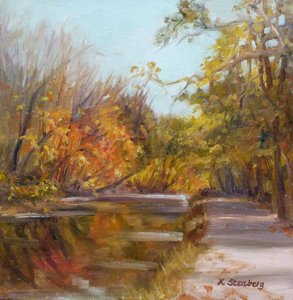
william henry hope
1835 - 1917
Quick Facts
- Artistic Movement Or Style: Realist Painting
- Artists Or Movements Influenced By This Artist: ['William Brymner']
- Artists Who Influenced This Artist:
- Maurice Cullen
- Robert Harris
- Percy Erskine Nobbs
- Date Of Birth: 1835
- Date Of Death: 1917
- Full Name: William Henry Hope
- Nationality: Canadian
- Notable Artworks:
- Landscape with Trees & a Man at Work
- Landscape with Hills
- On Nouns Heath, September 1895
- Place Of Birth: Canada