Preview
 Send
Send Share
Share
 Details

 Download
 Similars
 X-Ray
X-Ray Diaporama
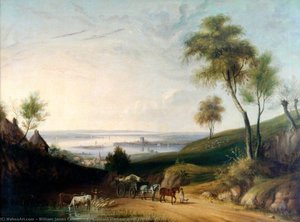
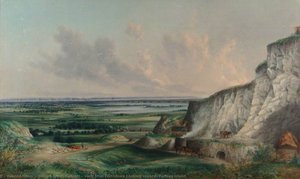
View from Portsdown Looking towards Portsea Island
 69.0 x 120.0 cm
 Read More
Giclée / Art Print
Museum-quality giclée or canvas print with fast production and flexible finish options. ( Buy Hand Made Painting Buy Image)




































Pick from our preset sizes that match the artwork's original proportions.

You may enter your own dimensions to fit a specific frame or space. If your selected size does not match the original image's proportions, we will either crop the artwork or extend the image with a mirrored or solid-fill edge. A digital mockup will be sent for your approval before production begins.
Please note that the on-screen preview does not reflect the actual cropping or extension. Only the mockup will accurately show the final composition.
While custom sizes are available, we recommend selecting a dimension from the predefined list to preserve the original proportions.
Worldwide Delivery () in 2 weeks instead of standard 4/5 weeks. (30 August)

Free Worldwide Express Shipping

High-Quality Linen Canvas

Full Shipping Insurance

Customs Tax Refund Guarantee

True Color Matching Guarantee

60-Day Return Policy (Defects Only)

100% Money-Back Guarantee

Bulk Discount Offer
 Glass option is only available in size under 110 CM

View from Portsdown Looking towards Portsea Island
Giclée / Art Print
Reproduction Size
-


Total Price
$ 63
Related Artworks









Artist Biography
The Ethereal Vision of William James Callcott
In the golden age of Victorian landscape painting, few artists possessed the ability to translate the fleeting whispers of the atmosphere into permanent, breathtaking visual poetry quite like William James Callcott. A master of light and shadow, Callcott’s work serves as a window into a nineteenth-century Britain defined by both its industrial progress and its profound, quiet connection to the natural world. Born in the verdant surroundings of Hampstead Heath, London, his early life was shaped by an environment where scientific inquiry and aesthetic beauty were inextricably linked. The son of Sir William Horsley, a distinguished physician and botanist, Callcott inherited a keen eye for the minute details of the natural world—a trait that would later manifest in his meticulous rendering of botanical textures and maritime precision.
His artistic development was further enriched by a unique cross-pollination of disciplines. Under the guidance of the composer Theodore Smith, Callcott developed a deep understanding of musical harmony, an influence that many scholars believe informed the rhythmic composition of his landscapes. Just as a composer balances melody and cadence, Callcott balanced light and depth, creating visual movements that guide the viewer’s eye through misty riverbanks and sun-drenched coastlines. This melodic approach to painting was deeply rooted in the traditions of the Dutch Golden Age; he drew significant inspiration from the dramatic chiaroscuro techniques of Rembrandt, utilizing the interplay of profound darkness and sudden brilliance to imbue his scenes with a sense of spiritual weight and emotional resonance.
A Legacy Written in Water and Light
The true heart of Callcott’s oeuvre lies in his unparalleled ability to capture the soul of the River Thames. To look upon his Thames landscapes is to experience the river not merely as a body of water, but as a living, breathing entity. Through his masterful command of atmospheric perspective, he achieved a sense of infinite distance, where the heavy London mists dissolve into soft, silvery horizons. His works often feature:
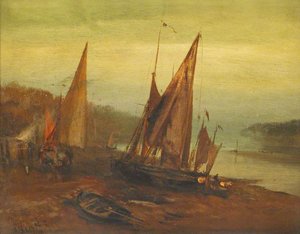
- The Serenity of Maritime Life: Detailed depictions of Thames barges and vessels that capture the quiet dignity of nineteenth-century commerce.
- Atmospheric Mastery: The use of subtle gradations in tone to replicate the humid, heavy air of the English riverside.
- Coastal Grandeur: Expansive views of Portsmouth Harbour and the Norfolk coast, where the meeting of sea and sky creates a sense of sublime vastness.
Beyond the Thames, Callcott’s reach extended to the rugged beauty of the British coastline, where he explored the tension between the permanence of stone and the ephemeral nature of crashing waves. His ability to render the "sublime"—that specific Romantic era feeling of awe mixed with a hint of terror—cemented his reputation among the Royal Academicians. He did not merely paint scenery; he painted the very air that surrounded it, capturing the way light filters through clouds or reflects off a damp pier.
Historical Significance and Enduring Impression
As the Victorian era progressed, Callcott’s work stood as a testament to the enduring power of classical observation in an age of rapid change. While his contemporaries often moved toward more radical abstractions, Callcott remained dedicated to the truth of the landscape, finding infinite complexity within the familiar. His historical significance lies in this bridge between the meticulous scientific observation of his father's generation and the emotive, atmospheric romanticism that would define much of British art for decades to come.
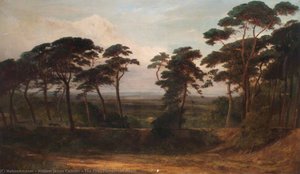
Today, the works of William James Callcott continue to captivate collectors and historians alike. They offer more than just a nostalgic glimpse into a bygone era; they provide a masterclass in how light can be used to evoke memory and emotion. Whether through the quiet stillness of The Firs or the bustling maritime charm of his Thames barge studies, Callcott’s legacy remains etched in the soft, luminous textures of his unmistakable style—a permanent record of the fleeting beauty of the natural world.
Quick Facts
- Artistic Movement Or Style: Luminism
- Artists Or Movements Influenced By This Artist: ['Hudson River School']
- Artists Who Influenced This Artist: ['James Abbott McNeill Whistler']
- Date Of Birth: c.1823
- Date Of Death: 1900
- Full Name: William James Callcott
- Nationality: British
- Notable Artworks:
- The Firs
- Portsmouth Harbour
- Thames Barges
- Place Of Birth: England