 Preview
 Send
Send Share
Share
 Details

 Download
 Similars
 X-Ray
X-Ray Diaporama
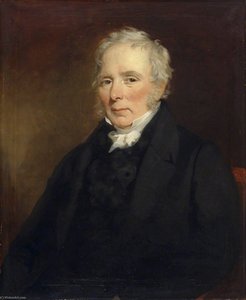
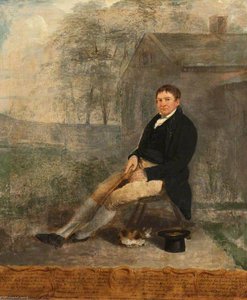
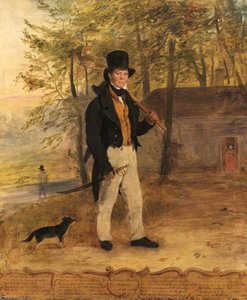
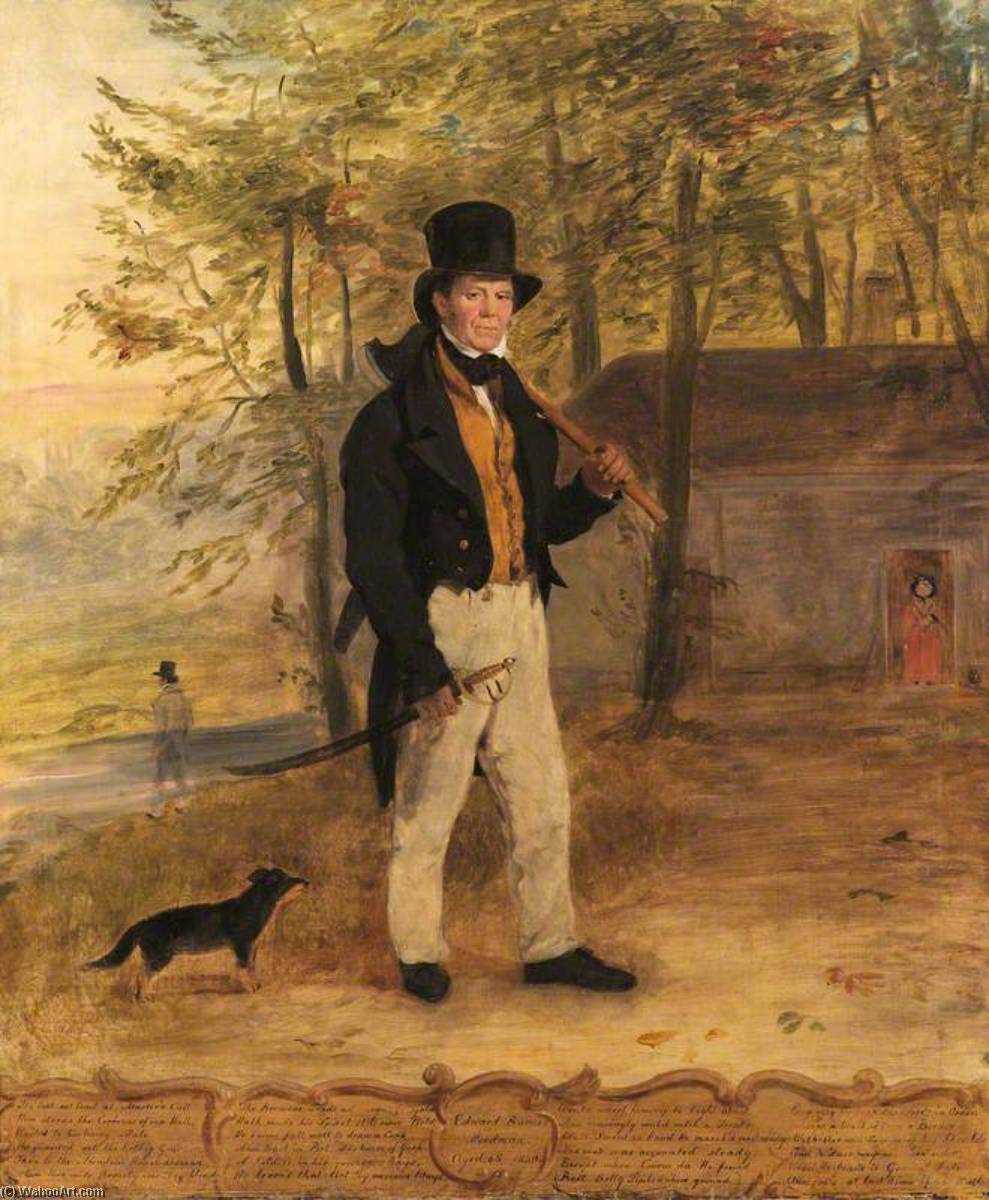
Edward Barnes (b.1761 1762), Woodman
 1830
1830 112.0 x 94.0 cm
 Read More
Hand Made Oil Reproduction
Hand-painted oil on canvas in your size and frame, made to order by our artists. ( Buy Print Buy Image)




































Pick from our preset sizes that match the artwork's original proportions.

You may enter your own dimensions to fit a specific frame or space. If your selected size does not match the original image's proportions, we will either crop the artwork or extend the painting with additional hand-painted elements. A digital mockup will be sent for your approval before production begins.
Please note that the on-screen preview does not reflect the actual cropping or extension. Only the mockup will accurately show the final composition.
While custom sizes are available, we recommend selecting a dimension from the predefined list to preserve the original proportions.
After order, ArtsDot.com team will email client for instructions and provide a mockup preview
Worldwide Delivery () in 3/4 weeks instead of standard 5 weeks. (24 August). No compromise on quality.

Free Worldwide Express Shipping

High-Quality Linen Canvas

Full Shipping Insurance

Customs Tax Refund Guarantee

True Color Matching Guarantee

60-Day Return Policy (Defects Only)

100% Money-Back Guarantee

Bulk Discount Offer
 Glass option is only available in size under 110 CM

Edward Barnes (b.1761 1762), Woodman
Reproduction Medium
Reproduction Size
-


Total Price
$ 263
Related Artworks






Artist Biography
The Scholar’s Canvas: The Dual Legacy of William Jones
In the tapestry of the eighteenth century, few figures possessed a mind as expansive or as profoundly interconnected as William Jones. Born on September 28th, 1746, in the heart of Westminster, London, Jones was the progeny of the esteemed Welsh mathematician William Jones, an inheritance that gifted him with a rigorous analytical foundation. While history most fervently remembers him as the pioneer of comparative linguistics—the man who dared to trace the ancestral threads connecting Sanskrit, Greek, Latin, Persian, and Hebrew—there exists a parallel, more visual dimension to his legacy. His life was a masterful blend of scientific inquiry and an artistic vision that sought to find harmony in the complexities of the human experience.
His early years were marked by a prodigious intellectual hunger. A polyglot by nature, Jones mastered a staggering array of languages, including Arabic, Chinese, and Persian, at a remarkably young age. This linguistic dexterity was not merely an academic feat but a way of perceiving the world through diverse cultural lenses. His education at University College Oxford, culminating in his M.A. in 1773, provided the formal structure for this curiosity, while his election as a Fellow of the Royal Society in 1772 signaled his arrival among the intellectual elite of Europe. To look upon the world through Jones's eyes was to see not isolated nations, but a grand, interconnected web of human history and expression.
A Journey Through Law and Light
The trajectory of Jones’s life took a dramatic turn when his legal expertise led him far from the familiar streets of London to the vibrant, complex landscape of British-controlled India. Appointed as a judge in the Bengal Presidency, he navigated the intricate jurisprudence of the Supreme Court of Judicature at Fort William. It was during this period that his scholarly pursuits and his role as a colonial official converged. In 1784, he established the Asiatic Society in Calcutta, an institution designed to be a sanctuary for research into the languages, antiquities, and arts of Asia. This endeavor was more than a scientific mission; it was an attempt to document and celebrate the aesthetic and cultural richness of a continent.
In the realm of visual history, Jones is often associated with the evocative power of portraiture and historical narrative. His influence can be felt in the way he captured the dignity of the era, much like the neoclassical precision found in works that depict his contemporaries. There is an inherent artistry in his linguistic breakthroughs—a way of painting connections between distant civilizations using words as his medium. Whether through the legal precision of a judge or the philological insight of a scholar, Jones sought to illuminate the hidden structures of the world, much like an artist uses light and shadow to reveal form.
The Enduring Resonance of a Polymath
Though his life was tragically short, ending in Calcutta in 1794 at the age of forty-seven, the impact of William Jones remains indelible. He did not merely study history; he redefined how we understand its origins. His groundbreaking assertion regarding the Indo-European language family fundamentally reshaped Western scholarship, providing a foundation upon which modern philology was built. His ability to bridge the gap between the analytical and the evocative allowed him to leave a mark on both the scientific and cultural landscapes of his time.
Today, we remember William Jones not just as a judge or a linguist, but as a visionary who saw the beauty in the underlying unity of all things. His life serves as a testament to the power of interdisciplinary thought—the idea that the study of a word can be as profound an act of discovery as the stroke of a painter's brush. His legacy continues to inspire those who seek to find the hidden patterns and shared stories that bind the human race together across time and geography.
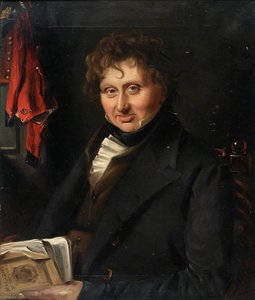
william jones
1746 - 1794
Quick Facts
- Artistic Movement Or Style: Romanticism
- Artists Or Movements Influenced By This Artist:
- John Flaxman
- William Blake
- Artists Who Influenced This Artist:
- Johann Wolfgang von Goethe
- Thomas Jefferson
- Date Of Birth: September 28, 1746
- Date Of Death: April 27, 1794
- Full Name: William Jones
- Nationality: British
- Notable Artworks: ['Death of Nelson']
- Place Of Birth: London, England