

 Preview
 Send
Send Share
Share
 Details

 Download
 Similars
 X-Ray
X-Ray Diaporama
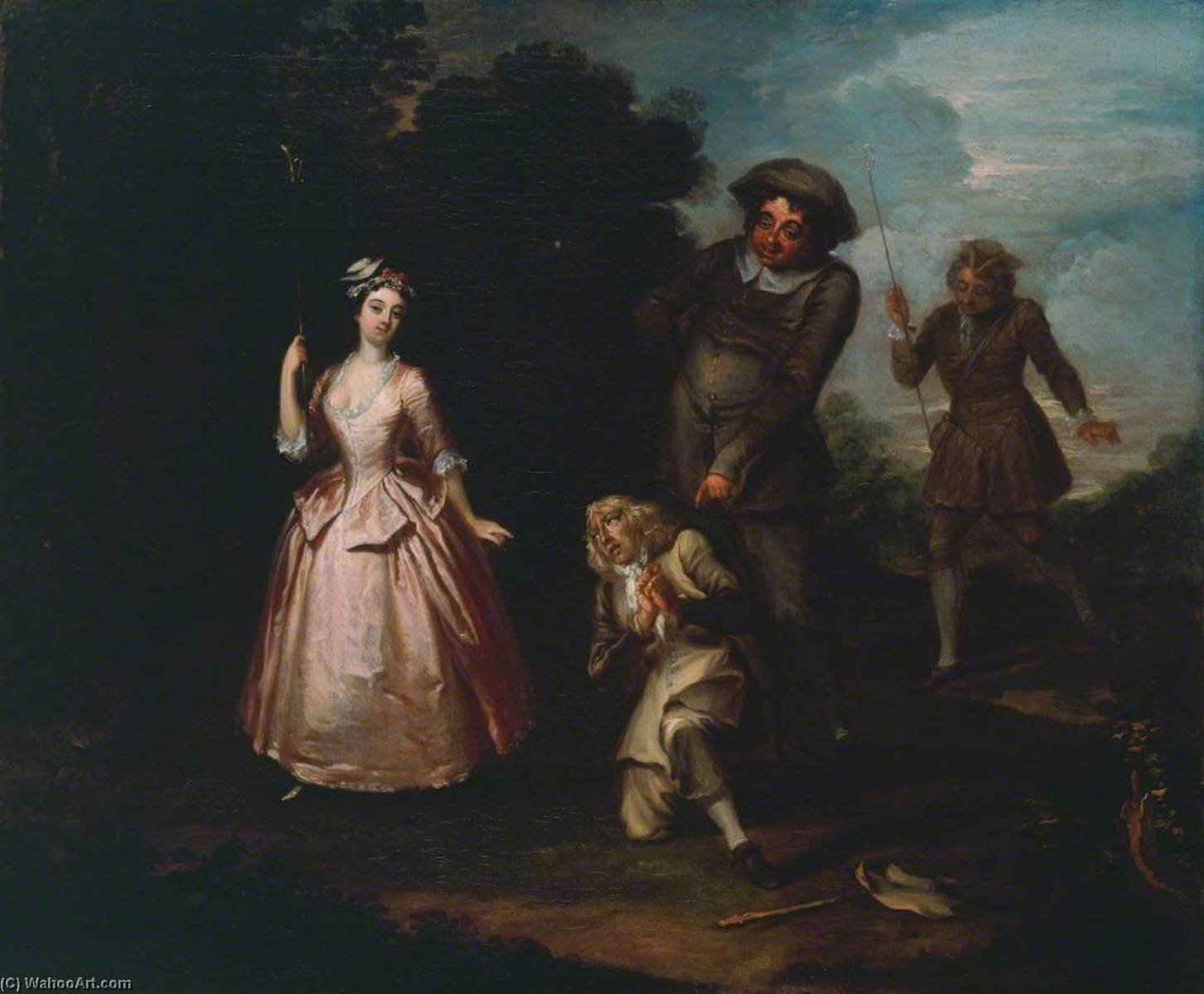
Phillida Rejecting Mopsus and Cimon A Scene from Colley Cibber's 'Damon and Phillida'
 1740
1740 64.0 x 76.0 cm
 Read More
Purchase a high-resolution, enhanced digital image, far superior to the online preview.
Each file is meticulously prepared by our in-house specialists using advanced tools and expert manual retouching. We ensure every image has exceptional clarity, precise color accuracy, and fine detail.
The final file is delivered via email within 72 hours, optimized for immediate use in professional, editorial, and print environments. This is the same quality trusted by top-tier design studios, publishers, and galleries.
Digital Image
Download a high-resolution file for personal display, printing, and creative projects. ( Buy Print Buy Hand Made Painting)
Included in Every Digital Image Order
Expert Digital Delivery, Guaranteed
When you choose ArtsDot.com, you're not just getting an image - you're receiving a professionally enhanced digital artwork, crafted with precision and backed by a satisfaction guarantee. Here's everything that comes with your order, automatically:

Fast Email Delivery
Your high-resolution digital image file will be emailed to you within 72 hours of ordering - ready for immediate use.

AI-Enhanced Digital File
Your artwork is professionally optimized using advanced AI tools and manual editing, ensuring maximum detail, clarity, and color accuracy.

Free Lifetime Re-Delivery
Accidentally deleted or lost your file? No worries - we'll resend it to you anytime, free of charge.

No Import Fees - Ever
Enjoy your artwork instantly with zero customs, duties, or delivery fees - digital downloads are always tax-free.

Color Accuracy Guarantee
We ensure your digital image reflects the original colors as closely as possible using professional tools and color management.

60-Day Satisfaction Guarantee
If you're not satisfied with your digital image, we'll revise it or refund 100% within 60 days - no questions asked.

100% Money-Back Guarantee
Not satisfied? Get a full refund within 60 days of receiving your digital file - no questions asked.

Bulk Order Discounts
Buy 3 images, save 10% - Buy 5, save 15% - Buy 10+, save 20%. Great for creative projects, galleries, and agencies.
Related Artworks








Artist Biography
William Jones (1746–1794): Pioneer of Comparative Linguistics and Artistic Vision
William Jones, born September 28th, 1746, in Westminster, London—the son of Welsh mathematician William Jones—was a figure whose intellectual curiosity transcended national boundaries and profoundly impacted the burgeoning field of comparative linguistics. From his early fascination with languages to his groundbreaking assertion that Sanskrit, Greek, Latin, Persian, Hebrew, and Celtic languages shared an underlying unity, Jones fundamentally reshaped Western scholarship and cemented his legacy as one of the fathers of modern philology.
- Early Life & Education: Jones’s prodigious linguistic abilities emerged early in life. He mastered Greek, Latin, Persian, Arabic, Hebrew, and Chinese at a remarkably young age—a testament to his innate talent and dedication. His father's influence instilled in him a passion for mathematics and scientific inquiry, shaping his intellectual trajectory.
- Academic Career & Royal Society Fellowship: Jones pursued his studies diligently at University College Oxford, earning an M.A. degree in 1773. He was elected Fellow of the Royal Society in 1772—a prestigious honor recognizing his scholarly achievements and demonstrating the esteem with which his peers regarded him—further bolstering his reputation as a brilliant thinker.
- Legal Practice & Judicial Role: Following graduation, Jones embarked on a legal career at Middle Temple, London. He honed his skills in jurisprudence while simultaneously cultivating his intellectual pursuits. In 1783 he was knighted and appointed to a position as a judge in British-controlled India—a pivotal moment that combined his legal expertise with his burgeoning interest in Oriental cultures.
- The Asiatic Society & Linguistic Breakthrough: Recognizing the importance of fostering scholarly exchange, Jones established the Asiatic Society in Calcutta in 1784. This institution served as a hub for research into Asian languages and civilizations—a direct consequence of his revolutionary hypothesis regarding Indo-European linguistic kinship. His assertion that these languages descended from a common ancestor challenged prevailing assumptions about language evolution and sparked intense debate.
- Notable Works & Artistic Patronage: Jones’s artistic sensibilities extended beyond scholarly pursuits. He actively supported the work of prominent artists, notably Burne-Jones and Morris—collaborating on monumental stained glass windows and decorative panels for Whitelands College, London. These projects exemplify his commitment to blending intellectual rigor with aesthetic beauty—a hallmark of the Arts and Crafts movement.
Jones’s death in Calcutta in 1794 marked the end of a remarkable life dedicated to unlocking the secrets of language and culture. However, his contributions to philology endured, establishing him as an intellectual giant whose ideas continue to resonate within the humanities today. His legacy resides not only in his groundbreaking linguistic theories but also in his unwavering belief that art could illuminate the human condition—a conviction that cemented his place among the most influential thinkers of his era.
- Major Achievements: Jones’s assertion of Indo-European linguistic kinship remains one of the most significant breakthroughs in comparative linguistics. His work on Sanskrit, Persian and Hebrew contributed to a deeper understanding of ancient civilizations and their cultural connections.
- Influence & Legacy: Jones's ideas profoundly impacted subsequent scholars—including Friedrich Nietzsche and Karl Marx—who recognized the transformative potential of linguistic analysis. He championed the Arts and Crafts movement, fostering collaboration between artists and intellectuals.
His artistic patronage helped to shape the visual landscape of Victorian London, demonstrating his conviction that intellectual pursuits could inspire creative expression. William Jones’s life exemplifies the pursuit of knowledge across disciplines—a testament to the power of curiosity and imagination in shaping human understanding.
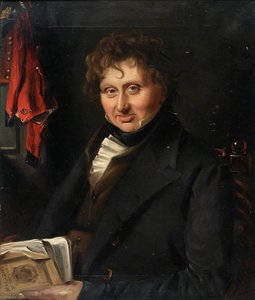
william jones
1746 - 1794
Quick Facts
- Artistic Movement Or Style: Romanticism
- Artists Or Movements Influenced By This Artist:
- John Flaxman
- William Blake
- Artists Who Influenced This Artist:
- Johann Wolfgang von Goethe
- Thomas Jefferson
- Date Of Birth: September 28, 1746
- Date Of Death: April 27, 1794
- Full Name: William Jones
- Nationality: British
- Notable Artworks: ['Death of Nelson']
- Place Of Birth: London, England

