 Preview
 Send
Send Share
Share
 Details

 Download
 Similars
 X-Ray
X-Ray Diaporama
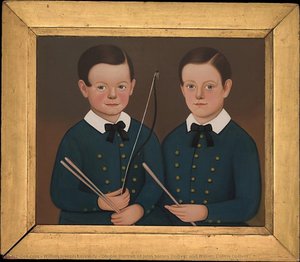
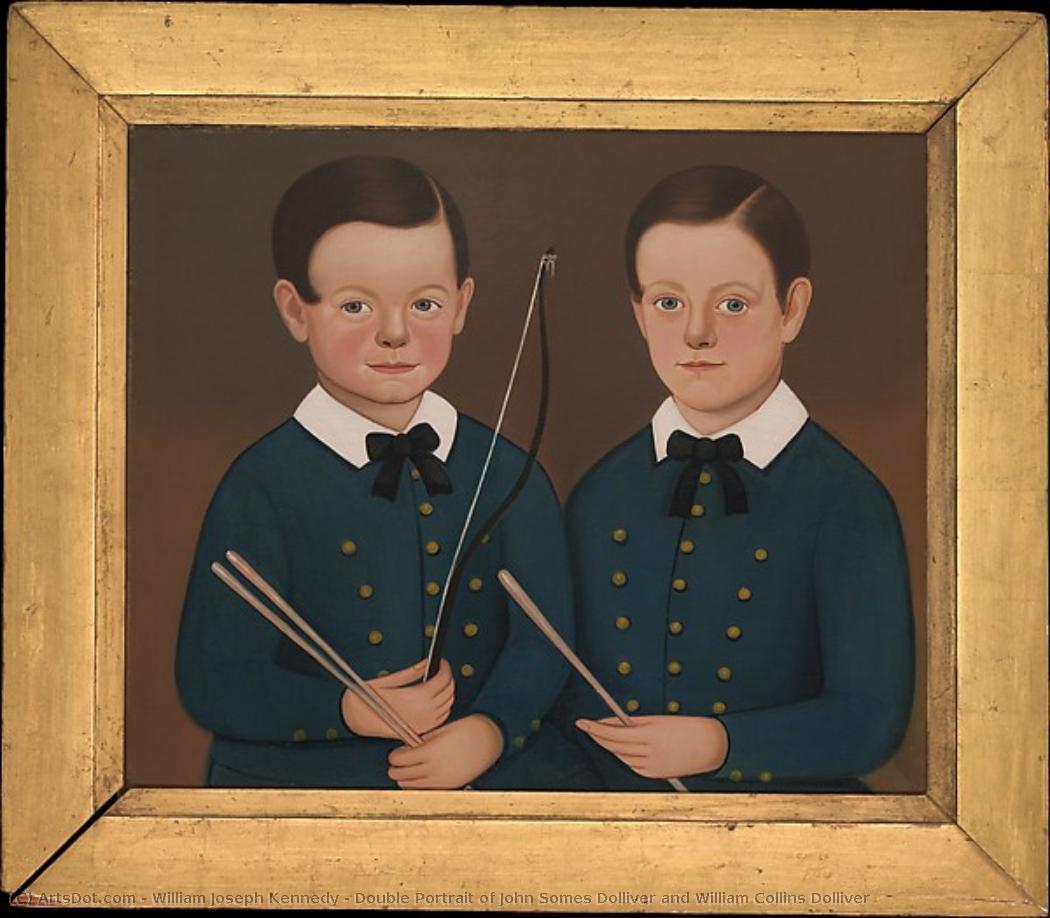
Double Portrait of John Somes Dolliver and William Collins Dolliver
 Oil On Canvas
- WallArt
- Contemporary Realism
 1848
1848 51.0 x 61.0 cm
 Metropolitan Museum of Art
 Read More
Hand Made Oil Reproduction
Hand-painted oil on canvas in your size and frame, made to order by our artists. ( Buy Print Buy Image)




P118B $10

P118H $10

P118W $10

P438Z $10

P508JH $12

P508YH $12

P805H $10

P805Z $10

P919BZ $10

P919G $10

P919XJ $10

P959ZH $10

P968JZ $12

W106C $8

W218G $10

W218JH $8

W218Y $10

W307PJ $10

W316G $10

W316PJ $8

W316Y $10

W398PJ $8

W4111J $10

W500HY $15

W500JH $15

W692G $12

W849H $8

W940BG $15

W953PJ $8




Pick from our preset sizes that match the artwork's original proportions.

You may enter your own dimensions to fit a specific frame or space. If your selected size does not match the original image's proportions, we will either crop the artwork or extend the painting with additional hand-painted elements. A digital mockup will be sent for your approval before production begins.
Please note that the on-screen preview does not reflect the actual cropping or extension. Only the mockup will accurately show the final composition.
While custom sizes are available, we recommend selecting a dimension from the predefined list to preserve the original proportions.
After order, ArtsDot.com team will email client for instructions and provide a mockup preview
Worldwide Delivery () in 3/4 weeks instead of standard 5 weeks. (1 September). No compromise on quality.

Free Worldwide Express Shipping

High-Quality Linen Canvas

Full Shipping Insurance

Customs Tax Refund Guarantee

True Color Matching Guarantee

60-Day Return Policy (Defects Only)

100% Money-Back Guarantee

Bulk Discount Offer
 Glass option is only available in size under 110 CM

Double Portrait of John Somes Dolliver and William Collins Dolliver
Reproduction Medium
Reproduction Size
-


Total Price
$ 288
A Quiet Dignity Amidst Linear Precision: Examining William Kennedy’s Double Portrait of John Somes Dolliver and William Collins Dolliver
William Joseph Kennedy's "Double Portrait of John Somes Dolliver and William Collins Dolliver," completed in 1848, transcends mere representation; it embodies a profound stillness within the framework of American Romanticism. Painted by this Albany-born artist, the portrait captures two young boys—likely identical twins—in an arresting tableau that speaks volumes about Victorian sensibilities and the enduring fascination with familial bonds. More than just depicting faces on canvas, Kennedy meticulously crafted an image imbued with symbolic resonance and executed with a distinctive artistic style that distinguishes it from its contemporaries. The painting’s aesthetic is immediately striking due to its deliberate simplicity. Kennedy eschewed elaborate ornamentation or dramatic chiaroscuro—the theatrical use of light and shadow—favoring instead a remarkably flat, linear approach reminiscent of William Matthew Prior, a fellow artist with whom he maintained an influential association. This stylistic choice isn't merely pragmatic; it reflects the broader artistic currents of the era, prioritizing clarity and precision over opulent visual effects. The muted palette – dominated by shades of green and brown – contributes to an atmosphere of quiet dignity, mirroring the solemn expressions etched upon the boys’ faces. Lines delineate every contour of their features with unwavering accuracy, emphasizing their likeness and conveying a sense of contemplative seriousness. Geometric shapes—squares for their uniforms and rounded forms for their faces—provide structural stability while subtly reinforcing the overarching theme of unity. Historical Context illuminates the significance of Kennedy's work. The portrait emerged during a period marked by burgeoning industrialization and societal upheaval in America, yet it resists the prevailing trends toward grand narratives and heroic figures. Instead, Kennedy focuses on capturing the essence of boyhood—the innocence and vulnerability inherent in youth—against a backdrop of Victorian moral values. Gloucester, Massachusetts, where the Dolliver twins resided, was a hub of Irish-American culture during this time, and Kennedy’s depiction subtly acknowledges this heritage through the boys' attire and demeanor. The inclusion of drumsticks and a toy whip serves as poignant reminders of childhood playfulness juxtaposed with maturity—a visual metaphor for the passage of time and the complexities of human experience. Beyond its stylistic merits and historical context, “Double Portrait” possesses an undeniable emotional impact. The artist’s careful attention to detail – from the meticulously rendered eyebrows to the subtle creases around the mouths – invites viewers into a realm of psychological introspection. There's a palpable sense of melancholy woven throughout the composition, hinting at unspoken anxieties and perhaps reflecting Kennedy's own personal reflections on family and memory. The painting isn’t merely a visual record; it’s an invitation to contemplate themes of identity, connection, and the enduring quest for inner peace—qualities that continue to resonate with audiences today. Ultimately, William Kennedy’s “Double Portrait” stands as a testament to the power of understated artistry. Its meticulous technique, combined with its evocative symbolism and grounding in Victorian culture, elevates it beyond a simple depiction of two boys into a timeless meditation on human nature itself. It's a piece that rewards repeated viewing—a quiet masterpiece destined to inspire admiration for generations to come.Related Artworks


Artist Biography
William Joseph Kennedy: A Chronicle of Albany and the American Soul
William Joseph Kennedy, born in Albany, New York, in 1928, wasn’t merely a novelist; he was a chronicler of a specific place—a gritty, often overlooked corner of America—and through that lens, a profound explorer of the human condition. His work, deeply rooted in the history and folklore of his hometown, transcends simple regionalism to become a resonant meditation on family, memory, loss, and the enduring struggle for redemption. Kennedy’s legacy isn't defined by grand narratives or sweeping historical events, but rather by the intimate portraits he crafted—characters wrestling with their pasts, haunted by secrets, and striving, however imperfectly, toward some semblance of grace.
Kennedy’s early life was inextricably linked to the vibrant, often turbulent, Irish-American community that shaped Albany. His family history, tracing back to County Wexford, Ireland, instilled a deep appreciation for storytelling and a keen awareness of the immigrant experience. This heritage, coupled with his upbringing in a city grappling with its own complex social dynamics—a blend of old money, political corruption, and working-class struggles—provided fertile ground for his literary explorations. His father, William Kennedy Sr., a prominent businessman and politician, instilled in him a respect for the power of influence and the intricacies of human relationships within the corridors of power – themes that would later permeate his own writing.
Initially pursuing journalism, Kennedy honed his craft as a reporter for various New York newspapers. This experience proved invaluable, providing him with an understanding of narrative structure, investigative techniques, and the art of capturing authentic voices. However, it was the pull of fiction—a desire to delve deeper into the psychological landscapes of his characters—that ultimately led him to embrace the novel as his primary medium. His early works, such as *The Ink Truck* (1969) and *Legs* (1975), established his signature style: a blend of sharp social commentary, lyrical prose, and a willingness to confront uncomfortable truths about American life.
The Albany Cycle: A Regional Tapestry
Kennedy’s most celebrated achievement is undoubtedly the “Albany Cycle”—a series of novels that collectively form a sprawling, multi-generational saga centered on the Phelan family. This fictional dynasty, rooted in the city's history and populated by a cast of unforgettable characters, serves as a microcosm for the broader American experience. *Billy Phelan’s Greatest Game* (1978) introduced readers to this world, followed by *Roscoe* (2002), which explored the dark underbelly of Albany’s political landscape, and *Changó’s Beads and Two-Tone Shoes* (2011), a poignant reflection on family secrets and the enduring power of memory.
What distinguishes the Albany Cycle is Kennedy's meticulous attention to detail—his ability to evoke the sights, sounds, and smells of Albany with remarkable precision. He doesn’t shy away from depicting the city’s flaws—its corruption, its poverty, its social divisions—but he also celebrates its resilience, its spirit, and its unique cultural identity. The cycle is not simply a chronicle of events; it's an exploration of how history shapes individual lives and how the past continues to haunt the present.
Literary Influences and Style
Kennedy’s writing style is characterized by its lyrical prose, its sharp wit, and its unflinching honesty. He draws inspiration from a wide range of sources—from the works of Ernest Hemingway and William Faulkner to the oral traditions of his Irish-American heritage. Faulkner's exploration of Southern identity and the weight of history profoundly influenced Kennedy’s approach to storytelling, particularly in *Ironweed*.
However, Kennedy’s style is distinctly his own—a blend of realism and surrealism, of social commentary and psychological insight. He frequently employs stream-of-consciousness narration, allowing readers access to the inner thoughts and feelings of his characters. His use of symbolism—particularly the recurring motif of water—adds layers of meaning to his narratives, suggesting themes of purification, renewal, and the cyclical nature of life.
Critical Acclaim and Lasting Legacy
Despite initial challenges in securing publication for his novels, Kennedy’s work eventually gained widespread recognition. *Ironweed* (1983), a sprawling epic about an aging alcoholic haunted by his past, won him the Pulitzer Prize for Fiction—a testament to its literary merit and its profound exploration of human suffering. The novel was adapted into a film in 1987, starring Daniel Day-Lewis.
Kennedy’s influence extends far beyond the realm of fiction. His work has been praised for its insightful portrayal of American society, its evocative depiction of Albany, and its unflinching examination of human nature. He is remembered as a master storyteller—a writer who possessed a rare gift for capturing the complexities of life in all its beauty and ugliness. His novels continue to resonate with readers today, offering a timeless meditation on family, memory, and the enduring search for meaning in a world often marked by loss and disappointment.
william joseph kennedy
1928 - , United States of America
Quick Facts
- Artistic Movement Or Style: Southern Literature, American Realism
- Artists Or Movements Influenced By This Artist:
- Yoknapatawpha County
- Southern Gothic
- Artists Who Influenced This Artist:
- Faulkner
- Hunter S. Thompson
- Date Of Birth: January 16, 1928
- Full Name: William Joseph Kennedy
- Nationality: American
- Notable Artworks:
- Ironweed
- Legs
- Billy Phelan’s Greatest Game
- O Albany!
- Quinn’s Book
- Very Old Bones
- The Flaming Corsage
- Roscoe
- Changó’s Beads
- Place Of Birth: Albany, United States
Related Articles
Grant Wood & American Regionalism: Identity, Myth & the Rural Landscape
Explore the world of Grant Wood & American Regionalism with ArtsDot. Discover the symbolism behind 'American Gothic', recurring themes, and the movement's lasting impact on art history. High-quality reproductions available.
American Realism's Defining Works: 10 Masterpieces for Your Home
Explore 10 defining American Realism masterpieces – Hopper, Homer & more. Discover the stories behind these iconic paintings and bring timeless art to your home with ArtsDot's museum-quality reproductions. Explore the full collection online.

The Enduring Legacy of Oil on Canvas: Technique, History & Aesthetic Impact
Explore the rich history & techniques of oil painting – from Renaissance masters to Impressionism. Discover pigments, layering methods, and why this timeless medium endures. Expert insights for artists & art enthusiasts.

Oil on Canvas: A Historical & Technical Exploration of a Timeless Artistic Medium
Explore the rich history & enduring techniques of oil painting on canvas. Discover the science behind its longevity, conservation practices, and contemporary relevance. Expert insights for art enthusiasts.
Alfred Jacob Miller: Chronicling the American West Through Artistic Observation & Narrative
Explore the captivating art of Alfred Jacob Miller, chronicler of the American West. Discover his iconic paintings, techniques & lasting legacy – a valuable addition to any serious collection. Learn more at ArtsDot.