 Preview
 Send
Send Share
Share
 Details

 Download
 Similars
 X-Ray
X-Ray Diaporama
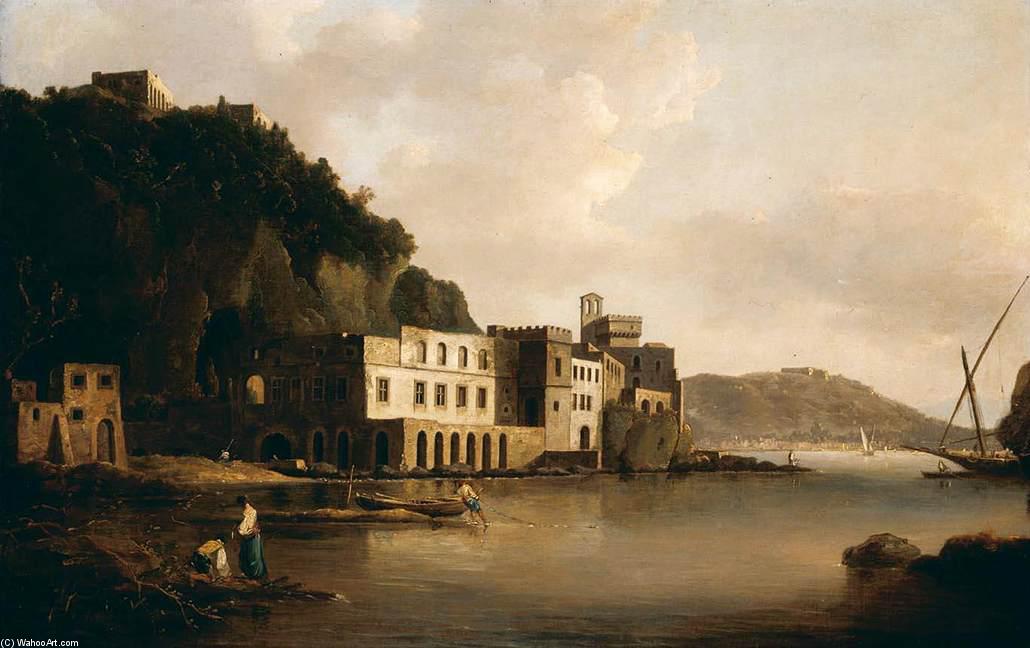
View of the Bay of Naples from Posillipo
 1777
1777 65.0 x 100.0 cm
 Read More
Hand Made Oil Reproduction
Hand-painted oil on canvas in your size and frame, made to order by our artists. ( Buy Print Buy Image)




































Pick from our preset sizes that match the artwork's original proportions.

You may enter your own dimensions to fit a specific frame or space. If your selected size does not match the original image's proportions, we will either crop the artwork or extend the painting with additional hand-painted elements. A digital mockup will be sent for your approval before production begins.
Please note that the on-screen preview does not reflect the actual cropping or extension. Only the mockup will accurately show the final composition.
While custom sizes are available, we recommend selecting a dimension from the predefined list to preserve the original proportions.
After order, ArtsDot.com team will email client for instructions and provide a mockup preview
Worldwide Delivery () in 3/4 weeks instead of standard 5 weeks. (7 September). No compromise on quality.

Free Worldwide Express Shipping

High-Quality Linen Canvas

Full Shipping Insurance

Customs Tax Refund Guarantee

True Color Matching Guarantee

100-Day Return Policy (Defects Only)

100% Money-Back Guarantee

Bulk Discount Offer
 Glass option is only available in size under 110 CM

View of the Bay of Naples from Posillipo
Reproduction Medium
Reproduction Size
-


Total Price
$ 263
Related Artworks
Artist Biography
Philip James de Loutherbourg: A Pioneer of Theatrical Illusion and Landscape Painting
Born in Strasbourg in 1740, Philip James de Loutherbourg’s life was a fascinating blend of artistic pursuits, theatrical innovation, and scientific curiosity. His early training under Carle van Loo and Giovanni Battista Casanova in Paris laid the foundation for his skills as a landscape painter, but it was his subsequent move to London in 1771 that truly defined his legacy. Loutherbourg arrived at a pivotal moment in British theatre, eager to revolutionize stage design and bring a new level of realism and spectacle to the Drury Lane Theatre under the direction of David Garrick.
Initially, Loutherbourg’s work focused on capturing the grandeur of English landscapes – rolling hills, dramatic coastlines, and charming villages. His paintings, though sometimes criticized for their theatricality, possessed a vibrant energy and an acute awareness of “Picturesque” and “Sublime” qualities, offering a refreshing alternative to the prevailing Italianate style dominating the Royal Academy exhibitions. He travelled extensively throughout England and Wales, meticulously documenting these scenes with a keen eye for detail and a sensitivity to light and atmosphere. His work wasn’t merely representational; it sought to evoke emotion and transport the viewer to another world.
The Eidophusikon: A Revolutionary Theatrical Innovation
Loutherbourg's most significant contribution was undoubtedly the creation of the *Eidophusikon* – a theatrical entertainment that debuted in 1781. This ambitious project wasn’t simply a play; it was an immersive experience designed to simulate reality through a combination of painted backdrops, mechanical devices, and carefully orchestrated lighting effects. Loutherbourg meticulously recreated historical events, battles, and even fantastical scenes, employing innovative techniques like rotating stages, projecting images onto screens, and using mirrors to create illusions of depth and perspective. The *Eidophusikon* was a resounding success, captivating audiences with its unprecedented realism and spectacle – effectively pioneering the concept of immersive theatre long before it became commonplace.
Following Garrick’s retirement in 1776, Loutherbourg continued his theatrical endeavors under Richard Brinsley Sheridan. However, by 1781, he decided to pursue a new artistic direction, abandoning the stage for a period and dedicating himself to scientific pursuits. This shift led him to develop instruments for astronomical observation and other scientific applications, demonstrating a remarkable intellectual curiosity alongside his artistic talents.
A Return to Painting and Historical Subjects
After a hiatus of several years, Loutherbourg returned to painting in the 1780s, focusing on historical subjects – battle scenes, biblical narratives, and portraits. His later works exhibited a more mature style, characterized by greater compositional control and a refined use of color. He also became involved with the controversial occultist Count Cagliostro, a period that added an element of intrigue to his life. Despite facing public opposition during his attempts at faith-healing in 1788–9, he ultimately returned to art, producing a series of engravings documenting his work – *The Picturesque Scenery of Great Britain* (1801) and *The Romantic and Picturesque Scenery of England and Wales* (1805).
Legacy and Influence
Philip James de Loutherbourg’s legacy extends far beyond his individual paintings. He is remembered as a pivotal figure in the history of theatrical design, whose innovations profoundly influenced the development of stagecraft. His pioneering use of illusion and spectacle paved the way for future generations of theatre designers and set artists. Furthermore, his meticulous documentation of English landscapes contributed to a growing appreciation for the beauty and diversity of the British countryside. He remains an important figure in art history, representing a fascinating intersection of artistic vision, scientific inquiry, and theatrical innovation.

william marlow
1740 - 1813 , United Kingdom
Quick Facts
- Artistic Movement Or Style: Stage design, landscape
- Artists Or Movements Influenced By This Artist:
- Richard Brinsley Sheridan
- Picturesque movement
- Artists Who Influenced This Artist:
- Carle van Loo
- Giovanni Battista Casanova
- Date Of Birth: 1740
- Date Of Death: 1813
- Full Name: Philip James de Loutherbourg
- Nationality: French
- Notable Artworks:
- Eidophusikon designs
- Royal Academy landscapes
- Place Of Birth: Strasbourg, France