 Preview
 Send
Send Share
Share
 Details

 Download
 Similars
 X-Ray
X-Ray Diaporama
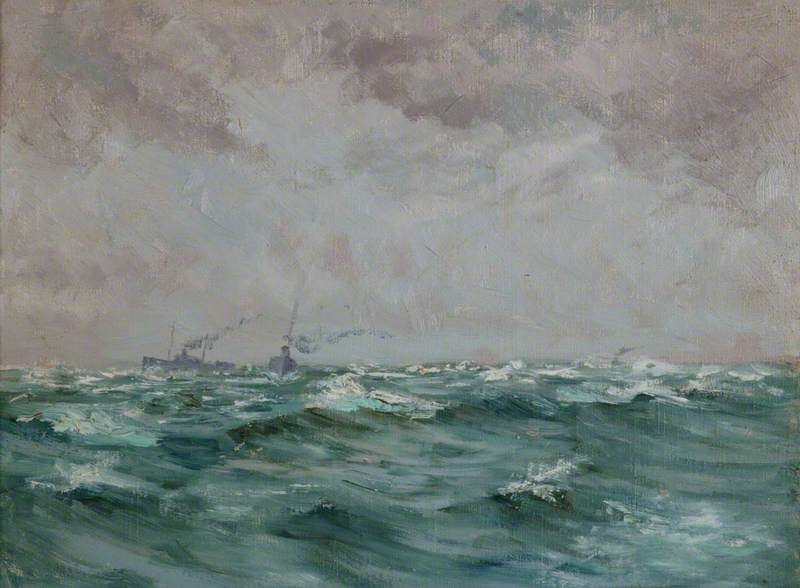
A Convoy in the Mediterranean, April 1918
 1918
1918 30.0 x 40.0 cm
 Read More
Giclée / Art Print
Museum-quality giclée or canvas print with fast production and flexible finish options. ( Buy Hand Made Painting Buy Image)




































Pick from our preset sizes that match the artwork's original proportions.

You may enter your own dimensions to fit a specific frame or space. If your selected size does not match the original image's proportions, we will either crop the artwork or extend the image with a mirrored or solid-fill edge. A digital mockup will be sent for your approval before production begins.
Please note that the on-screen preview does not reflect the actual cropping or extension. Only the mockup will accurately show the final composition.
While custom sizes are available, we recommend selecting a dimension from the predefined list to preserve the original proportions.
Worldwide Delivery () in 2 weeks instead of standard 4/5 weeks. (26 August)

Free Worldwide Express Shipping

High-Quality Linen Canvas

Full Shipping Insurance

Customs Tax Refund Guarantee

True Color Matching Guarantee

60-Day Return Policy (Defects Only)

100% Money-Back Guarantee

Bulk Discount Offer
 Glass option is only available in size under 110 CM

A Convoy in the Mediterranean, April 1918
Giclée / Art Print
Reproduction Size
-


Total Price
$ 63
Related Artworks










Artist Biography
A Life Painted in Landscapes and Maritime Echoes: William Maxwell Reekie
William Maxwell Reekie, a name perhaps less celebrated than some of his contemporaries, nevertheless occupies a significant niche within the British landscape painting tradition, particularly noted for his evocative depictions of historical scenes and atmospheric maritime subjects. Born in Manchester in 1869 to Scottish parents, Reekie’s artistic journey began amidst the burgeoning industrial heartland of England, yet his gaze often turned towards more pastoral and historically resonant vistas. He received early training under Tom Mostyn and Walter Sickert, figures who would undoubtedly influence his approach to realism and observation, though Reekie ultimately forged a distinct path characterized by a romantic sensibility and meticulous attention to detail. While details of his formative years remain somewhat scarce, it’s clear that he developed a deep connection with the landscapes surrounding Manchester, as well as an enduring fascination with Britain's naval history.Early Influences and Artistic Development
Reekie exhibited consistently between 1893 and 1933, establishing himself within the artistic circles of his time. His early works demonstrate a clear grounding in traditional landscape painting techniques, favoring a naturalistic style that captured the subtleties of light and atmosphere. However, he wasn’t content merely to replicate what he saw; Reekie infused his paintings with a sense of narrative, often choosing subjects steeped in historical significance. This inclination towards history is particularly evident in his depictions of castles like Caerlaverock Castle, rendered not simply as architectural structures but as embodiments of time and the stories they held within their walls. The influence of Sickert’s focus on everyday life can be seen in Reekie's ability to imbue even grand historical scenes with a sense of intimacy and human presence. He wasn’t solely focused on landscapes; his maritime paintings, particularly those documenting World War I vessels, reveal a keen eye for technical accuracy combined with an emotional understanding of the era’s anxieties and triumphs.Themes of History and National Identity
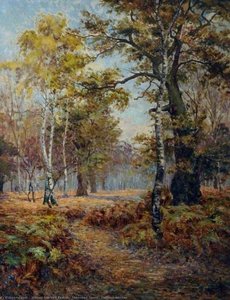
- Sherwood Forest: Reekie's depictions of Sherwood Forest are not simply idyllic scenes but evoke the legends of Robin Hood, tapping into a deep vein of English folklore and national identity.
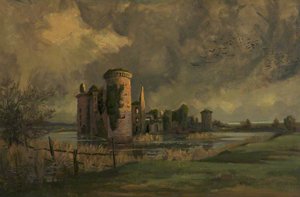
- Caerlaverock Castle: His paintings of Caerlaverock Castle in Scotland showcase his skill in rendering architectural detail alongside atmospheric effects, creating images that feel both historically accurate and emotionally resonant. The castle becomes a symbol of Scottish heritage and resilience.
- WWI Maritime Scenes: Reekie’s wartime maritime paintings are particularly compelling. They move beyond simple documentation to convey the weight of conflict and the bravery of those at sea, offering a poignant glimpse into a pivotal moment in British history.
Recognition and Legacy
William Maxwell Reekie was awarded the OBE (Order of the British Empire), a testament to his contributions to the artistic landscape of Britain. While he may not be as widely recognized today as some of his more avant-garde contemporaries, his work continues to resonate with those who appreciate meticulous technique, atmospheric depth, and a strong sense of historical context. A portrait of Reekie himself, created by Albert Vincent Reade in 1931, offers a fascinating glimpse into the man behind the paintings – a thoughtful figure embodying the spirit of his time. His legacy lies in his ability to seamlessly blend realism with romantic sensibility, creating images that are both visually compelling and emotionally evocative. He stands as a reminder that art can be a powerful vehicle for preserving memory, celebrating heritage, and connecting us to the stories of the past. His paintings offer a window into a Britain grappling with its identity, its history, and its place in the world.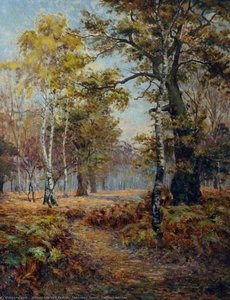
Quick Facts
- Artistic Movement Or Style: Landscape, Maritime
- Artists Who Influenced This Artist:
- Tom Mostyn
- Walter Sickert
- Date Of Death: 1948
- Full Name: William Maxwell Reekie
- Nationality: British
- Notable Artworks:
- Sherwood Forest
- Caerlaverock Castle
- Place Of Birth: Manchester, UK