

 Preview
 Send
Send Share
Share
 Details

 Download
 Similars
 X-Ray
X-Ray Diaporama
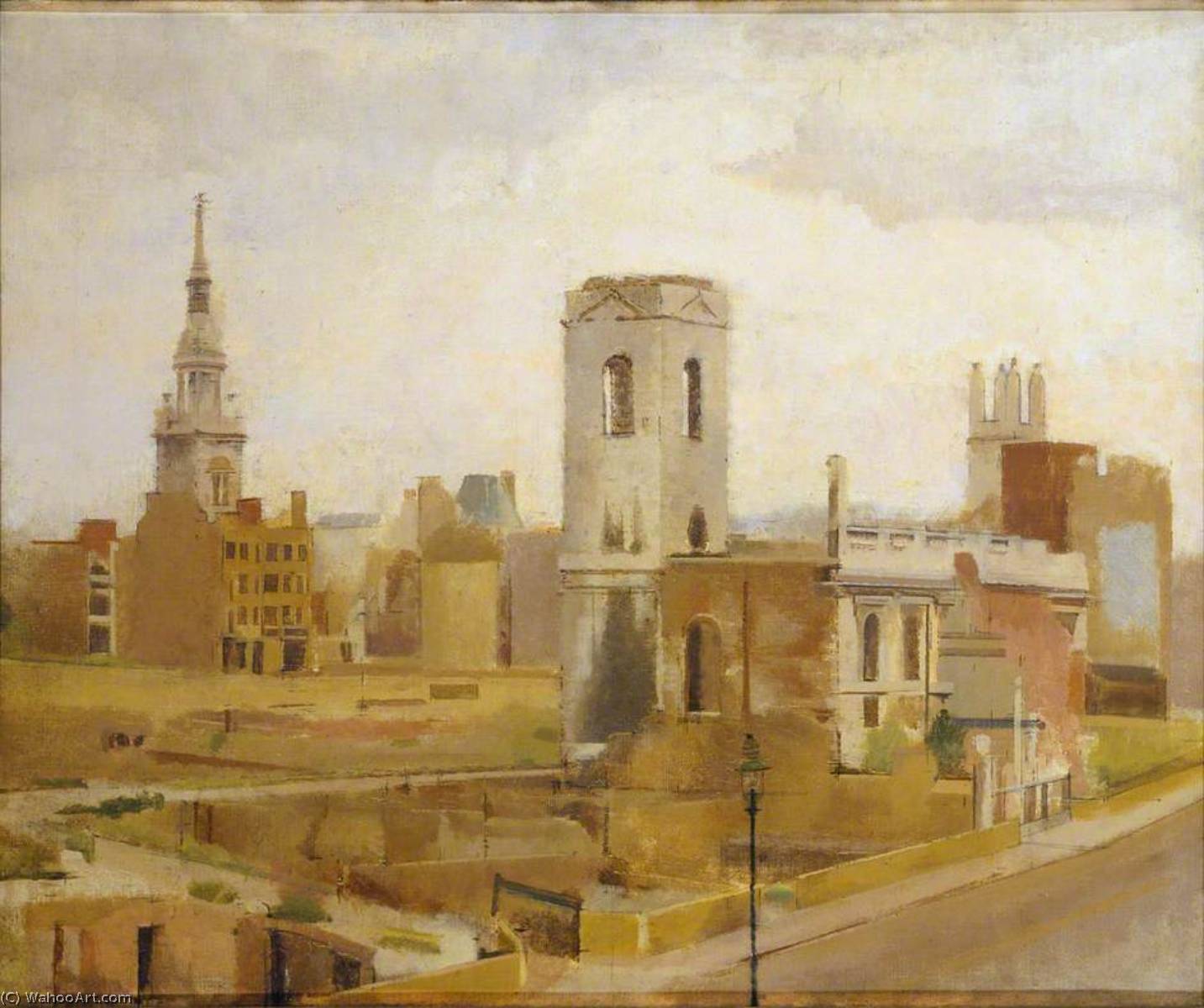
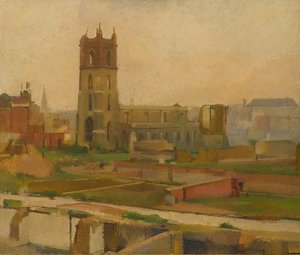
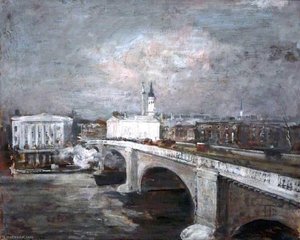
London Bombed Site 1946 (St Nicholas Coln Abbey and Bow Church)
 Acrylic On Canvas
- WallArt
- Contemporary Realism
 1946
1946 51.0 x 61.0 cm
 British Council Collection
 Read More
Purchase a high-resolution, enhanced digital image, far superior to the online preview.
Each file is meticulously prepared by our in-house specialists using advanced tools and expert manual retouching. We ensure every image has exceptional clarity, precise color accuracy, and fine detail.
The final file is delivered via email within 72 hours, optimized for immediate use in professional, editorial, and print environments. This is the same quality trusted by top-tier design studios, publishers, and galleries.
Digital Image
Download a high-resolution file for personal display, printing, and creative projects. ( Buy Print Buy Hand Made Painting)
Included in Every Digital Image Order
Expert Digital Delivery, Guaranteed
When you choose ArtsDot.com, you're not just getting an image - you're receiving a professionally enhanced digital artwork, crafted with precision and backed by a satisfaction guarantee. Here's everything that comes with your order, automatically:

Fast Email Delivery
Your high-resolution digital image file will be emailed to you within 72 hours of ordering - ready for immediate use.

AI-Enhanced Digital File
Your artwork is professionally optimized using advanced AI tools and manual editing, ensuring maximum detail, clarity, and color accuracy.

Free Lifetime Re-Delivery
Accidentally deleted or lost your file? No worries - we'll resend it to you anytime, free of charge.

No Import Fees - Ever
Enjoy your artwork instantly with zero customs, duties, or delivery fees - digital downloads are always tax-free.

Color Accuracy Guarantee
We ensure your digital image reflects the original colors as closely as possible using professional tools and color management.

60-Day Satisfaction Guarantee
If you're not satisfied with your digital image, we'll revise it or refund 100% within 60 days - no questions asked.

100% Money-Back Guarantee
Not satisfied? Get a full refund within 60 days of receiving your digital file - no questions asked.

Bulk Order Discounts
Buy 3 images, save 10% - Buy 5, save 15% - Buy 10+, save 20%. Great for creative projects, galleries, and agencies.
London Bombed Site 1946 (St Nicholas Coln Abbey and Bow Church) – A Reflection on Resilience
William Menzies Coldstream’s “London Bombed Site 1946” isn't merely a depiction of devastation; it’s a profound meditation on memory, faith, and the enduring spirit of London itself. Painted in 1946, shortly after the Blitz—the relentless aerial bombardment campaign that scarred Britain during World War II—this monumental canvas transcends mere documentation to become an emblem of resilience and contemplation. Coldstream, a staunch advocate for observational art and a formative influence on British art education, meticulously crafted this piece using oil paint on canvas, prioritizing accuracy and detail alongside a subtle emotional resonance. The painting’s composition immediately draws the eye to St Nicholas Coln Abbey and Bow Church, two venerable ecclesiastical buildings situated amidst the rubble of wartime London. The tower of St Nicholas dominates the skyline, bearing visible scars from explosions—a stark reminder of the destructive force unleashed upon the city. Yet, despite this physical ruin, Coldstream portrays the churches bathed in a diffused light that suggests an unwavering presence, symbolizing faith’s steadfastness amidst chaos. This deliberate use of illumination isn't gratuitous; it speaks to the artist’s belief in capturing not just what is seen but also what feels—the intangible essence of place and history. Coldstream’s technique exemplifies the Euston Road School’s approach to realism, characterized by painstaking observation and a commitment to portraying subjects with uncompromising honesty. He eschewed idealized representations, opting instead for a nuanced rendering of textures and surfaces – the crumbling stone of the buildings, the weathered brickwork—to convey the palpable atmosphere of post-war London. The artist's meticulous attention to detail extends beyond mere visual accuracy; it’s infused with a contemplative spirit that invites viewers to consider the profound impact of trauma on architectural spaces and human experience. The painting’s symbolism is layered and deliberate. The bombed churches stand as symbols of enduring faith and spiritual fortitude, resisting destruction despite facing unimaginable hardship. They represent not only physical structures but also the resilience of the human spirit—the ability to persevere through adversity and find solace in beauty even amidst ruin. Furthermore, the inclusion of a clock face adds another dimension to the artwork’s narrative. Time itself is rendered as both destructive (representing the devastation of war) and restorative (suggesting the passage of time heals wounds), reinforcing Coldstream's overarching theme of continuity and remembrance. “London Bombed Site 1946” remains a powerful testament to Coldstream’s artistic vision and his unwavering dedication to capturing the complexities of human emotion within the framework of observational art. It serves as an enduring reminder that even in the face of profound loss, beauty—and faith—can endure, transforming destruction into contemplation and prompting viewers to reflect on the significance of history and memory.Related Artworks

Artist Biography
A Life Dedicated to Observation: The World of William Menzies Coldstream
Sir William Menzies Coldstream, a pivotal figure in 20th-century British art, wasn’t merely a painter; he was an advocate for seeing—for a rigorous, analytical approach to representing the world around us. Born in the quiet Northumberland village of Belford in 1908, his early life shifted towards the bustling energy of London, where he received a private education before embarking on formal artistic training at the Slade School of Fine Art from 1926 to 1929. This foundational period instilled within him not just technical skill, but a commitment to direct observation that would define his entire career. Coldstream’s path wasn't confined to the easel; it was interwoven with documentary filmmaking, progressive social movements, wartime service, and ultimately, a profound influence on art education in Britain. He embodied a rare combination of artistic dedication and institutional leadership, leaving an indelible mark on the landscape of British art.From Documentary Film to Euston Road Realism
The 1930s proved to be a period of intense exploration for Coldstream. After his time at the Slade, he became involved with various artistic circles, joining both the London Artists' Association in 1931 and the London Group two years later—demonstrating an eagerness to engage with contemporary art discourse. A brief but significant stint with the GPO Film Unit (1934-1937), working alongside luminaries like John Grierson, W. H. Auden, Benjamin Britten, and Barnett Freedman, exposed him to the power of visual storytelling and a broader cultural landscape. This experience undoubtedly informed his later artistic practice, sharpening his eye for detail and composition. However, it was the co-founding of the Euston Road School in 1937 with Graham Bell, Victor Pasmore, and Claude Rogers that truly solidified Coldstream’s artistic direction. Initially flirting with objective abstraction, the school quickly pivoted towards a renewed emphasis on realism—a return to painting directly from life, rejecting the prevailing abstract trends. This commitment is powerfully exemplified in his portrait of Inez Spender (later Inez Pearn), a work requiring an astonishing forty sittings. The resulting canvas isn’t simply a likeness; it's a meticulous study of form and character, lauded as a “masterpiece of analytical realism” for its precision and unwavering dedication to capturing the subject with unflinching honesty. Coldstream’s socialist ideals also played a role during this period, supporting the Mass Observation social survey of Britain and participating in their 1938 painting trip to Bolton—a testament to his desire for art that engaged with and represented everyday life.Wartime Service and the Analytical Eye
The outbreak of World War II dramatically altered Coldstream’s trajectory, as it did for so many artists of his generation. He enlisted in the Royal Artillery before transferring to the Royal Engineers, finding himself employed as a camouflage officer from 1940-1943. This role, while practical, proved surprisingly relevant to his artistic practice. The need for precise observation and representation of form—skills honed through years of dedicated study—were directly applicable to the task of deceiving the enemy. In 1943, he accepted a full-time commission from the War Artists' Advisory Committee (WAAC), taking him to Cairo and Italy. There, he produced portraits of individuals within an Indian transport unit and documented architectural subjects in Capua, Rimini, and Florence. However, Coldstream’s methodical approach meant that his wartime output was relatively small—only nine pictures were completed during this period. This wasn't a matter of lack of effort, but rather a reflection of his unwavering commitment to quality over quantity, to ensuring each work possessed the analytical rigor he demanded of himself.Shaping Future Generations: A Legacy in Art Education
Following the war, Coldstream transitioned into a prominent role in art education, becoming a transformative force in shaping future generations of artists. He served as a visiting teacher at Camberwell School of Arts and Crafts before ascending to the position of Professor there, and then, in 1949, he became Principal and Professor of Fine Art at the Slade School—the very institution that had nurtured his own talent decades earlier. His leadership was marked by an unwavering belief in the importance of direct observation and rigorous training. Perhaps his most significant contribution to art education came as Chairman of the National Advisory Council on Art Education (1958-1971), where he spearheaded the creation of the “Coldstream Report” (1960). This landmark document outlined requirements for a new Diploma in Art and Design (Dip.A.D.), leading to increased recognition and degree status for art school courses—a pivotal moment in elevating the standing of artistic education within Britain. Beyond this, he held significant administrative positions, including Vice Chairman of the Arts Council, director of the Royal Opera House, Covent Garden, and trustee of the National Gallery, further solidifying his influence on the cultural landscape.The Enduring Power of Direct Observation
William Menzies Coldstream’s artistic style was characterized by a relentless pursuit of accuracy and an unwavering commitment to painting directly from life. He famously stated, “I lose interest unless I let myself be ruled by what I see.” His technique involved precise measurement—using a brush held at arm's length to record proportions and spatial relationships—and the meticulous application of paint. The surfaces of his paintings are often marked with small horizontal and vertical markings—coordinates used for verification against reality, demonstrating the scientific rigor underpinning his artistic process. His subjects ranged from still-life and landscapes (often featuring architectural elements) to portraits and the female nude, all approached with a dedication to analytical representation. Coldstream’s legacy rests not only on his own body of work but also on his profound influence as an educator and administrator. He championed a method of seeing—a way of engaging with the world through careful observation and precise rendering—that continues to resonate with artists today. He remains an essential figure for understanding the evolution of both realist painting and art pedagogy in Britain, a testament to the enduring power of dedication, discipline, and a commitment to truthfulness in art.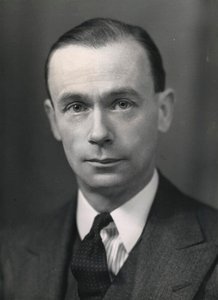
William Menzies Coldstream
1908 - 1987 , United Kingdom
Quick Facts
- Artistic Movement Or Style: Realism
- Artists Or Movements Influenced By This Artist: ['Euston Road School']
- Date Of Birth: 1908
- Date Of Death: 1987
- Full Name: William Menzies Coldstream
- Nationality: British
- Notable Artworks:
- Inez Spender portrait
- Rimini, Italy
- Helen Darbishire
- Place Of Birth (City And Country): Belford, UK

