

 Send
Send Share
Share
 Details

 Download
 Similars
 Diaporama
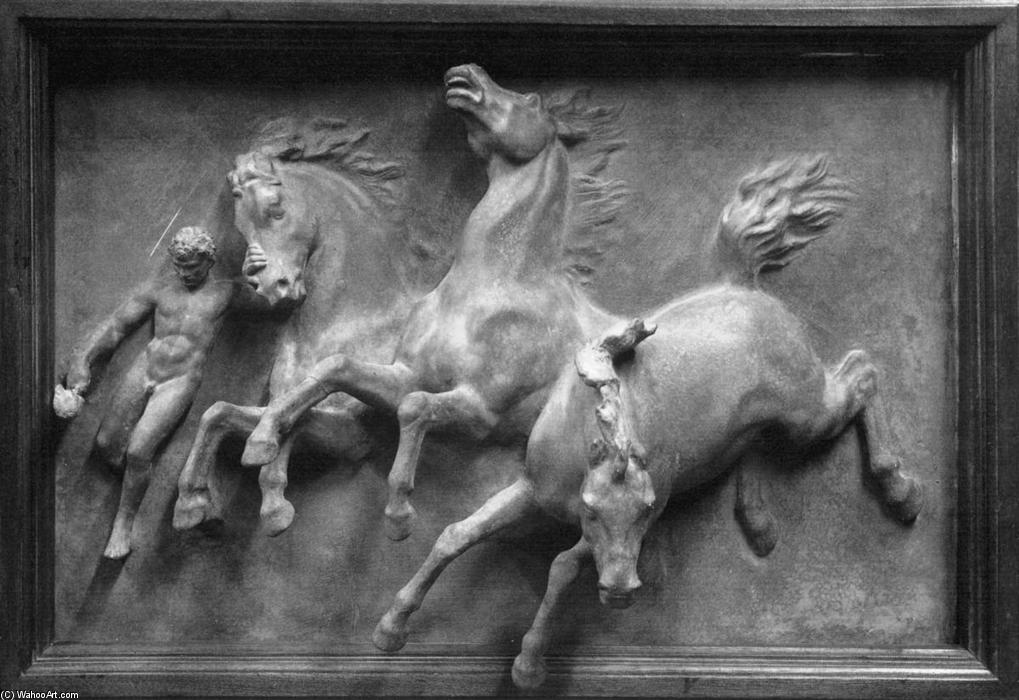
The Horses of Anahita or The Flight of Night
 Plaster
- Sculpture
- Neoclassicism/Romanticism
 1848
1848- 19th Century
 47.0 x 72.0 cm
 Metropolitan Museum of Art
 Read More
Purchase a high-resolution, enhanced digital image, far superior to the online preview.
Each file is meticulously prepared by our in-house specialists using advanced tools and expert manual retouching. We ensure every image has exceptional clarity, precise color accuracy, and fine detail.
The final file is delivered via email within 72 hours, optimized for immediate use in professional, editorial, and print environments. This is the same quality trusted by top-tier design studios, publishers, and galleries.
Digital Image
Download a high-resolution file for personal display, printing, and creative projects. ( Buy Print Buy Hand Made Painting)
Included in Every Digital Image Order
Expert Digital Delivery, Guaranteed
When you choose ArtsDot.com, you're not just getting an image - you're receiving a professionally enhanced digital artwork, crafted with precision and backed by a satisfaction guarantee. Here's everything that comes with your order, automatically:

Fast Email Delivery
Your high-resolution digital image file will be emailed to you within 72 hours of ordering - ready for immediate use.

AI-Enhanced Digital File
Your artwork is professionally optimized using advanced AI tools and manual editing, ensuring maximum detail, clarity, and color accuracy.

Free Lifetime Re-Delivery
Accidentally deleted or lost your file? No worries - we'll resend it to you anytime, free of charge.

No Import Fees - Ever
Enjoy your artwork instantly with zero customs, duties, or delivery fees - digital downloads are always tax-free.

Color Accuracy Guarantee
We ensure your digital image reflects the original colors as closely as possible using professional tools and color management.

60-Day Satisfaction Guarantee
If you're not satisfied with your digital image, we'll revise it or refund 100% within 60 days - no questions asked.

100% Money-Back Guarantee
Not satisfied? Get a full refund within 60 days of receiving your digital file - no questions asked.

Bulk Order Discounts
Buy 3 images, save 10% - Buy 5, save 15% - Buy 10+, save 20%. Great for creative projects, galleries, and agencies.
A Dance of Power and Night: William Morris Hunt’s “The Horses of Anahita”
William Morris Hunt's "The Horses of Anahita or The Flight of Night," painted in 1848, isn’t merely a depiction of galloping horses; it’s a visceral embodiment of primal energy and the interplay between darkness and light. This remarkable plaster relief sculpture, now meticulously reproduced, transports us to a realm where mythic forces collide with raw, untamed power. Hunt, a pivotal figure in establishing American Barbizon painting—a movement deeply influenced by the French masters—crafted this work as an exploration of the Persian goddess Anahita, associated with both the moon and the night, and her dominion over the encroaching darkness. The sculpture’s dynamism immediately commands attention; three magnificent horses surge forward, their musculature taut, manes streaming, and tails whipping through the air – a whirlwind of movement frozen in time.
The piece's aesthetic is firmly rooted in Neoclassicism, yet infused with a Romantic sensibility. Hunt’s meticulous study of classical sculpture, particularly the works of Michelangelo, is evident in the idealized forms of the horses and their powerful stances. However, he departs from strict adherence to idealization, imbuing them with an almost frenzied energy—a characteristic that distinguishes his work from purely academic representations. The muted color palette – primarily shades of gray and white – contributes significantly to this effect, creating a sense of timelessness and emphasizing the sculptural form itself. The subtle variations in texture, achieved through careful carving, mimic the roughness of the material while simultaneously highlighting its polished surfaces, adding depth and visual interest.
Decoding Symbolism: Horses, Myth, and the Divine Feminine
Beyond their immediate visual impact, “The Horses of Anahita” is rich in symbolic meaning. The horses themselves are potent symbols – representing speed, strength, freedom, and even wildness. Their association with Anahita, a goddess revered for her fertility and connection to water, adds another layer of complexity. In Persian mythology, Anahita embodies both the nurturing aspects of motherhood and the darker forces of the night. Hunt’s sculpture captures this duality perfectly: the horses are simultaneously powerful and vulnerable, suggesting a struggle between opposing forces. The inclusion of a human figure on the left side, holding aloft a torch, further reinforces this narrative—a guardian attempting to hold back the encroaching darkness, or perhaps, to guide the horses towards a brighter future.
The choice of depicting three horses is also significant. Triads are frequently used in mythology and symbolism to represent completeness, balance, and harmony. Here, they could symbolize the three phases of the moon, or perhaps the three aspects of Anahita’s divine nature. The dynamic composition—the diagonal thrust of the horses—creates a sense of urgency and movement, as if the scene is unfolding before our eyes. The sculpture invites contemplation on themes of power, destiny, and the eternal struggle between light and darkness.
Craftsmanship and Technique: A Masterclass in Relief Sculpture
“The Horses of Anahita” showcases Hunt’s exceptional skill as a sculptor. The relief carving technique—where the design is raised from a flat background surface—is executed with remarkable precision and detail. Each muscle, each vein, each strand of hair is meticulously rendered, creating an illusion of three-dimensionality that is both captivating and convincing. The use of plaster, a material favored by Hunt for its versatility and ability to capture subtle textures, allows for a nuanced range of tones and shading. The artist skillfully manipulates light and shadow to enhance the sense of depth and volume, drawing the viewer’s eye into the heart of the composition.
The sculpture's scale—47 x 72 cm—is perfectly proportioned, allowing it to command attention without overwhelming its surroundings. The smooth, polished surface contrasts beautifully with the rough texture of the plaster, creating a tactile and visually stimulating experience. It’s a testament to Hunt’s mastery that this relatively small work possesses such a monumental presence.
A Timeless Legacy: Reproduction and Artistic Inspiration
Today, “The Horses of Anahita” continues to resonate with viewers across generations. William Morris Hunt's influence on American art is undeniable, and his pioneering spirit paved the way for future generations of artists. Reproductions of this iconic sculpture offer a remarkable opportunity to experience its beauty and power firsthand, bringing its evocative imagery into homes and galleries worldwide. Whether you’re an art enthusiast, a collector seeking a statement piece, or simply someone drawn to the allure of mythology and masterful craftsmanship, “The Horses of Anahita” remains a timeless treasure—a celebration of artistic skill, symbolic depth, and the enduring power of the human imagination.
Related Artworks

Artist Biography
A Pioneer of American Barbizon Painting
William Morris Hunt, born in Brattleboro, Vermont, in 1824, stands as a pivotal figure in the development of American art during the 19th century. He wasn’t merely a painter; he was an advocate, an educator, and a catalyst who championed the principles of the Barbizon School on American soil. Hunt's lineage reflected both established societal roots – his father descended from Vermont founders, while his mother hailed from Connecticut wealth – and a burgeoning artistic sensibility that would ultimately redefine the landscape of American painting. His early life was marked by privilege but also by an initial suppression of creative inclinations, a situation rectified when his determined mother, Jane Leavitt Hunt, defied convention and relocated the family to Europe in pursuit of proper artistic training for her children. This bold move set the stage for Hunt’s profound engagement with European masters and ultimately shaped his distinctive style.Formative Years in France: Millet and the Barbizon Circle
Hunt's formal education began under Thomas Couture in Paris, where he received a grounding in classical techniques. However, it was an encounter at the 1851 Paris Salon that irrevocably altered his artistic trajectory. Jean-François Millet’s *The Sower* resonated deeply with Hunt, sparking a profound shift in his aesthetic sensibilities. He abandoned the rigid constraints of academic painting and embarked on a two-year period of direct study with Millet at Barbizon. This immersion into the heart of the Barbizon School proved transformative. The emphasis on plein air painting – working directly from nature – and a commitment to depicting rural life with honesty and realism became cornerstones of Hunt’s artistic philosophy. He absorbed not only Millet's technical approach but also his profound respect for the dignity of labor and the beauty inherent in everyday existence. Historian David McCullough noted that this French training significantly advanced Hunt’s development, while S.G.W. Benjamin recognized his role in directing younger American artists towards Paris and Munich, fostering a new boldness in technique and style.Returning to America: Portraiture and Landscape
Upon returning to the United States in 1855, following his marriage to Louise Dumaresq Perkins, Hunt established himself as a prominent artist in Boston. While he achieved considerable success as a portrait painter – capturing the likenesses of notable figures like William M. Evarts, Charles Francis Adams, and Senator Charles Sumner – landscape painting remained central to his artistic identity. His landscapes reflected the Barbizon influence: loose brushwork, realistic depictions of rural scenes, and an acute sensitivity to atmospheric effects. He didn’t simply reproduce nature; he sought to capture its essence, its mood, and its fleeting moments of beauty. Notable works from this period include *The Belated Kid*, *Girl at the Fountain*, *Hurdy-Gurdy Boy*, *View of the St. Johns River* (1874), *Woman with Cow* (1874) and *Niagara Falls* (1878). However, tragedy struck in 1872 when the Great Boston Fire consumed many of his paintings, along with a valuable collection of French art, including his cherished copy of Millet’s *The Sower*.Later Years, Legacy, and Artistic Philosophy
Despite this devastating loss, Hunt continued to paint, accepting commissions for murals at the State Capitol in Albany, New York. These allegorical scenes, unfortunately, deteriorated rapidly due to faulty installation, contributing to a period of profound disappointment and depression. This experience underscored his commitment to artistic integrity and the importance of proper materials and execution. In 1878, he published *Talks About Art*, a collection of essays that articulated his artistic philosophy and received widespread acclaim. Hunt’s legacy extends beyond his own paintings. He was a dedicated teacher who encouraged younger artists to embrace realism and plein air painting, leaving an indelible mark on the development of American art. He championed a shift away from academic conventions towards a more direct and honest engagement with nature, fostering a uniquely American artistic voice. His influence can be seen in the work of countless artists who followed, solidifying his position as a leading figure in the American Barbizon movement and a true pioneer of modern painting. He remains an important link between European traditions and the burgeoning artistic identity of 19th-century America.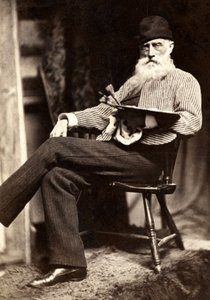
William Morris Hunt
1824 - 1879 , United States of America
Quick Facts
- Artistic Movement Or Style: Barbizon School
- Artists Or Movements Influenced By This Artist: ['American Barbizon painters']
- Artists Who Influenced This Artist:
- Jean-François Millet
- Thomas Couture
- Date Of Birth: 1824
- Date Of Death: 1879
- Full Name: William Morris Hunt
- Nationality: American
- Notable Artworks:
- The Belated Kid
- Girl at the Fountain
- Hurdy-Gurdy Boy
- View of St. Johns River
- Woman with Cow
- Niagara Falls
- Place Of Birth: Brattleboro, USA

