 Preview
 Send
Send Share
Share
 Details

 Download
 Similars
 X-Ray
X-Ray Diaporama
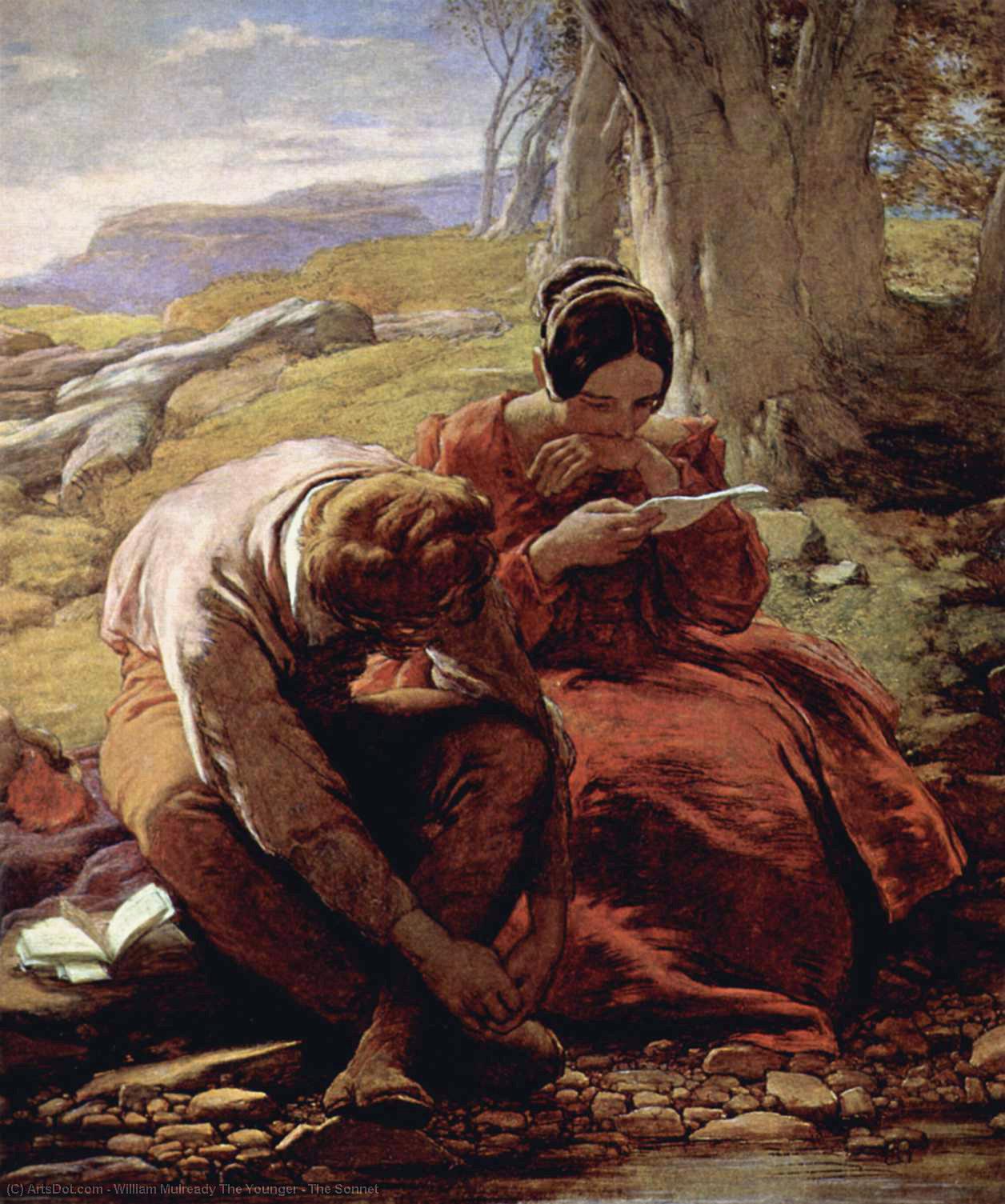
The Sonnet


 Read More
Hand Made Oil Reproduction
Hand-painted oil on canvas in your size and frame, made to order by our artists. ( Buy Print Buy Image)




P118B $10

P118H $10

P118W $10

P438Z $10

P508JH $12

P508YH $12

P805H $10

P805Z $10

P919BZ $10

P919G $10

P919XJ $10

P959ZH $10

P968JZ $12

W106C $8

W218G $10

W218JH $8

W218Y $10

W307PJ $10

W316G $10

W316PJ $8

W316Y $10

W398PJ $8

W4111J $10

W500HY $15

W500JH $15

W692G $12

W849H $8

W940BG $15

W953PJ $8




Pick from our preset sizes that match the artwork's original proportions.

You may enter your own dimensions to fit a specific frame or space. If your selected size does not match the original image's proportions, we will either crop the artwork or extend the painting with additional hand-painted elements. A digital mockup will be sent for your approval before production begins.
Please note that the on-screen preview does not reflect the actual cropping or extension. Only the mockup will accurately show the final composition.
While custom sizes are available, we recommend selecting a dimension from the predefined list to preserve the original proportions.
After order, ArtsDot.com team will email client for instructions and provide a mockup preview
Worldwide Delivery () in 3/4 weeks instead of standard 5 weeks. (17 August). No compromise on quality.

Free Worldwide Express Shipping

High-Quality Linen Canvas

Full Shipping Insurance

Customs Tax Refund Guarantee

True Color Matching Guarantee

60-Day Return Policy (Defects Only)

100% Money-Back Guarantee

Bulk Discount Offer
 Glass option is only available in size under 110 CM

The Sonnet
Reproduction Medium
Reproduction Size
-


Total Price
$ 263
Artwork Description
A Window into Victorian Sentimentality: Exploring William Mulready’s “The Sonnet”
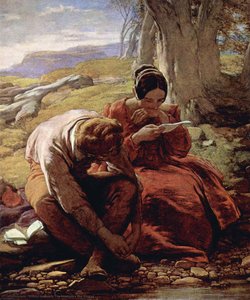
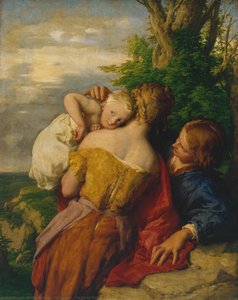
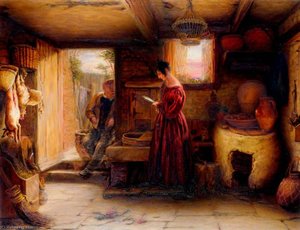
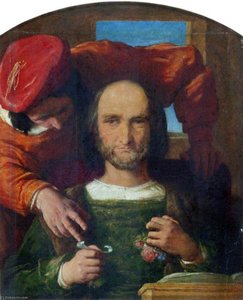
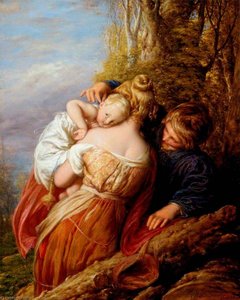
William Mulready the Younger (1786–1863), a name perhaps less familiar than Turner or Constable, nevertheless stands as a cornerstone of Victorian genre painting—a movement dedicated to depicting everyday life with an emphasis on moral instruction and emotional resonance. His masterpiece, “The Sonnet,” completed in 1839, exemplifies this aesthetic beautifully, offering viewers a glimpse into the quiet intimacy of domestic tranquility amidst the burgeoning industrial landscape of London. This stunning oil-on-panel painting resides within the Victoria and Albert Museum’s collection, cementing its place as an enduring symbol of Victorian artistic sensibility.- Subject Matter & Composition: The artwork portrays a serene tableau featuring a man and woman seated together outdoors—likely in a woodland setting—engaged in a contemplative moment. The woman is absorbed in reading a book, while her gaze turns towards the man, creating a palpable connection between them. This deliberate arrangement prioritizes human interaction and emotional nuance, aligning perfectly with the genre’s core purpose.
- Style & Technique: Mulready's style leans heavily into Romanticism, characterized by soft brushstrokes and muted tonal palettes—a conscious departure from the more dramatic styles prevalent at the time. The artist skillfully employs chiaroscuro – the interplay of light and shadow – to sculpt the figures and enhance the atmospheric depth of the scene. This technique lends an air of solemn beauty to the composition.
Symbolism Within Domestic Tranquility
Beyond its immediate depiction, “The Sonnet” is laden with symbolic significance. The choice of a woodland backdrop speaks to notions of pastoral innocence and escape from urban pressures—a common theme in Romantic art reflecting anxieties about the rapid pace of industrialization. Furthermore, the inclusion of a clock subtly underscores the passage of time and invites contemplation on themes of permanence and memory. It’s a quiet reminder that even amidst life's hustle and bustle, moments of profound connection endure.- The Book: The woman reading represents intellectual pursuits and inner reflection—values highly esteemed during the Victorian era. Books served as conduits for knowledge and moral guidance, mirroring the genre’s didactic intent.
- The Chair: Positioned strategically near the couple, the chair symbolizes comfort, repose, and a space for shared intimacy – reinforcing the painting's central theme of domestic harmony.
Historical Context & Artistic Legacy
Created during the height of Victorian artistic fervor, “The Sonnet” reflects broader societal trends toward valuing family life and moral virtue. Mulready’s meticulous observation of everyday scenes—a hallmark of his oeuvre—established him as a pioneer in capturing the subtleties of human emotion within accessible landscapes. His influence extended beyond painting itself, impacting printmaking and decorative arts, where similar stylistic approaches gained considerable popularity. Today, reproductions of “The Sonnet” continue to inspire interior designers seeking to evoke feelings of warmth, serenity, and understated elegance—a testament to its enduring artistic merit.Emotional Resonance & Artistic Inspiration
Ultimately, “The Sonnet” transcends mere visual representation; it communicates a profound emotional experience. The painting’s gentle luminosity and harmonious color scheme invite viewers into a realm of quiet contemplation—encouraging reflection on relationships, values, and the beauty inherent in simple moments. It serves as an exquisite reminder that art can illuminate not only what we see but also what we feel, securing its place as a treasured exemplar of Victorian genre painting.Related Artworks
Artist Biography
A Life Rooted in Observation: The World of William Mulready the Younger
Born in the quiet Irish town of Ennis, County Clare, in 1786, William Mulready the Younger embarked on a journey that would establish him as a pivotal figure in Victorian genre painting. His early life foreshadowed his artistic inclinations; a family relocation to London in 1792 provided access to a burgeoning art world and opportunities for formal training. Even as a young boy, Mulready demonstrated an exceptional talent for copying engravings, revealing a keen eye for detail and a natural aptitude for visual representation. This innate ability led him to the tutelage of John Graham, a historical painter who recognized his potential, followed by studies at the Royal Academy School around the age of fourteen – a significant achievement for someone from such humble beginnings. These formative years were characterized not only by academic instruction but also by self-directed learning; Mulready diligently copied prints and keenly observed actors in theatrical performances, honing his skills through dedicated practice and immersive observation of the world around him.From Landscape to Life: The Evolution of a Genre Painter
Mulready’s artistic path wasn't immediately defined. He initially focused on landscapes, demonstrating an early mastery of depicting natural settings. However, around 1808, he began his transition into genre painting – scenes from everyday life – a shift that would ultimately define his career and secure his place in art history. This move was significantly influenced by the Dutch masters of the 17th century, whose works he meticulously studied in private collections. He absorbed their techniques for capturing realistic detail, nuanced characterizations, and intimate domestic settings. His paintings became imbued with a romantic sensibility, often carrying subtle moral undertones that resonated deeply with Victorian audiences. Recurring themes emerged in his work: children engaged in various activities, explorations of behavior and education, reflecting the societal concerns prevalent during the era. Mulready’s technical skill was remarkable, particularly evident in his detailed drawings of the nude figure – a testament to his dedication to mastering fundamental artistic principles. He wasn't merely recording life; he was interpreting it through a lens of sentiment and moral consideration, creating scenes that were both charming and thought-provoking.Recognition and Innovation: A Royal Academician and Beyond
Mulready’s talent didn’t go unnoticed by the artistic establishment. He rapidly ascended within the ranks of the Royal Academy, becoming an Associate (A.R.A.) in 1815 and a full member (R.A.) just a year later – a remarkable feat demonstrating his exceptional skill and promise. His international recognition extended beyond Britain; in 1816, he was awarded the French Légion d'honneur, further solidifying his reputation as a leading artist of his time. Among his most celebrated works are “Returning from the Ale House” (also known as “Fair Time”), housed in the Tate Gallery, and “Giving a Bite,” which graces the Victoria and Albert Museum. “First Love”, also at the V&A, exemplifies his ability to capture tender emotion and delicate narrative. Beyond painting, Mulready’s creativity extended into design; he is perhaps equally well-known for designing the iconic Mulready stationery, introduced in 1840 alongside the Penny Black postage stamp. While initially met with some public disapproval – its complexity contrasted with the simplicity of the stamp itself – this commission remains a significant contribution to postal history and demonstrates his versatility as an artist. He also lent his talents to illustrating several children's books, including early editions of Charles and Mary Lamb’s "Tales from Shakespeare" and William Roscoe's "The Butterfly's Ball", bringing literary worlds to life through his visual interpretations.A Lasting Legacy: The Enduring Appeal of Victorian Life
William Mulready died in 1863, leaving behind a rich artistic legacy that continues to resonate today. His paintings were immensely popular during the Victorian era, reflecting and shaping contemporary tastes and values. He played a crucial role in establishing genre painting as a respected art form within Britain, elevating scenes of everyday life to the level of serious artistic consideration. Mulready’s influence extended beyond his own work; he came from a family deeply rooted in artistry – his wife Elizabeth Varley and their sons Paul Augustus, William Junior, and Michael all pursued careers as artists. His grandson, Augustus Edwin Mulready, became a prominent member of the Cranbrook Colony of artists, continuing the family tradition. While the Mulready stationery may have been short-lived, its association with the Penny Black ensures its place in history. More importantly, his paintings offer a captivating glimpse into Victorian life, capturing the essence of an era with remarkable detail and sensitivity. His dedication to technical mastery, combined with his ability to imbue ordinary scenes with emotional depth, secures William Mulready’s position as a significant and enduring figure in British art.Family Connections
- Elizabeth Varley: Mulready's wife, also a landscape painter.
- Paul Augustus Mulready: One of his sons, who followed in his father’s artistic footsteps.
- William Mulready Junior: Another son, known as a portrait painter and picture restorer.
- Michael Mulready: The third son to pursue an art career.
- Augustus Edwin Mulready: His grandson, a prominent member of the Cranbrook Colony.
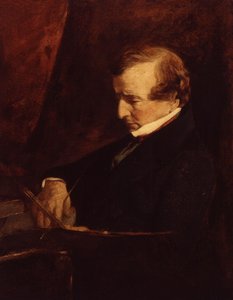
William Mulready the Younger
1786 - 1863 , Ireland
Quick Facts
- Artistic Movement Or Style: Genre painting, Romanticism
- Artists Or Movements Influenced By This Artist: ['Victorian Genre Painting']
- Artists Who Influenced This Artist: ['Dutch genre painters']
- Date Of Birth: 1786
- Date Of Death: 1863
- Full Name: William Mulready the Younger
- Nationality: Irish
- Notable Artworks:
- Returning from the Ale House
- Giving a Bite
- First Love
- The Organ Grinder
- Place Of Birth: Ennis, Ireland
Related Articles

Giclée Prints: Archival Quality & Aesthetic Nuances for the Discerning Collector
Explore the world of giclée prints with ArtsDot. Learn about archival quality, aesthetic nuances & investment potential. Expert guidance for discerning art collectors seeking museum-quality reproductions and lasting value.

Echoes of Time: Exploring the Enduring Appeal & Historical Context of Vintage Art Prints
Explore the captivating world of vintage art prints! Discover their history, collecting tips & enduring appeal. Expert insights on chromolithography and building a legacy collection with ArtsDot.

The Enduring Legacy of Fine Art Prints: Technique, History & Aesthetic Impact
Explore the rich history & techniques of fine art prints. Discover investment potential, assess authenticity, and learn how to preserve your collection with expert guidance. Trusted insights for discerning collectors.
Marianne North's Masterpieces: 25 Botanical Paintings That Bloom With Adventure | ArtsDot
Journey through the vibrant world of Marianne North’s botanical paintings! Explore 25 iconic artworks from this Victorian artist, celebrating exotic flora & travel. Find museum-quality reproductions and curated decor ideas at ArtsDot.com.
John Gilbert: A Comprehensive Exploration of Technique, Context, and Enduring Legacy in Victorian Genre Painting
Explore the life & art of John Gilbert, a prolific Victorian painter renowned for his captivating genre scenes and Venetian-inspired style. Discover his legacy with ArtsDot.