 Preview
 Send
Send Share
Share
 Details

 Download
 Similars
 X-Ray
X-Ray Diaporama
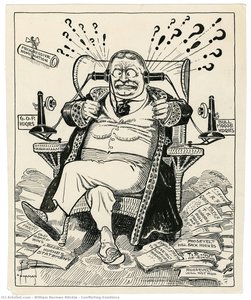
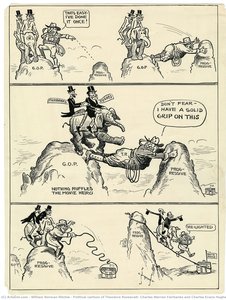
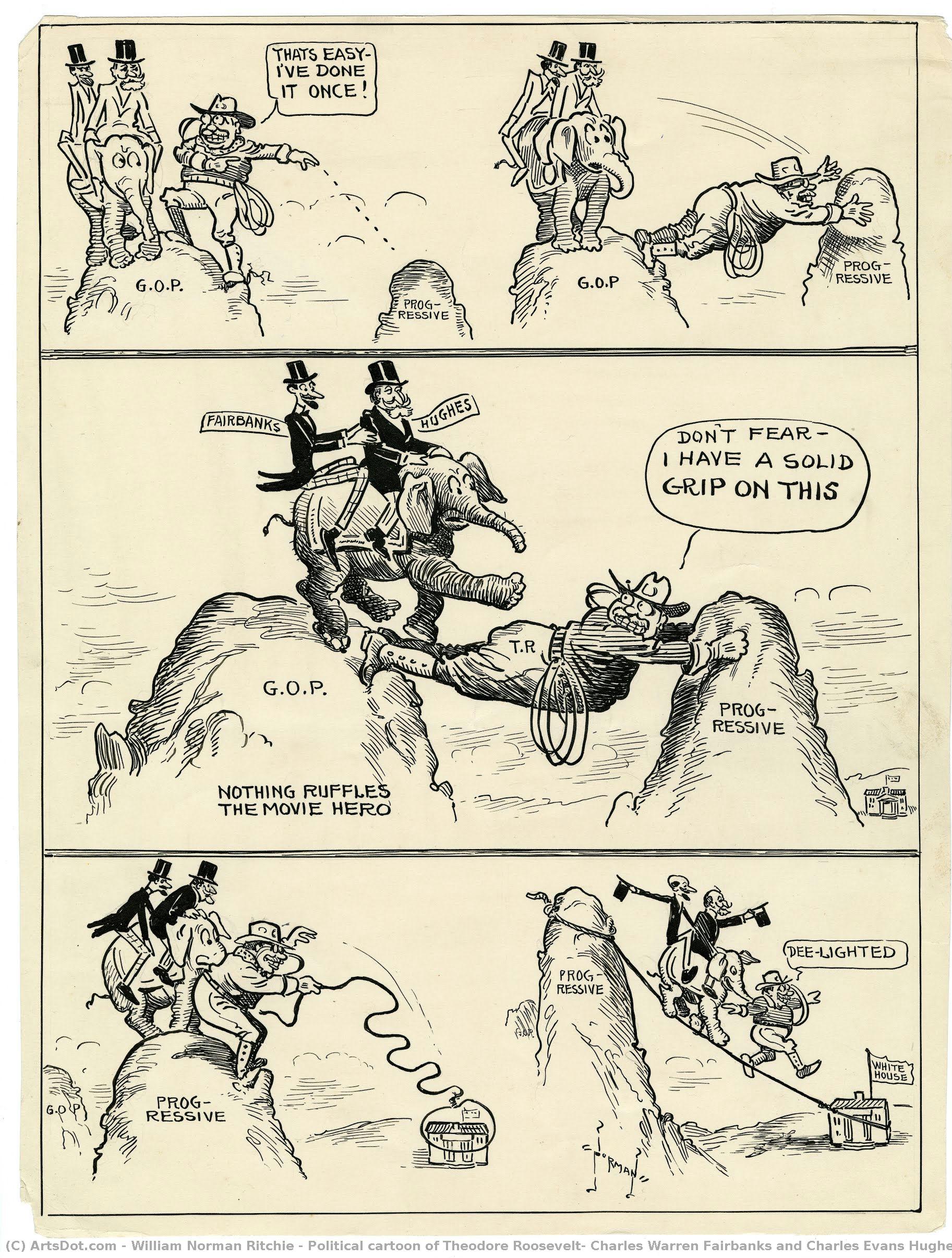
Political cartoon of Theodore Roosevelt, Charles Warren Fairbanks and Charles Evans Hughes traveling to the White House


 Read More
Giclée / Art Print
Museum-quality giclée or canvas print with fast production and flexible finish options. ( Buy Hand Made Painting Buy Image)




































Pick from our preset sizes that match the artwork's original proportions.

You may enter your own dimensions to fit a specific frame or space. If your selected size does not match the original image's proportions, we will either crop the artwork or extend the image with a mirrored or solid-fill edge. A digital mockup will be sent for your approval before production begins.
Please note that the on-screen preview does not reflect the actual cropping or extension. Only the mockup will accurately show the final composition.
While custom sizes are available, we recommend selecting a dimension from the predefined list to preserve the original proportions.
Worldwide Delivery () in 2 weeks instead of standard 4/5 weeks. (1 September)

Free Worldwide Express Shipping

High-Quality Linen Canvas

Full Shipping Insurance

Customs Tax Refund Guarantee

True Color Matching Guarantee

60-Day Return Policy (Defects Only)

100% Money-Back Guarantee

Bulk Discount Offer
 Glass option is only available in size under 110 CM

Political cartoon of Theodore Roosevelt, Charles Warren Fairbanks and Charles Evans Hughes traveling to the White House
Giclée / Art Print
Reproduction Size
-


Total Price
$ 63
Related Artworks
Artist Biography
William Norman Ritchie: Chronicler of American Progress
William Norman Ritchie (1865 – 1947) stands as a singular figure in the annals of American political cartooning, embodying the spirit of journalistic satire and unwavering commitment to documenting pivotal moments in the nation’s history. Born in Boston, Massachusetts, Ritchie possessed an innate talent for visual storytelling that would propel him to prominence during the late Victorian and Edwardian eras—a period marked by significant social reform movements and burgeoning anxieties about national identity. His career spanned over fifty years at The Boston Post, cementing his legacy as one of the most prolific and respected voices in American editorial illustration.Early Life & Artistic Training
Little is known definitively about Ritchie’s formative years beyond documented records indicating a childhood steeped in artistic pursuits. He honed his skills initially through self-study and experimentation with drawing techniques—a testament to his independent spirit and dedication to mastering the craft. While formal academic training remained elusive, Ritchie's exposure to influential artists of the time undoubtedly shaped his aesthetic sensibilities. Notably, he admired the work of Gustave Dore and Jules Favry, whose dramatic engravings captivated audiences with their meticulous detail and expressive narratives – influences that would permeate Ritchie’s own artistic style.The Boston Post Years & Artistic Style
Ritchie joined The Boston Post in 1892, accepting a position that would define his professional life and solidify his reputation as “The Poet Laureate of the Press.” During his tenure, he produced an astonishing output of cartoons—estimated to be upwards of 3,500—covering a breathtaking range of subjects from political debates to social issues. His distinctive artistic style was characterized by bold lines, meticulous shading, and a masterful command of perspective – techniques that conveyed both humor and profound commentary on the events unfolding around him. Ritchie’s cartoons weren't merely decorative; they were carefully constructed arguments designed to persuade viewers and provoke discussion. He skillfully employed symbolism and caricature to expose hypocrisy and champion progressive ideals.Notable Cartoons & Historical Significance
Ritchie’s oeuvre is replete with iconic images that capture the essence of American history. Perhaps his most celebrated work remains “Halo of Reform,” a 1910 depiction of Theodore Roosevelt, Charles Warren Fairbanks, and Charles Evans Hughes embarking on their journey to Washington D.C., symbolizing the arduous path toward achieving legislative reform. The cartoon’s composition—featuring Roosevelt perched atop a mountain while Fairbanks and Hughes struggle to ascend—became instantly recognizable and powerfully conveyed the challenges faced by reformers in confronting entrenched opposition. Beyond “Halo of Reform,” Ritchie tackled issues such as labor disputes, immigration debates, and military preparedness with unflinching honesty and artistic brilliance. His cartoons served as crucial visual records of these transformative periods, shaping public opinion and influencing political discourse.Legacy & Influence
William Norman Ritchie’s contribution to American art history extends far beyond his prolific output of cartoons. He established a tradition of politically engaged illustration—demonstrating that visual media could serve as potent instruments for social commentary and historical documentation. His meticulous craftsmanship, coupled with his unwavering commitment to capturing the spirit of his time, continues to inspire artists today. Ritchie’s work resides primarily in The Morgan Library & Museum's collection, where it stands as a testament to the enduring power of artistic expression to illuminate history and provoke reflection. Furthermore, his influence can be discerned in subsequent generations of political cartoonists who embraced Ritchie’s stylistic innovations and adopted his ethos of courageous advocacy for social justice—a legacy that ensures Ritchie’s name will forever resonate within the annals of American art and journalism.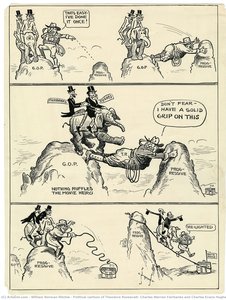
william norman ritchie
1865 - 1947 , United States
Quick Facts
- Artistic Movement Or Style: Political Cartooning
- Artists Or Movements Influenced By This Artist: ['Editorial Illustration']
- Artists Who Influenced This Artist: ['Thomas Nast']
- Date Of Death: 1947
- Full Name: William Norman Ritchie
- Nationality: American
- Notable Artworks: ['Halo of Reform']
- Place Of Birth: Boston, Massachusetts
Related Articles
Christopher Williams: Deconstructing Representation & Materiality in Contemporary Art
Explore the groundbreaking work of Christopher Williams, a pivotal figure in contemporary art. This analysis delves into his deconstruction of representation, materiality, and institutional critique – essential reading for serious collectors.
Arthur Hughes: Pre-Raphaelite Visions of Beauty & Melancholy
Explore the captivating world of Arthur Hughes (1832-1915), a leading Pre-Raphaelite painter. Discover his dreamy landscapes, poetic narratives & iconic Victorian artworks. Learn about his life, style & collecting today.
Penry Williams: Evoking Welsh Nostalgia Through Impressionistic Landscapes
Explore the captivating world of Penry Williams (1802-1885), a Welsh artist renowned for his evocative Impressionistic landscapes and scenes of Italy. Discover his life, style & legacy with ArtsDot.
Sir John Tenniel: A Visual Chronicler of Victorian Society – Caricature, Illustration & Cultural Impact
Explore the life & work of Sir John Tenniel, Victorian England's master illustrator & political cartoonist. Discover his iconic 'Alice in Wonderland' art and lasting impact on satire & visual culture.
Sir William Blake Richmond: A Visionary of Aestheticism & Symbolism
Explore the life & art of Sir William Blake Richmond, a pivotal figure bridging Pre-Raphaelitism and Aestheticism. Discover his stunning portraits, mosaics at St Paul's Cathedral, and lasting influence on Victorian art.