 Preview
 Send
Send Share
Share
 Details

 Download
 Similars
 X-Ray
X-Ray Diaporama
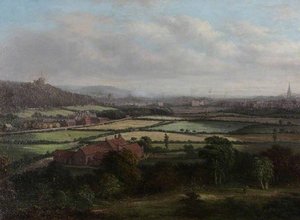
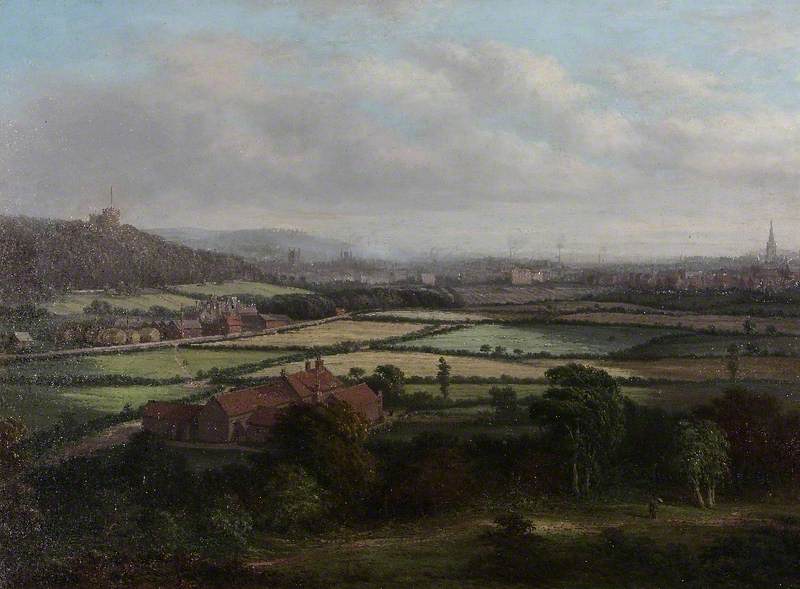
View of Dudley from the North
 1884
1884 66.0 x 90.0 cm
 Read More
Hand Made Oil Reproduction
Hand-painted oil on canvas in your size and frame, made to order by our artists. ( Buy Print Buy Image)




































Pick from our preset sizes that match the artwork's original proportions.

You may enter your own dimensions to fit a specific frame or space. If your selected size does not match the original image's proportions, we will either crop the artwork or extend the painting with additional hand-painted elements. A digital mockup will be sent for your approval before production begins.
Please note that the on-screen preview does not reflect the actual cropping or extension. Only the mockup will accurately show the final composition.
While custom sizes are available, we recommend selecting a dimension from the predefined list to preserve the original proportions.
After order, ArtsDot.com team will email client for instructions and provide a mockup preview
Worldwide Delivery () in 3/4 weeks instead of standard 5 weeks. (25 August). No compromise on quality.

Free Worldwide Express Shipping

High-Quality Linen Canvas

Full Shipping Insurance

Customs Tax Refund Guarantee

True Color Matching Guarantee

60-Day Return Policy (Defects Only)

100% Money-Back Guarantee

Bulk Discount Offer
 Glass option is only available in size under 110 CM

View of Dudley from the North
Reproduction Medium
Reproduction Size
-


Total Price
$ 263
Related Artworks









Artist Biography
The Ethereal Landscapes of William R. Stone
To wander through the canvases of William R. Stone is to step into a world where the boundaries between reality and romanticism dissolve into a soft, atmospheric haze. A master of the Victorian landscape tradition, Stone possessed an uncanny ability to capture the quiet, melanchative beauty of the natural world, particularly the rugged terrains of the British Isles. His work does not merely depict scenery; it evokes a profound sense of nostalgia and the sublime, inviting the viewer to feel the damp chill of a winter morning or the serene stillness of a mountain stream. Through his meticulous use of light and texture, Stone transformed ordinary vistas into poetic meditations on time, decay, and the enduring spirit of nature.
The artist's life and creative evolution were deeply intertwined with the shifting cultural landscapes of the nineteenth century. While historical records occasionally conflate his identity with other figures of the era, the artistic legacy of Stone remains distinctively focused on the Romantic movement. His technical prowess was rooted in a deep understanding of light, often utilizing oil on canvas to achieve a layered, luminous quality that suggests depth and movement. Whether he was rendering the crumbling stone of a medieval ruin or the gentle ripples of a river crossing, his brushwork served a higher purpose: to convey the emotional resonance of the landscape itself.
A Mastery of Light and Ruin
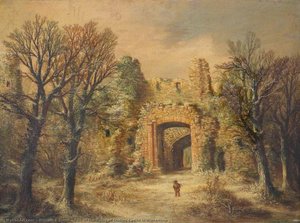
One of the most captivating aspects of Stone’s oeuvre is his fascination with the concept of transience. He frequently returned to the motif of ruins, perhaps finding a spiritual connection between the crumbling architecture of man and the unstoppable progression of nature. In works such as "Part of the Ruins of Dudley Castle in Wintertime," one can observe how he employs textured brushwork to mimic the weathered surfaces of ancient stone, contrasted against the stark, biting clarity of a winter sky. This interplay between the permanent and the ephemeral creates a hauntingly beautiful tension that is characteristic of his most celebrated pieces.
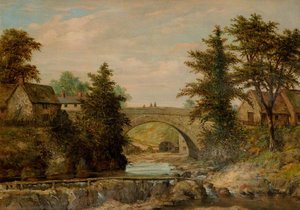
Beyond the melancholic beauty of ruins, Stone also found profound inspiration in the pastoral and the serene. His depictions of the Welsh countryside, such as "Rhayader Bridge," showcase a different facet of his genius—a ability to find peace in the rhythmic flow of water and the sturdy presence of stone structures. In these compositions, the artist utilizes a more tranquil palette, guiding the eye through lush greenery and soft shadows to create a sense of sanctuary. His technique in these landscapes often relied on:
- Atmospheric Perspective: Using subtle shifts in color and clarity to suggest vast distances and misty horizons.
- Textural Depth: Applying paint with varying thicknesses to differentiate between the smoothness of water and the roughness of earth.
- Luminous Glazing: Layering thin, transparent colors to capture the fleeting quality of sunlight filtering through clouds.
Legacy and Historical Significance
The historical significance of William R. Stone lies in his role as a visual chronicler of the Victorian landscape's emotional depth. During an era of rapid industrialization and social change, his art provided a much-needed connection to the primordial and the pastoral. He captured a version of the world that felt both timeless and fragile, preserving the majesty of the British landscape for future generations. His works continue to resonate in contemporary collections, serving as vital touchstones for anyone seeking to understand the Romantic fascination with the sublime.
Today, Stone’s paintings are more than mere historical artifacts; they are emotional experiences. They remind us of a time when art sought to bridge the gap between the human soul and the wild, untamed beauty of the earth. Through his dedication to capturing the subtle nuances of light and shadow, William R. Stone secured his place as a visionary who could find the infinite within a single, quiet moment of nature.
Quick Facts
- Artistic Movement Or Style: Romanticism
- Artists Or Movements Influenced By This Artist: ['Romanticism']
- Artists Who Influenced This Artist:
- Thomas Jefferson
- Benjamin Franklin
- Date Of Birth: April 7, 1786
- Date Of Death: April 18, 1853
- Full Name: William Rufus DeVane King
- Nationality: American
- Notable Artworks: ['The Declaration of Independence']
- Place Of Birth: North Carolina