 Preview
 Send
Send Share
Share
 Details

 Download
 Similars
 X-Ray
X-Ray Diaporama
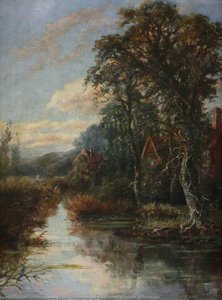
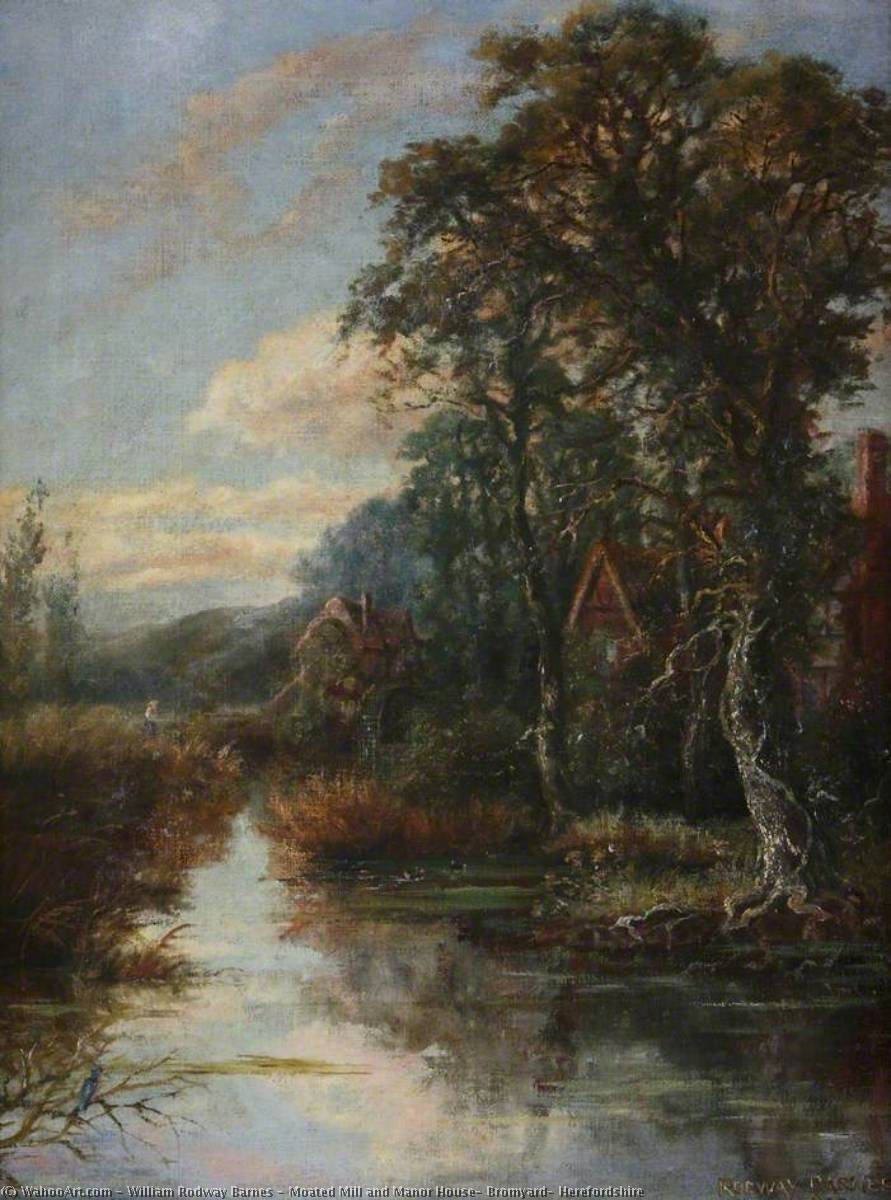
Moated Mill and Manor House, Bromyard, Herefordshire
 66.0 x 53.0 cm
 Read More
Giclée / Art Print
Museum-quality giclée or canvas print with fast production and flexible finish options. ( Buy Hand Made Painting Buy Image)




































Pick from our preset sizes that match the artwork's original proportions.

You may enter your own dimensions to fit a specific frame or space. If your selected size does not match the original image's proportions, we will either crop the artwork or extend the image with a mirrored or solid-fill edge. A digital mockup will be sent for your approval before production begins.
Please note that the on-screen preview does not reflect the actual cropping or extension. Only the mockup will accurately show the final composition.
While custom sizes are available, we recommend selecting a dimension from the predefined list to preserve the original proportions.
Worldwide Delivery () in 2 weeks instead of standard 4/5 weeks. (23 August)

Free Worldwide Express Shipping

High-Quality Linen Canvas

Full Shipping Insurance

Customs Tax Refund Guarantee

True Color Matching Guarantee

60-Day Return Policy (Defects Only)

100% Money-Back Guarantee

Bulk Discount Offer
 Glass option is only available in size under 110 CM

Moated Mill and Manor House, Bromyard, Herefordshire
Giclée / Art Print
Reproduction Size
-


Total Price
$ 63
Related Artworks









Artist Biography
A Life Immersed in the English Landscape: William Rodway Barnes
William Rodway Barnes, born in 1885 and passing away prematurely in 1919, was a British painter whose brief career left an indelible mark on early 20th-century landscape art. He wasn’t a revolutionary figure overturning established traditions, but rather a sensitive observer deeply attuned to the subtle beauty of the English countryside, particularly the woodlands and rural scenes of his native Surrey and beyond. His paintings offer a poignant glimpse into a world rapidly changing under the pressures of industrialization and war, capturing an atmosphere of tranquility that feels both timeless and acutely nostalgic. Barnes’s story is one of artistic promise cut short, yet his legacy endures through the evocative power of his work, much of which remains in private collections and institutions like The Barnes Foundation, thanks to the foresight of collectors such as William Evans.Early Influences and Artistic Development
Barnes received his formal training at the Slade School of Art, a prestigious institution known for its emphasis on direct observation and life drawing. This foundation proved crucial in shaping his artistic approach. While at the Slade, he was exposed to a diverse range of influences, including the Impressionists – particularly Monet and Sisley – whose techniques of capturing light and atmosphere would become central to his own style. However, Barnes wasn’t simply an imitator; he synthesized these external influences with a distinctly English sensibility. He gravitated towards artists like John Constable and Samuel Palmer, drawn to their romantic depictions of the natural world and their emphasis on personal feeling. The influence of Palmer's neo-romantic vision is particularly evident in Barnes’s early works, characterized by a delicate palette and a focus on idyllic rural scenes. He developed a unique ability to convey not just *what* he saw, but also *how* it felt to be immersed within the landscape. His technique involved building up layers of thin paint, creating luminous effects that capture the fleeting qualities of light and shadow.Themes and Techniques: A Celebration of Rural England
The core subject matter of Barnes’s paintings is overwhelmingly rural England – woodlands bathed in sunlight, fields dotted with wildflowers, winding country lanes, and picturesque villages. He possessed a particular fondness for bluebells, which feature prominently in many of his compositions, becoming almost symbolic of the ephemeral beauty he sought to capture. His technique was characterized by a delicate touch and a masterful use of color. He often employed a broken brushstroke, reminiscent of Impressionism, but with a greater emphasis on tonal harmony and atmospheric perspective. Unlike some of his contemporaries who embraced bolder colors and more abstract forms, Barnes remained committed to representational painting, albeit one infused with a strong sense of mood and emotion. His paintings are not merely depictions of places; they are evocations of experiences – the warmth of the sun on skin, the scent of wildflowers in the air, the quiet solitude of the countryside. He often worked *en plein air*, capturing the immediacy of his impressions directly from nature.Major Achievements and Recognition
Despite his tragically short career, Barnes achieved a degree of recognition during his lifetime. He exhibited regularly at leading galleries in London, including the Royal Academy and the New English Art Club. His work was praised for its sensitivity, technical skill, and evocative atmosphere.- His paintings were acquired by several important collectors, including William Evans, whose bequest to The Barnes Foundation ensured that a significant body of his work would be preserved for future generations.
- Barnes’s ability to capture the essence of the English landscape earned him a reputation as one of the leading landscape painters of his generation.
- He successfully blended Impressionistic techniques with a distinctly English romantic sensibility, creating a unique and recognizable style.
Historical Significance and Enduring Legacy
William Rodway Barnes’s historical significance lies not in groundbreaking innovation but in his ability to articulate a particular vision of England at a pivotal moment in its history. His paintings offer a poignant reminder of a world that was rapidly disappearing – a rural landscape threatened by industrialization and war. He captured the beauty of this vanishing world with a sensitivity and skill that continues to resonate today. In an era dominated by abstract art movements, Barnes remained steadfastly committed to representational painting, demonstrating the enduring power of traditional techniques. His work serves as a testament to the importance of direct observation, personal feeling, and the evocative potential of landscape art. The preservation of his paintings at institutions like The Barnes Foundation ensures that future generations will be able to appreciate the beauty and tranquility of his vision – a lasting legacy for an artist whose life was tragically cut short but whose work continues to inspire and captivate.
Quick Facts
- Artistic Movement Or Style: Impressionism, Muralist
- Date Of Birth: 1885
- Date Of Death: 1919
- Full Name: William Rodway Barnes
- Nationality: British
- Notable Artworks:
- Bluebells and Woodland
- Rural British Scenes