

 Preview
 Send
Send Share
Share
 Details

 Download
 Similars
 X-Ray
X-Ray Diaporama
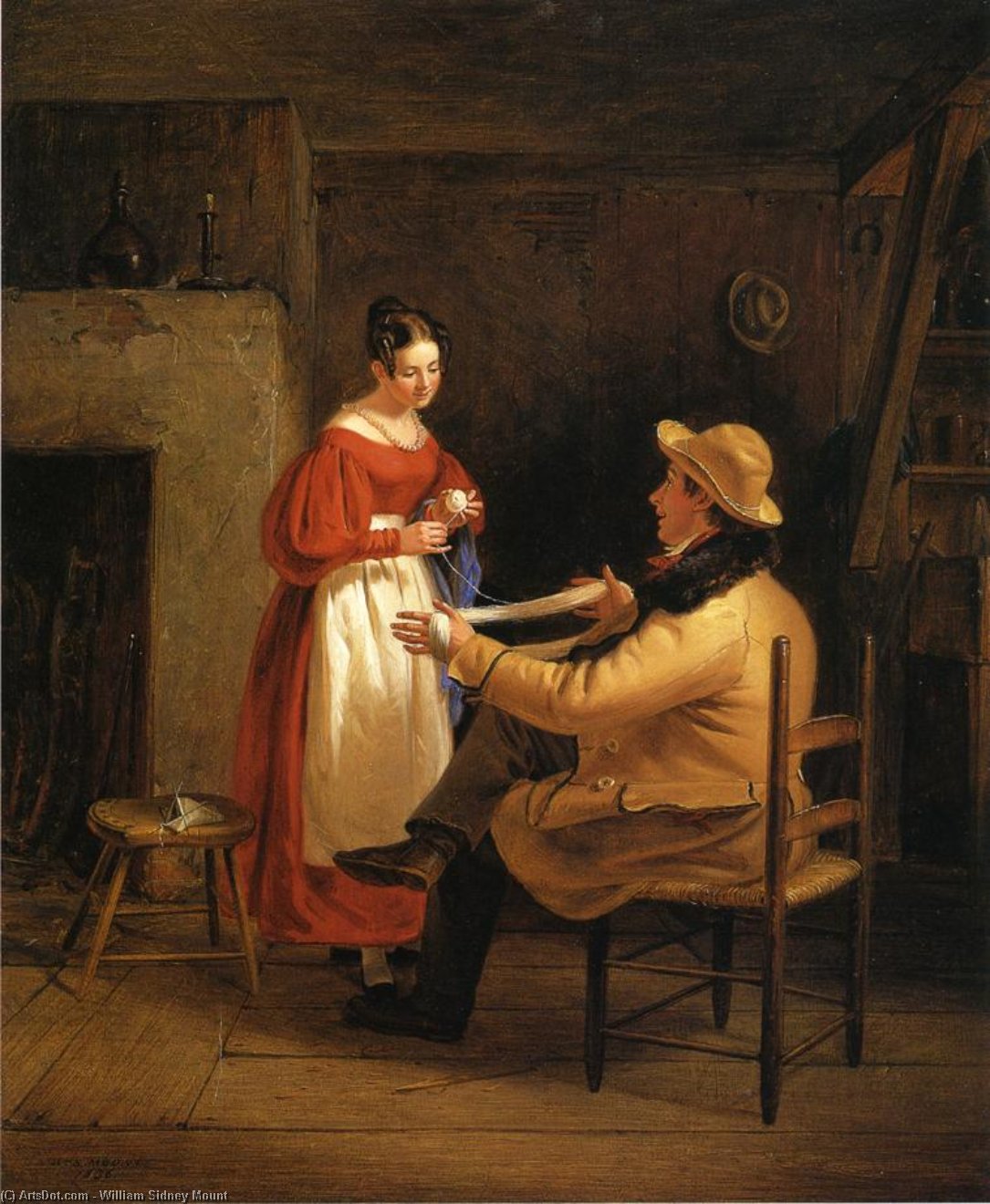
Courtship (also known as Winding Up)


 Read More
Purchase a high-resolution, enhanced digital image, far superior to the online preview.
Each file is meticulously prepared by our in-house specialists using advanced tools and expert manual retouching. We ensure every image has exceptional clarity, precise color accuracy, and fine detail.
The final file is delivered via email within 72 hours, optimized for immediate use in professional, editorial, and print environments. This is the same quality trusted by top-tier design studios, publishers, and galleries.
Digital Image
Download a high-resolution file for personal display, printing, and creative projects. ( Buy Print Buy Hand Made Painting)
Included in Every Digital Image Order
Expert Digital Delivery, Guaranteed
When you choose ArtsDot.com, you're not just getting an image - you're receiving a professionally enhanced digital artwork, crafted with precision and backed by a satisfaction guarantee. Here's everything that comes with your order, automatically:

Fast Email Delivery
Your high-resolution digital image file will be emailed to you within 72 hours of ordering - ready for immediate use.

AI-Enhanced Digital File
Your artwork is professionally optimized using advanced AI tools and manual editing, ensuring maximum detail, clarity, and color accuracy.

Free Lifetime Re-Delivery
Accidentally deleted or lost your file? No worries - we'll resend it to you anytime, free of charge.

No Import Fees - Ever
Enjoy your artwork instantly with zero customs, duties, or delivery fees - digital downloads are always tax-free.

Color Accuracy Guarantee
We ensure your digital image reflects the original colors as closely as possible using professional tools and color management.

60-Day Satisfaction Guarantee
If you're not satisfied with your digital image, we'll revise it or refund 100% within 60 days - no questions asked.

100% Money-Back Guarantee
Not satisfied? Get a full refund within 60 days of receiving your digital file - no questions asked.

Bulk Order Discounts
Buy 3 images, save 10% - Buy 5, save 15% - Buy 10+, save 20%. Great for creative projects, galleries, and agencies.
Collectible Description
A Moment Frozen in Time: Exploring William Sidney Mount’s “Courtship”
William Sidney Mount's "Courtship," more commonly known as “Winding Up,” is not merely a painting; it’s a meticulously crafted tableau of 19th-century domestic life, brimming with quiet observation and subtle emotional resonance. Completed in 1836, this oil on panel work resides within the esteemed collection of the Nelson-Atkins Museum of Art in Kansas City, offering viewers a rare glimpse into the social dynamics and artistic sensibilities of its era. Mount, a pivotal figure in establishing American genre painting, eschewed grand historical narratives for a focus on the everyday experiences of his countrymen – a deliberate choice that imbued his work with an unparalleled sense of realism and intimacy.
The scene unfolds within a warmly lit parlor, dominated by a welcoming fireplace and a collection of books suggesting intellectual pursuits. A man, dressed in a fur-collared coat and hat—a detail indicative of the era’s fashion—is engaged in a seemingly simple task: winding yarn into a ball. Beside him stands a woman, her attire hinting at elegance and refinement, as she observes his activity with an expression that suggests both amusement and perhaps a touch of anticipation. The inclusion of a clock on the wall subtly anchors the scene within time, while a bottle near the left side adds a layer of domesticity, possibly used for refreshment or decorative purposes. Mount’s skill lies not just in depicting these objects but in capturing the interplay between them – the quiet conversation implied by their proximity and the shared activity that binds them.
The Artist's Hand: Technique and Style
Mount’s artistic style is immediately recognizable for its remarkable detail and a deep understanding of light and shadow. He employed a technique known as “lost-and-found edges,” where certain details are sharply defined while others fade into the background, creating an illusion of depth and realism. The brushstrokes themselves are visible, contributing to the painting’s textured surface and lending it a sense of immediacy. The use of oil on panel allowed Mount to build up layers of color and create subtle gradations in tone – essential for capturing the nuances of light reflecting off the furniture and fabrics. His meticulous attention to detail extends beyond mere representation; he seems to have sought to evoke the *feeling* of being within that parlor, a testament to his artistic skill.
A Window into 19th-Century America
"Courtship" offers a valuable window into the social customs and values of mid-19th century America. The scene reflects a comfortable domesticity—a time when courtship rituals were often characterized by quiet conversation, shared activities, and the careful cultivation of relationships. The presence of books suggests an emphasis on education and intellectual pursuits, while the woman’s attire speaks to her social standing. Mount's choice to depict this intimate moment within a familiar setting underscores the importance of domestic life in shaping individual identities and fostering community bonds. The painting is not simply a portrait; it’s a snapshot of a particular time and place, imbued with the spirit of its era.
Symbolism and Emotional Resonance
Beyond its surface details, “Courtship” is rich in symbolic meaning. The act of winding yarn can be interpreted as a metaphor for the gradual unfolding of a relationship—a process of careful preparation and deliberate action. The man’s focused attention on his task suggests a desire to impress or perhaps to demonstrate his capabilities, while the woman's observation hints at her discerning judgment. The overall mood is one of quiet intimacy and hopeful anticipation – a subtle suggestion that something significant may be about to occur. Mount masterfully uses these elements to create an image that resonates with viewers on an emotional level, inviting them to contemplate the complexities of human connection.
Related Artworks
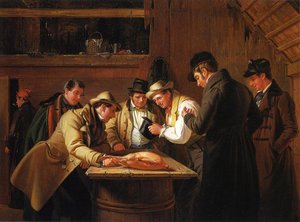
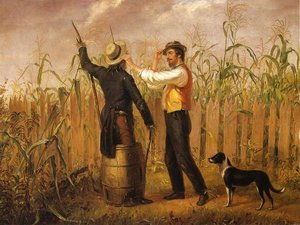
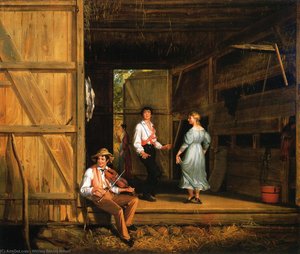
Artist Biography
A Pioneer of American Genre Painting
William Sidney Mount, born November 26, 1807, in the quiet hamlet of Setauket, Long Island, emerged as a pivotal figure in the development of distinctly American art. He wasn’t drawn to the grand historical narratives or formal portraiture favored by many of his contemporaries; instead, Mount turned his keen eye toward the everyday lives unfolding around him – the farmers, musicians, and ordinary folk who populated the rural landscapes of 19th-century Long Island. This dedication to depicting scenes of common life established him as a pioneer of genre painting in America, a style that celebrated the dignity and inherent beauty found within the mundane. His artistic journey was deeply rooted in his upbringing; his father operated a bustling farm, store, and tavern, while his uncle Micah Hawkins was a man of varied talents – a composer, playwright, mimic, and poet – fostering an environment rich with both artistic expression and observation of human character.Early Training and Artistic Awakening
Mount’s initial foray into the art world began not in a formal academy but through an apprenticeship with his older brother, Henry Smith Mount, a sign painter in New York City. This practical training honed his skills in draftsmanship and painting technique, providing a solid foundation for future endeavors. However, it was a visit to the American Academy of the Fine Arts exhibition in 1825 that truly ignited his artistic passion. Immersed in the works of established artists, Mount experienced an awakening, shifting his focus from traditional subjects toward capturing authentic moments from everyday life. He established his own studio in New York City in 1829, a significant step towards independence and solidifying his commitment to pursuing art as a profession. Though initially influenced by historical painting—he created works like *Christ Raising the Daughter of Jairus* (1828)—Mount soon found his true calling lay in portraying the world he knew best: the rural life of Long Island. He was captivated by the rhythms and interactions of those around him, recognizing a compelling narrative within their simple existence.Capturing Rural Life with Realism and Warmth
Mount’s artistic style is characterized by an unwavering realism coupled with a remarkable ability to infuse his scenes with warmth and humor. He didn't idealize rural life; rather, he presented it as it was – full of both labor and leisure, hardship and joy. His attention to detail is meticulous, from the textures of clothing to the expressions on faces, creating a sense of immediacy and authenticity. *Dancing on the Barn Floor* (1831), one of his early successes, exemplifies this approach; it’s a lively depiction of a rural dance, brimming with energy and capturing the spirit of communal celebration. Later works like *The Banjo Player* (1856) demonstrate not only his technical skill but also a profound sensitivity to his subjects. This poignant portrait of an African American musician is particularly noteworthy for its dignified portrayal, challenging prevailing stereotypes of the time. Other notable paintings include *The Long Story* (also known as *The Tough Story*) and *Right and Left*, each offering a glimpse into the lives and experiences of ordinary Americans.Innovation Beyond the Canvas
Mount’s creativity extended beyond painting; he was also an accomplished musician and inventor. He played the fiddle with skill, composed music, and dedicated considerable time to designing his own version of the violin, which he affectionately named the “Cradle of Harmony.” This passion for music frequently found its way into his artwork, with many paintings featuring musicians or scenes of musical performance. In 1860, demonstrating a remarkable spirit of innovation, Mount constructed a portable studio within a horse-drawn wagon. This mobile workspace allowed him to travel freely throughout Long Island, painting directly from life and capturing spontaneous moments as they unfolded. It was a testament to his dedication to authenticity and his desire to connect with the people he depicted.Legacy and Enduring Influence
William Sidney Mount passed away on November 19, 1868, in his beloved Setauket, leaving behind a rich artistic legacy that continues to resonate today. His pioneering work in genre painting helped establish it as a significant force within the American art landscape, paving the way for future generations of artists who sought to capture the essence of American identity and culture. He is remembered not only for his technical skill and realistic depictions but also for his compassionate portrayal of everyday people, celebrating their lives with dignity and respect. His home and studio are now designated as a National Historic Landmark, preserving his creative space as a testament to his enduring influence. Mount’s paintings offer a valuable window into 19th-century American life, reminding us of the beauty and significance found within the ordinary moments that shape our shared history. He was truly a chronicler of rural America, an artist who understood the power of art to connect us to our past and to each other.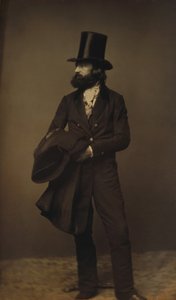
William Sidney Mount
1807 - 1868 , United States of America
Quick Facts
- Artistic Movement Or Style: Genre painting, Realism
- Artists Or Movements Influenced By This Artist: ['American Genre Painting']
- Artists Who Influenced This Artist:
- Benjamin West
- William Hogarth
- Date Of Birth: November 26, 1807
- Date Of Death: November 19, 1868
- Full Name: William Sidney Mount
- Nationality: American
- Notable Artworks:
- The Banjo Player
- The Long Story
- Dancing on Barn Floor
- Right and Left
- Loss and Gain
- School Boys Quarreling
- Place Of Birth: Setauket, USA

