Preview
 Send
Send Share
Share
 Details

 Download
 Similars
 X-Ray
X-Ray Diaporama
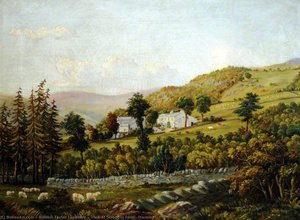
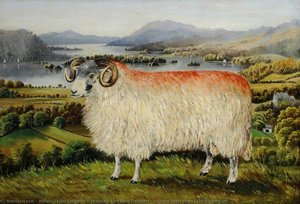
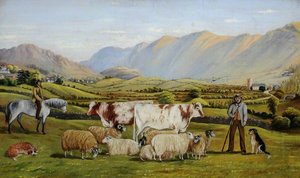
View of Scrogg's Farm, Staveley
 1870
1870 113.0 x 151.0 cm
 Read More
Giclée / Art Print
Museum-quality giclée or canvas print with fast production and flexible finish options. ( Buy Hand Made Painting Buy Image)




































Pick from our preset sizes that match the artwork's original proportions.

You may enter your own dimensions to fit a specific frame or space. If your selected size does not match the original image's proportions, we will either crop the artwork or extend the image with a mirrored or solid-fill edge. A digital mockup will be sent for your approval before production begins.
Please note that the on-screen preview does not reflect the actual cropping or extension. Only the mockup will accurately show the final composition.
While custom sizes are available, we recommend selecting a dimension from the predefined list to preserve the original proportions.
Worldwide Delivery () in 2 weeks instead of standard 4/5 weeks. (24 August)

Free Worldwide Express Shipping

High-Quality Linen Canvas

Full Shipping Insurance

Customs Tax Refund Guarantee

True Color Matching Guarantee

60-Day Return Policy (Defects Only)

100% Money-Back Guarantee

Bulk Discount Offer
 Glass option is only available in size under 110 CM

View of Scrogg's Farm, Staveley
Giclée / Art Print
Reproduction Size
-


Total Price
$ 63
Related Artworks









Artist Biography
William Taylor Longmire: A Painter of the Wyoming Landscape
The evocative beauty of the American West, particularly the rugged landscapes of Wyoming and the surrounding states, found a devoted chronicler in William Taylor Longmire (1841–1914). More than just a painter of scenery, Longmire captured a sense of place—a quiet dignity, a subtle melancholy, and an intimate understanding of the region’s character. Born in Troutbeck, Pennsylvania, into a family deeply rooted in farming, his early life instilled a profound connection to the land, a theme that would dominate his artistic output for decades. His journey westward, culminating in establishing himself as a significant artist in the Lake District of northern Arizona, reveals a fascinating evolution shaped by personal tragedy and an unwavering dedication to portraying the natural world.
Longmire’s early years were marked by hardship. A childhood accident—a fall from a tree resulting in permanent hearing loss— profoundly impacted his life. This physical limitation, coupled with the loss of his wife, fueled a contemplative nature within him and likely contributed to the introspective quality often found in his paintings. He initially pursued a traditional farming career but soon discovered a passion for drawing, encouraged by a local vicar who recognized his nascent talent. This early mentorship proved pivotal, setting him on a path away from the practicalities of rural life and towards the pursuit of artistic expression. He honed his skills through self-study and observation, developing a distinctive style characterized by soft brushwork, atmospheric perspective, and an almost palpable sense of stillness.
The Lake District and Pastoral Themes
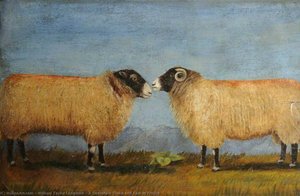
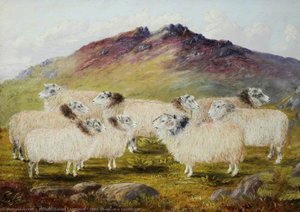
Longmire’s most celebrated work emerged from his time in the Lake District of northern Arizona. He established a studio in Ambleside, a picturesque town nestled amongst the stunning beauty of Windermere, Grasmere, and Rydal Water. It was here that he truly flourished, producing an extensive body of paintings primarily focused on landscapes—particularly scenes featuring sheep grazing across rolling hillsides. These weren’t merely depictions of scenery; they were imbued with a deep sense of tranquility and a celebration of the simple rhythms of rural life. The presence of sheep became almost symbolic, representing both the economic heartland of the region and a connection to the land's history.
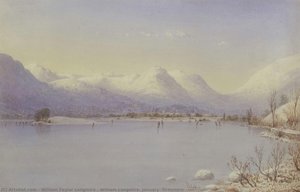
His subjects—the shimmering waters of Windermere, the dramatic peaks of the Langdale Pikes, and the serene beauty of Coniston Water—were rendered with remarkable sensitivity. Longmire’s technique involved layering thin washes of color to create luminous effects and a sense of depth. He skillfully captured the changing light conditions, conveying the ethereal quality of dawn and dusk over the mountains or the hazy glow reflecting off the water's surface. His paintings weren’t about grand vistas or dramatic displays of power; instead, they offered intimate glimpses into a world of quiet contemplation and understated beauty.
Influences and Artistic Style
While Longmire developed his own unique style, it’s clear that he was influenced by several artistic currents. The Romantic tradition, with its emphasis on the sublime and the power of nature, undoubtedly played a role in shaping his vision. The works of artists like Albert Bierstadt and Frederic Church, who painted grand landscapes of the American West, provided a model for depicting vast vistas and dramatic lighting. However, Longmire’s paintings possess a more restrained and personal quality than many of these larger-scale works. He also drew inspiration from European landscape painters such as J.M.W. Turner, whose use of light and color to evoke atmosphere was particularly influential.
His brushwork is characterized by its delicacy and fluidity—a hallmark of his style. He employed a wet-on-wet technique, applying paint while the previous layer was still wet, allowing colors to blend seamlessly and creating soft, hazy effects. Longmire’s palette tended towards muted tones—greens, browns, blues, and grays—which contributed to the paintings' sense of tranquility and realism. He avoided harsh contrasts or overly dramatic compositions, opting instead for a subtle and understated approach that allowed the beauty of the landscape to speak for itself.
Legacy and Historical Significance
William Taylor Longmire’s work represents a significant contribution to the history of American landscape painting. He wasn't a flamboyant figure; he remained largely unknown during his lifetime, but his paintings have since gained recognition as examples of quiet beauty and regional authenticity. His depictions of the Lake District offer a valuable record of a rapidly changing landscape—a time when agriculture, tourism, and development were beginning to transform the region’s character.
Today, Longmire's paintings are held in collections at institutions like the National Trust at Townend and are exhibited widely. His legacy lies not only in his artistic skill but also in his ability to capture the essence of a place—a testament to the enduring power of landscape painting to evoke emotion and connect us to the natural world.
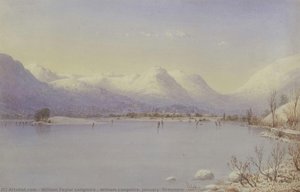
william taylor longmire
1841 - 1914
Quick Facts
- Artistic Movement Or Style: Pastoral landscapes
- Artists Or Movements Influenced By This Artist: ['Victorian Landscape']
- Artists Who Influenced This Artist: ['Craig Johnson']
- Date Of Birth: 1841
- Date Of Death: 1914
- Full Name: William Taylor Longmire
- Nationality: British
- Notable Artworks:
- Nine Sheep in a Landscape
- View of Scrogg's Farm
- Grasmere
- Lake Windermere Art
- Place Of Birth: Troutbeck, England