 Preview
 Send
Send Share
Share
 Details

 Download
 Similars
 X-Ray
X-Ray Diaporama
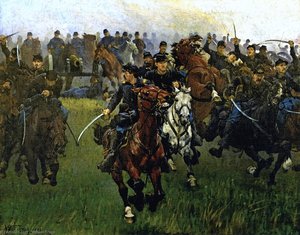
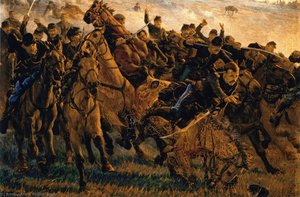
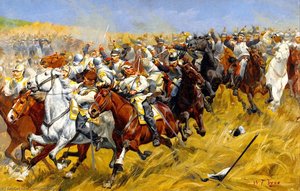
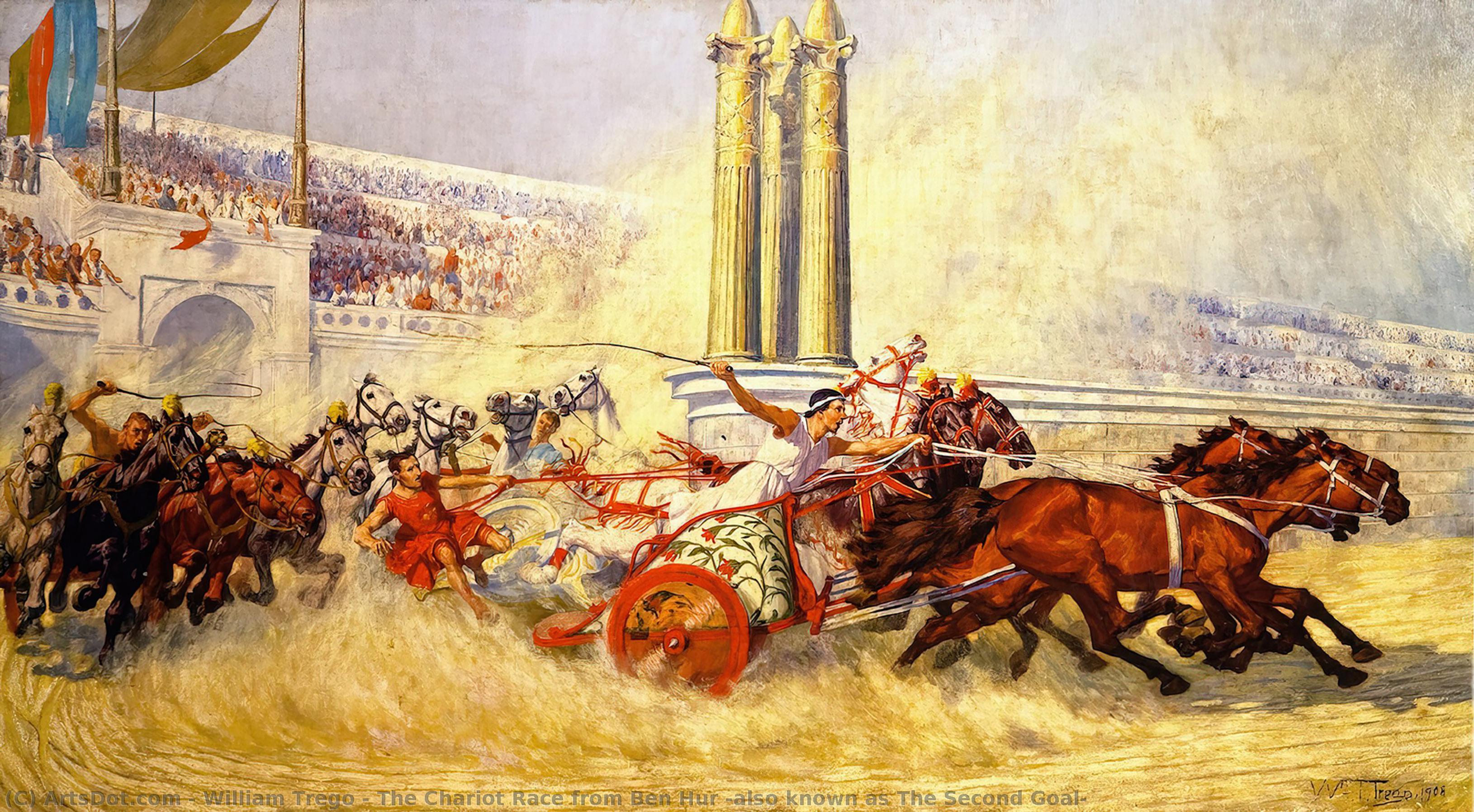
The Chariot Race from Ben Hur (also known as The Second Goal)

 Read More
Giclée / Art Print
Museum-quality giclée or canvas print with fast production and flexible finish options. ( Buy Hand Made Painting Buy Image)




































Pick from our preset sizes that match the artwork's original proportions.

You may enter your own dimensions to fit a specific frame or space. If your selected size does not match the original image's proportions, we will either crop the artwork or extend the image with a mirrored or solid-fill edge. A digital mockup will be sent for your approval before production begins.
Please note that the on-screen preview does not reflect the actual cropping or extension. Only the mockup will accurately show the final composition.
While custom sizes are available, we recommend selecting a dimension from the predefined list to preserve the original proportions.
Worldwide Delivery () in 2 weeks instead of standard 4/5 weeks. (27 August)

Free Worldwide Express Shipping

High-Quality Linen Canvas

Full Shipping Insurance

Customs Tax Refund Guarantee

True Color Matching Guarantee

60-Day Return Policy (Defects Only)

100% Money-Back Guarantee

Bulk Discount Offer
 Glass option is only available in size under 110 CM

The Chariot Race from Ben Hur (also known as The Second Goal)
Giclée / Art Print
Reproduction Size
-


Total Price
$ 63
Collectible Description
Artistic Significance and Style
William Trego's painting is a testament to his skill in capturing dynamic scenes with great detail and energy. The chariot race, inspired by the famous novel "Ben Hur," showcases Trego's ability to depict movement and tension. The use of oil on canvas allows for rich colors and textures, adding depth to the scene.Composition and Elements
The painting features several horses racing around a track with riders on them. There are at least 12 horses in the picture, each one positioned at different points along the track. Some horses are closer to the front while others are further back. Additionally, numerous people are visible in the painting, likely spectators or participants in the race. At least 14 individuals can be seen scattered throughout the scene, some of them riding on chariots and others standing near the horses.Historical Context
The Chariot Race from Ben Hur was exhibited in New York last spring and is now in the possession of his brother-in-law, A. J. Dever, of Philadelphia. This painting reflects Trego's interest in historical and literary subjects, as well as his ability to bring these scenes to life with vivid colors and dynamic composition.Relevance and Availability
For art enthusiasts interested in owning a piece of history, ArtsDot.com offers high-quality reproductions of this painting. These hand-painted oil on canvas reproductions are created by experienced artists, ensuring that every detail and color is meticulously captured.Conclusion
The Chariot Race from Ben Hur by William Trego is a remarkable piece of art that captures the excitement and drama of a chariot race. With its rich colors and detailed composition, this painting is a must-see for anyone interested in historical and literary art. For those who wish to own a reproduction of this masterpiece, ArtsDot.com provides an excellent opportunity to bring this piece of history into your home.- Artist: William Trego
- Title: The Chariot Race from Ben Hur (also known as The Second Goal)
- Date: 1908
- Museum: James A. Michener Art Museum (United States)
- Technique: Oil On Canvas
Related Artworks



Artist Biography
A Life Forged in Resilience: The Story of William Trego
Born in the quiet Pennsylvania countryside of Yardley in 1858, William Brooke Thomas Trego’s life was a testament to the power of artistic dedication overcoming immense physical adversity. Son of the accomplished portrait and animal painter Jonathan Kirkbridge Trego, young William inherited not only his father's talent but also a challenging fate. At just two years old, he contracted an illness – possibly polio or a severe reaction to medical treatment – that left his hands and feet nearly paralyzed. This early struggle would profoundly shape his artistic journey, forcing him to develop unconventional techniques and fueling a determination that resonated throughout his career. The family’s move to Detroit when William was sixteen brought another incident—a harrowing accident with a gas jet that cost him his hair—further isolating him within the familial studio where he received most of his formative training. It was there, guided by his father's instruction, that Trego learned to paint, famously maneuvering a brush jammed into his right hand while controlling it with the left, a method born of necessity and refined through sheer willpower.From Battlefield Visions to Academic Pursuits
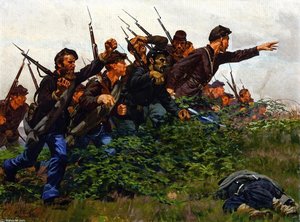
Trego’s breakthrough arrived in 1879 with *The Charge of Custer at Winchester*, a dramatic depiction of George Armstrong Custer's final stand that captivated audiences at the Michigan State Fair. The painting garnered significant acclaim, praised for its dynamic composition and vivid portrayal of military action. This success provided Trego with the opportunity to enroll at the prestigious Pennsylvania Academy of the Fine Arts (PAFA) in Philadelphia, a pivotal moment in his artistic development. For three years, he studied under the exacting tutelage of Thomas Eakins, immersing himself in anatomical study and rigorous figure drawing. While benefiting from Eakin’s emphasis on realism, Trego found the instructor's austere approach challenging, later acknowledging the difficulties he faced navigating that demanding environment. Despite this, his dedication yielded results; in 1882, he received the coveted Toppan Prize for *Battery of Light Artillery En Route*. However, his time at PAFA was also marked by controversy. In 1883, Trego entered the Temple Competition of Historical Paintings with a work he believed surpassed all others, only to be denied first place. He boldly pursued legal action against the Academy, arguing that his painting deserved recognition, but ultimately lost the case in the Pennsylvania Supreme Court—a testament to his unwavering conviction in his artistic vision.A Palette of History and Detail
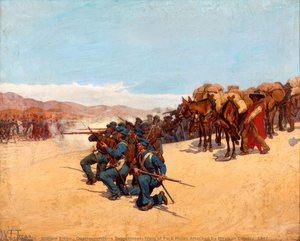
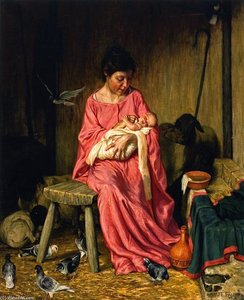
William Trego carved a niche for himself as a painter of historical military scenes, particularly those depicting the American Revolution and Civil War. His canvases are characterized by an almost obsessive attention to detail, especially regarding uniforms, weaponry, and battlefield landscapes. He wasn’t merely illustrating events; he was meticulously reconstructing them, striving for accuracy and authenticity. This commitment stemmed from a deep fascination with history and a desire to honor the sacrifices of those who came before him. His artistic style reflects his academic training, influenced by further studies at the Académie Julian in Paris under Tony Robert-Fleury and William-Adolphe Bouguereau. These masters instilled in him a refined technique and an appreciation for classical composition. Notable works like *Quartermaster's Department: Train of Pack Mules Attacked by Mexican Cavalry, 1847* showcase his ability to capture both the grandeur and the harsh realities of military life. Even venturing into religious subjects, as seen in *Madonna and Child* (1904), Trego brought his characteristic realism and meticulous detail to bear.Fading Glory and Enduring Legacy
Upon returning from Paris, Trego found that the public’s appetite for realistic military artwork had waned. Facing financial hardship, he broadened his artistic scope, accepting portrait commissions, genre scenes, and illustration work to supplement his income. He also generously shared his knowledge, taking on students including Walter Emerson Baum and Flora Baum, nurturing the next generation of artists. Despite continued effort, recognition proved elusive in his later years. *The Chariot Race from Ben Hur* (1908), one of his final works, failed to garner the acclaim he hoped for. Tragically, William Trego died unexpectedly in 1909 in North Wales, Pennsylvania, under circumstances that fueled speculation—some suggesting poisoning or overexertion due to the summer heat. Despite a life marked by physical challenges and professional setbacks, William B.T. Trego left behind a body of work that continues to resonate with its meticulous detail, historical accuracy, and poignant portrayal of courage and conflict. He remains a significant figure in American art history, a testament to the enduring power of artistic vision forged in the crucible of adversity. His paintings offer not just depictions of battles, but windows into the lives and sacrifices that shaped a nation.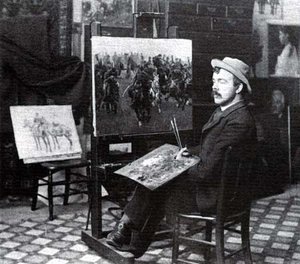
William Trego
1858 - 1909 , United States of America
Quick Facts
- Artistic Movement Or Style: Realism
- Artists Who Influenced This Artist:
- Thomas Eakins
- Tony Robert-Fleury
- William-Adolphe Bouguereau
- Date Of Birth: September 15, 1858
- Date Of Death: June 24, 1909
- Full Name: William Brooke Thomas Trego
- Nationality: American
- Notable Artworks:
- The Charge of Custer...
- Battery of Light Artillery...
- Quartermaster's Department
- Madonna and Child
- Place Of Birth: Yardley, USA