

 Preview
 Send
Send Share
Share
 Details

 Download
 Similars
 X-Ray
X-Ray Diaporama
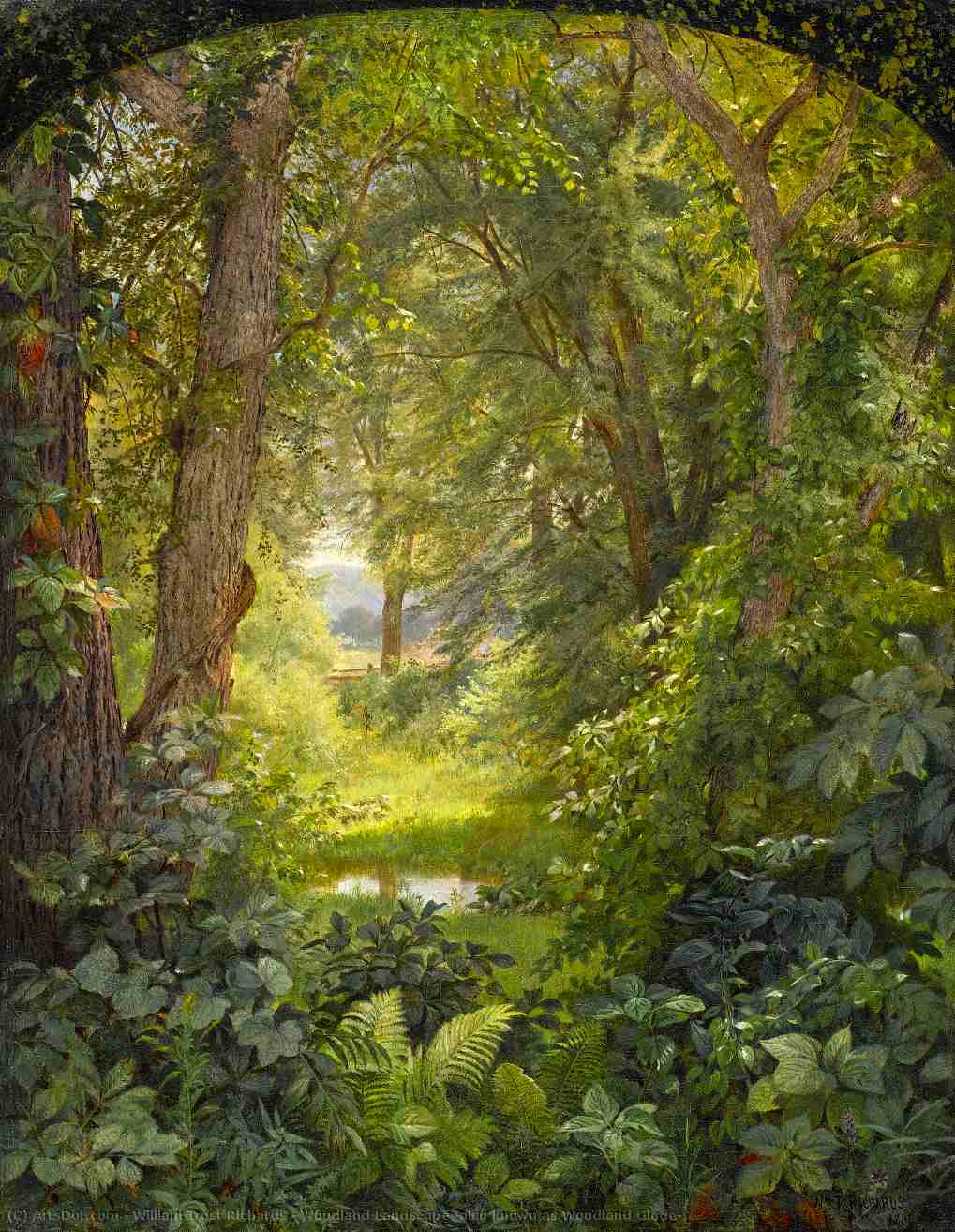
Woodland Landscape (also known as Woodland Glade)


 Read More
Purchase a high-resolution, enhanced digital image, far superior to the online preview.
Each file is meticulously prepared by our in-house specialists using advanced tools and expert manual retouching. We ensure every image has exceptional clarity, precise color accuracy, and fine detail.
The final file is delivered via email within 72 hours, optimized for immediate use in professional, editorial, and print environments. This is the same quality trusted by top-tier design studios, publishers, and galleries.
Digital Image
Download a high-resolution file for personal display, printing, and creative projects. ( Buy Print Buy Hand Made Painting)
Included in Every Digital Image Order
Expert Digital Delivery, Guaranteed
When you choose ArtsDot.com, you're not just getting an image - you're receiving a professionally enhanced digital artwork, crafted with precision and backed by a satisfaction guarantee. Here's everything that comes with your order, automatically:

Fast Email Delivery
Your high-resolution digital image file will be emailed to you within 72 hours of ordering - ready for immediate use.

AI-Enhanced Digital File
Your artwork is professionally optimized using advanced AI tools and manual editing, ensuring maximum detail, clarity, and color accuracy.

Free Lifetime Re-Delivery
Accidentally deleted or lost your file? No worries - we'll resend it to you anytime, free of charge.

No Import Fees - Ever
Enjoy your artwork instantly with zero customs, duties, or delivery fees - digital downloads are always tax-free.

Color Accuracy Guarantee
We ensure your digital image reflects the original colors as closely as possible using professional tools and color management.

60-Day Satisfaction Guarantee
If you're not satisfied with your digital image, we'll revise it or refund 100% within 60 days - no questions asked.

100% Money-Back Guarantee
Not satisfied? Get a full refund within 60 days of receiving your digital file - no questions asked.

Bulk Order Discounts
Buy 3 images, save 10% - Buy 5, save 15% - Buy 10+, save 20%. Great for creative projects, galleries, and agencies.
A Sanctuary of Light and Leaf: The Vision of William Trost Richards
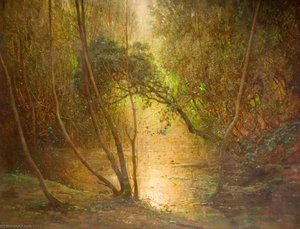
In the heart of the American landscape tradition, few works possess the quiet, breathing vitality found in William Trost Richards’ Woodland Landscape, also known as Woodland Glade. Painted in 1860, this oil on canvas masterpiece serves as a profound window into a world where nature is not merely observed but deeply felt. The painting invites the viewer to step away from the clamor of modern existence and enter a dense, primordial forest where time seems to suspend itself. Through his masterful command of light and texture, Richards captures a moment of absolute stillness, creating a sanctuary of greenery and shadow that resonates with anyone seeking peace within the natural world.
The composition is a masterclass in depth and immersion. As your eyes wander through the lush undergrowth, you are guided by a narrow, winding pathway that beckons you toward a sun-drenched clearing in the distance. This journey from the shadowed foreground into the luminous background creates a powerful sense of movement, drawing the soul deeper into the woods. The verticality of the canvas emphasizes the towering majesty of the trees, making the viewer feel small yet intimately connected to the earth. A subtle body of water rests in the foreground, its surface acting as a mirror that reflects the intricate canopy above, doubling the beauty of the scene and adding a layer of tranquil complexity to the composition.
The Precision of a Naturalist: Technique and Style
Richards was not merely a painter; he was a meticulous observer of the natural order. Influenced by the Pre-Raphaelite movement, his technique eschews broad, sweeping gestures in favor of an almost scientific fidelity to detail. Every fern, every textured strip of bark, and every dappled patch of sunlight is rendered with extraordinary precision. This dedication to realism allows the viewer to perceive the tactile qualities of the forest—the dampness of the moss, the roughness of the ancient trunks, and the delicate translucency of leaves caught in a sunbeam.
The artist’s palette is a sophisticated symphony of organic tones. Deep, velvety greens and earthy browns provide a rich foundation, while sudden bursts of golden yellow and soft, ethereal blues peeking through the canopy prevent the scene from feeling heavy or closed. This interplay of light and shadow—the chiaroscuro of the forest floor—is what breathes life into the work. For collectors and interior designers, this balance of color makes the piece incredibly versatile; it offers a calming focal point that can anchor a room with its organic warmth while providing a sophisticated sense of classical elegance.
Symbolism and the Spiritual Journey
Beyond its physical beauty, Woodland Landscape carries a profound metaphorical weight. During the mid-19th century, the study of nature was often viewed as a path to spiritual enlightenment. Richards utilizes the landscape as an allegory for the human experience; the dense, shadowed thickets represent the complexities and uncertainties of life, while the sunlit pasture visible in the distance symbolizes the ultimate attainment of clarity and peace. The path itself is a symbol of the journey toward wisdom—a continuous movement through the shadows toward the light.
For those looking to adorn a home or gallery with a high-quality reproduction, this painting offers more than just decoration. It provides an emotional anchor. To hang such a work is to invite a sense of contemplative solitude into a space. Whether placed in a quiet study, a serene bedroom, or a grand living area, Richards’ masterpiece continues to fulfill its original purpose: to remind us that within the intricate details of the natural world, there is a profound and enduring harmony waiting to be discovered.
Related Artworks




Artist Biography
A Meticulous Vision of Nature: The Life and Art of William Trost Richards
William Trost Richards, born in Philadelphia on November 14, 1833, occupies a unique position within the pantheon of American landscape painters. He wasn’t driven by the dramatic flourishes or romanticized ideals that characterized many of his contemporaries within the Hudson River School; instead, Richards pursued an almost scientific fidelity to nature, rendering scenes with a precision and detail that bordered on photographic realism. His early life provided a foundation for this distinctive approach. While formally educated at Central High School in Philadelphia, it was his apprenticeship between 1850 and 1855 with the German artist Paul Weber, combined with work as a designer of ornamental metalwork, that instilled within him a dedication to meticulous craftsmanship and observation. This blend of artistic training and practical skill would become the hallmark of his mature style. He wasn’t simply painting what he *felt* about nature; he was painstakingly documenting what he *saw*.From European Influences to American Shores
Richards's artistic journey took him to Europe in 1853, alongside fellow painters William Stanley Haseltine and Alexander Lawrie. This period proved formative, exposing him to the Düsseldorf School of painting—renowned for its detailed landscapes. However, upon his return to America, Richards began forging a path distinctly his own. He exhibited at the Pennsylvania Academy of Fine Arts from 1852 until 1905, gaining recognition within the Philadelphia art community. His first major public exhibition came in 1858 with a show organized by Albert Bierstadt in New Bedford, Massachusetts, aligning him, albeit loosely, with the Hudson River School tradition. Yet, even then, his work stood apart. While others sought to capture the sublime grandeur of nature, Richards focused on its intricate details—the texture of rocks, the play of light on water, the delicate structure of foliage. In 1862 he was elected an honorary member of the National Academy of Design and became a full academician in 1871, solidifying his standing within the American art establishment. He also joined the Association for the Advancement of Truth in Art, an American Pre-Raphaelite group, further emphasizing his commitment to realism and detailed observation.The White Mountains and Coastal Reveries
Perhaps Richards is best known for his watercolor views of the White Mountains of New Hampshire. These works, created during summers spent on the East Coast following his European sojourn, are remarkable for their almost clinical accuracy. He didn’t attempt to impose a romantic narrative onto the landscape; he simply presented it as it was—a complex interplay of geological formations, vegetation, and atmospheric conditions. Many of these watercolors now reside in the collection of the Metropolitan Museum of Art, testament to their enduring artistic merit. Later in his career, Richards shifted his focus almost exclusively to coastal scenes, particularly along the shores of New Jersey, Maine, and Rhode Island. These paintings reveal a deep fascination with the ocean’s rhythms—the relentless crashing of waves, the shifting patterns of light on the water's surface, the subtle gradations of color in the sky. He built a house in Jamestown, Rhode Island, in 1881, where he lived and worked until his death, fully immersed in the maritime world that became his primary subject matter.A Legacy of Precision and Observation
William Trost Richards passed away on November 8, 1905, in Newport, Rhode Island, leaving behind a body of work that continues to captivate viewers with its meticulous detail and unwavering commitment to realism. His influence can be seen in the works of later artists who embraced a more objective approach to landscape painting. His rejection of romanticism, his insistence on factual accuracy, and his masterful technique set him apart as a unique voice within American art history. He wasn’t interested in creating idealized visions of nature; he wanted to capture its essence with uncompromising honesty. His paintings are held in numerous prestigious museums across the United States, including the National Gallery, the Saint Louis Art Museum, and the Smithsonian American Art Museum, ensuring that his legacy will endure for generations to come. His daughter, Anna Richards Brewster, also followed in his footsteps as a painter, further extending the family’s artistic contribution.Exploring Further
- Discover more of Richards' work at online art databases like ArtsDot.com.
- Delve deeper into his life and career through resources such as Wikipedia and the Smithsonian Archives of American Art.
- Explore works by artists influenced by Richards, such as Enrique Arrigoni and his daughter Anna Richards Brewster.
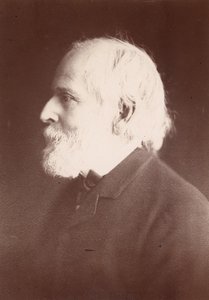
William Trost Richards
1833 - 1905 , United States of America
Quick Facts
- Artistic Movement Or Style: Hudson River School
- Artists Or Movements Influenced By This Artist: ['Anna Richards Brewster']
- Artists Who Influenced This Artist:
- Paul Weber
- Albert Bierstadt
- Date Of Birth: November 14, 1833
- Date Of Death: November 8, 1905
- Full Name: William Trost Richards
- Nationality: American
- Notable Artworks:
- Lago Avernus
- Woodland Landscape
- Interior of Woods…
- Place Of Birth: Philadelphia, USA

