 Preview
 Send
Send Share
Share
 Details

 Download
 Similars
 X-Ray
X-Ray Diaporama
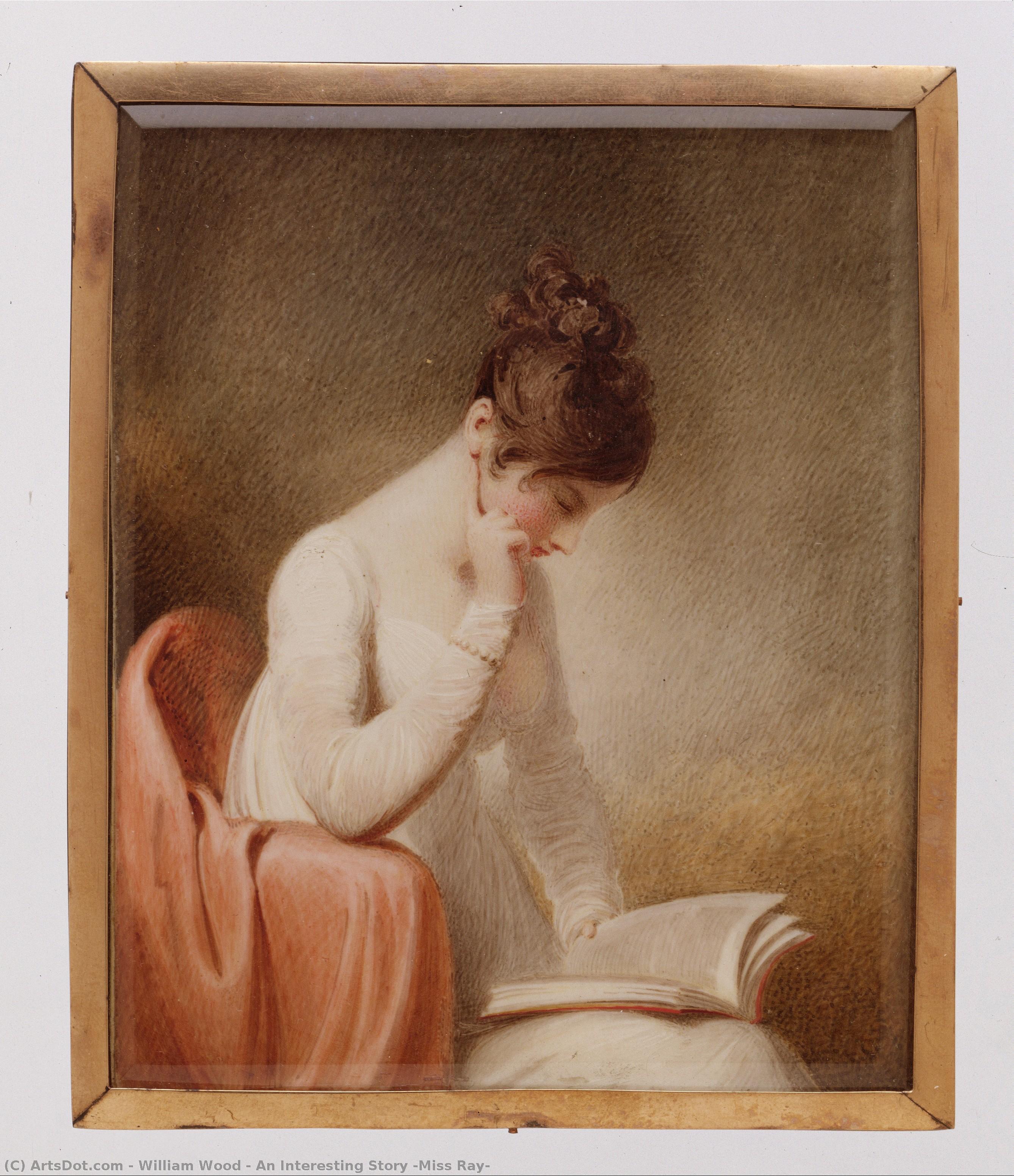
An Interesting Story (Miss Ray)
 1806
1806 12.0 x 10.0 cm
 Read More
Hand Made Oil Reproduction
Hand-painted oil on canvas in your size and frame, made to order by our artists. ( Buy Print Buy Image)




































Pick from our preset sizes that match the artwork's original proportions.

You may enter your own dimensions to fit a specific frame or space. If your selected size does not match the original image's proportions, we will either crop the artwork or extend the painting with additional hand-painted elements. A digital mockup will be sent for your approval before production begins.
Please note that the on-screen preview does not reflect the actual cropping or extension. Only the mockup will accurately show the final composition.
While custom sizes are available, we recommend selecting a dimension from the predefined list to preserve the original proportions.
After order, ArtsDot.com team will email client for instructions and provide a mockup preview
Worldwide Delivery () in 3/4 weeks instead of standard 5 weeks. (27 August). No compromise on quality.

Free Worldwide Express Shipping

High-Quality Linen Canvas

Full Shipping Insurance

Customs Tax Refund Guarantee

True Color Matching Guarantee

60-Day Return Policy (Defects Only)

100% Money-Back Guarantee

Bulk Discount Offer
 Glass option is only available in size under 110 CM

An Interesting Story (Miss Ray)
Reproduction Medium
Reproduction Size
-


Total Price
$ 263
Related Artworks









Artist Biography
A Life Forged in Iron, Marked by Coinage: The Singular Story of William Wood
William Wood (1671-1730) occupies a fascinatingly unusual place in the annals of 18th-century England. He wasn’t a painter, sculptor, or architect—the typical subjects of art historical study—but an ironmaster and mintmaster whose life intersected with the burgeoning world of commerce, colonial ambition, and even public scandal. Born in Shrewsbury, Shropshire, to a family of modest means – his father was a silkweaver – Wood rose through the ranks of industrial England, becoming a significant figure in the production of iron and, most notably, the controversial striking of coinage for Ireland and British America. His story is one of entrepreneurial drive, political entanglement, and a legacy that continues to spark debate among historians today.From Wolverhampton Industry to Royal Contracts
Wood’s early career was rooted in the practicalities of iron production. In 1690, he married Margaret Molineaux, a union that proved pivotal to his ascent. He entered into partnership with his father-in-law, Richard Molineaux, establishing themselves as manufacturing ironmongers in Wolverhampton, a town rapidly becoming a hub for industrial activity. This period saw Wood build a substantial business empire, acquiring leases on mines across England and Wales and pioneering the use of pit coal in iron production—a relatively novel approach at the time. By 1715, he had formed a large partnership dedicated to the marketing of iron and steel throughout the Midlands and London, demonstrating his ambition extended beyond mere manufacturing; he was a shrewd businessman with an eye for expanding markets. This success ultimately brought him to the attention of the Crown, leading to the contract that would define—and complicate—his historical reputation: the minting of Irish coinage from 1722 to 1724.The Tumultuous Affair of Irish Coinage
The circumstances surrounding Wood’s appointment as mintmaster for Ireland are shrouded in controversy. The contract was awarded through a rather dubious auction process, reportedly secured after a substantial payment to George I's mistress, the Duchess of Kendal, and her circle. This immediately cast a shadow over the entire undertaking. Wood was granted sole privilege to coin halfpence and farthings for Ireland, with a stipulated limit of 360 tons of copper over fourteen years. However, the quality of the coinage proved substandard—containing less copper than English currency—effectively imposing a tax on the Irish people. Furthermore, the sheer volume of coins produced exceeded actual demand, leading to widespread resentment and accusations of profiteering. The resulting outcry in Ireland led to fierce opposition within the Irish Parliament, and ultimately, the recall of much of the coinage.The ‘Rosa Americana’ and Anglo-American Trade
Adding another layer of complexity to Wood's minting activities was his simultaneous production of the 'Rosa Americana' coins for British America during the same period. These copper coins, featuring a rose on one side and the value on the other, were intended to alleviate a shortage of small change in the colonies. While less politically charged than the Irish coinage, the ‘Rosa Americana’ coins represent an intriguing example of Wood’s involvement in the expanding network of Anglo-American trade. The coins themselves are now highly sought after by collectors, offering a tangible link to the early economic history of North America. Following the recall of the Irish coinage, significant quantities of these 'Rosa Americana' coins were exported to the colonies, further solidifying his role as a key player in transatlantic commerce.A Legacy Forged in Metal and Controversy
William Wood died in 1730, leaving behind a complex legacy. He was an industrialist who embraced innovation and built a substantial business empire, but also a figure entangled in political scandal and accused of exploiting colonial economies. While his name may not be widely recognized alongside the great artists of his era, his story offers a compelling glimpse into the economic and political forces that shaped 18th-century England and its relationship with Ireland and America. His coinage—both the reviled Irish halfpence and the intriguing ‘Rosa Americana’—remain as tangible reminders of a life forged in iron, marked by ambition, controversy, and a lasting impact on the monetary history of two continents. His story serves as a potent reminder that even those who do not wield brushes or chisels can leave an indelible mark on the course of history.
william wood
1671 - 1730 , United Kingdom
Quick Facts
- Artistic Movement Or Style: Coin Design, Ironwork
- Date Of Birth: 1671
- Date Of Death: 1730
- Full Name: William Wood
- Nationality: English
- Notable Artworks:
- Irish Coinage
- Rosa Americana
- Place Of Birth: Shrewsbury, UK