

 Preview
 Send
Send Share
Share
 Details

 Download
 Similars
 X-Ray
X-Ray Diaporama
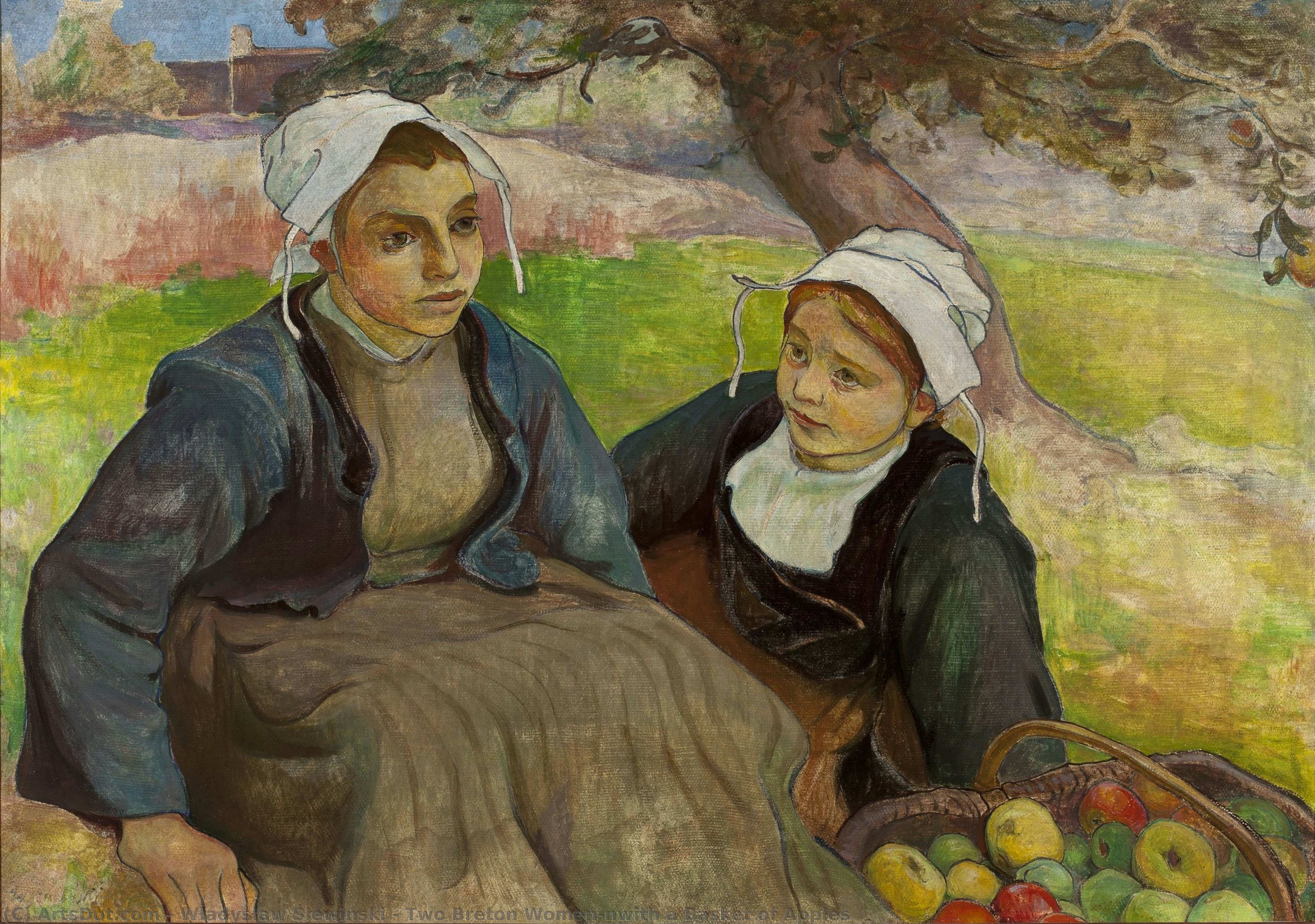
Two Breton Women\nwith a Basket of Apples
 Oil
Oil- WallArt
- Symbolism
 19th Century
 116.0 x 82.0 cm
 Warsaw National Museum
 Read More
Purchase a high-resolution, enhanced digital image, far superior to the online preview.
Each file is meticulously prepared by our in-house specialists using advanced tools and expert manual retouching. We ensure every image has exceptional clarity, precise color accuracy, and fine detail.
The final file is delivered via email within 72 hours, optimized for immediate use in professional, editorial, and print environments. This is the same quality trusted by top-tier design studios, publishers, and galleries.
Digital Image
Download a high-resolution file for personal display, printing, and creative projects. ( Buy Print Buy Hand Made Painting)
Included in Every Digital Image Order
Expert Digital Delivery, Guaranteed
When you choose ArtsDot.com, you're not just getting an image - you're receiving a professionally enhanced digital artwork, crafted with precision and backed by a satisfaction guarantee. Here's everything that comes with your order, automatically:

Fast Email Delivery
Your high-resolution digital image file will be emailed to you within 72 hours of ordering - ready for immediate use.

AI-Enhanced Digital File
Your artwork is professionally optimized using advanced AI tools and manual editing, ensuring maximum detail, clarity, and color accuracy.

Free Lifetime Re-Delivery
Accidentally deleted or lost your file? No worries - we'll resend it to you anytime, free of charge.

No Import Fees - Ever
Enjoy your artwork instantly with zero customs, duties, or delivery fees - digital downloads are always tax-free.

Color Accuracy Guarantee
We ensure your digital image reflects the original colors as closely as possible using professional tools and color management.

60-Day Satisfaction Guarantee
If you're not satisfied with your digital image, we'll revise it or refund 100% within 60 days - no questions asked.

100% Money-Back Guarantee
Not satisfied? Get a full refund within 60 days of receiving your digital file - no questions asked.

Bulk Order Discounts
Buy 3 images, save 10% - Buy 5, save 15% - Buy 10+, save 20%. Great for creative projects, galleries, and agencies.
A Moment of Quietude in Brittany
In the late nineteenth century, the rugged, windswept landscapes of Brittany became a sanctuary for artists seeking an escape from the industrial clamor of modern life. It was within this evocative setting, specifically the artistic enclave of Pont-Aven, that Władysław Ślewiński captured his hauntingly beautiful masterpiece, Two Breton Women with a Basket of Apples. The painting invites the viewer into a serene, pastoral moment, where two young women, adorned in their traditional, intricate Breton bonnets, sit nestled beneath the sprawling canopy of an apple tree. There is a profound stillness to the scene; as they rest after the labor of the harvest, the scattered apples at their feet serve as silent witnesses to a day spent in harmony with the earth. While the subject appears deceptively simple, there is an underlying layer of contemplative melancholy that lingers in the air, pulling the observer into a shared state of quiet reflection.
Moving beyond mere representation, Ślewiński employs a technique deeply influenced by the French Symbolist movement and his close association with Paul Gauguin. Rather than striving for a photographic realism that mimics every blade of grass or wrinkle in fabric, the artist utilizes cloisonnism—a style characterized by bold, flat areas of color bounded by dark, decisive contours. This approach transforms the canvas into a decorative surface where light and shadow are expressed through rhythmic patches of pigment. The interplay of these color zones creates a structural harmony that is as much about the emotional weight of the composition as it is about the physical landscape. For the discerning collector or interior designer, this method offers a sophisticated balance of texture and form, making the piece a versatile anchor for any curated space.
The symbolism embedded within the work speaks to the universal themes of nature, labor, and the human spirit. The apple tree, a symbol of fertility and the cyclical nature of life, provides a protective, almost maternal embrace for the figures. Yet, the faces of the women, though rendered with a delicate hand, carry an expression of profound introspection, suggesting a depth of thought that transcends their rural surroundings. This tension between the bountiful harvest and the internal, perhaps even somber, emotional state is what gives the painting its enduring power. It is not merely a depiction of a provincial afternoon; it is an exploration of the soul's quietude amidst the abundance of the natural world.
For those looking to bring a sense of historical elegance and emotional depth into their homes, this reproduction serves as more than just decoration. It is a window into the Belle Époque, offering a tactile connection to the Polish Symbolist tradition. The painting’s ability to evoke peace while maintaining a sophisticated, modern aesthetic makes it an ideal choice for creating a focal point in a room designed for contemplation and grace. Whether placed in a sunlit gallery or a cozy study, the presence of Ślewiński’s vision provides a timeless infusion of culture and tranquility.
Related Artworks
Artist Biography
A Soul in Bloom: The Poetic Legacy of Władysław Ślewiński
In the grand tapestry of European art, few threads possess the delicate, luminous quality of Władysław Ślewiński. A central figure of the Young Poland movement, Ślewiński did not merely paint objects; he captured the very breath of nature, imbuing the ephemeral beauty of flowers and fruit with a profound, spiritual weight. Born in 1856 in Nowy Białynin to a landowning family, his early life was marked by both privilege and profound loss. The death of his mother during childbirth cast a long shadow over his beginnings, yet it was this very sensitivity to the fragility of existence that would later define his brushwork. Guided by the keen eye of his cousin, the renowned painter Józef Chełmoński, Ślewiński began his formal training under Wojciech Gerson, laying the academic foundation upon which he would later build a revolutionary, modern aesthetic.
The trajectory of Ślewiński’s life took a dramatic turn following financial ruin and the pressures of political upheaval in Poland. Fleeing to Paris in 1888, he transitioned from a displaced landowner to a dedicated seeker of light and form. It was in the vibrant, intellectual crucible of France that his artistic identity truly crystallized. Studying at the prestigious Académie Julian and Académie Colarossi, he moved beyond traditional realism toward something far more evocative. Most significantly, his encounter with Paul Gauguin became the defining moment of his career. Immersed in the School of Pont-Aven, Ślewi ński embraced the principles of Synthetism, learning to simplify forms into bold, flat areas of color and to use contours that anchored his compositions with a rhythmic, almost musical grace.
The Language of Symbolism and Still Life
While many of his contemporaries sought the grand narratives of history painting, Ślewiński found the infinite within the intimate. His mastery of the still life genre allowed him to explore a unique visual language where every petal and every piece of fruit served as a vessel for meaning. To gaze upon his Peonies in a Vase or his depictions of apples is to enter a meditative space. He utilized a palette that was both luminous and controlled, blending the Impressionistic fascination with light with a Post-Impressionist commitment to symbolic depth. In his hands, the peony became more than a botanical specimen; it stood as an emblem of purity and nobility, while the simple presence of fruit suggested themes of fertility, abundance, and the cyclical nature of life.
His technique was a masterful balance of opposites:
- Precision and Fluidity: He maintained an unwavering commitment to academic accuracy in his botanical details while simultaneously employing the soft, expressive color patches characteristic of the Pont-Aven school.
- Subjective Color: Moving away from purely descriptive tones, he used color to evoke emotion, creating atmospheres that felt both physically real and spiritually heightened.
- Structural Harmony: Through the use of deliberate outlines and carefully arranged compositions, he achieved a sense of permanence and stillness that invites long periods of contemplation.
A Lasting Impression on Polish and Global Art
The historical significance of Władysław Ślewiński lies in his ability to bridge the gap between the academic traditions of the 19th century and the burgeoning modernism of the 20th. As a leading light of the Young Poland movement, he helped revitalize Polish culture during a period of intense national struggle, providing an art that was both deeply rooted in local identity and conversant with the avant-garde movements of Paris. His brief return to Poland between 1905 and 1910, where he served as a professor and opened his own school, allowed him to pass this sophisticated, international vision down to a new generation of Polish artists.
Though he passed away in Paris in 1918, leaving behind a body of work that remains as fresh and vibrant as the blooms he so loved, Ślewiński’s influence persists. He remains a master of the quiet moment, an artist who proved that the most profound truths are often found in the simplest of subjects. His legacy is one of resilience, beauty, and a deep, humanist connection to the natural world—a reminder that even in the face of tragedy, art can bloom with eternal grace.
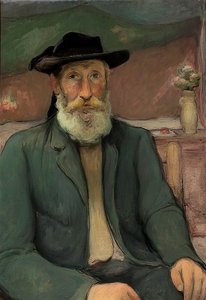
wladyslaw slewinski
1856 - 1918 , Poland
Quick Facts
- Artistic Movement Or Style: Academic Art Style
- Artists Who Influenced This Artist: ['Paul Gauguin']
- Date Of Birth: June 1856
- Full Name: Władysław Ślewiński
- Nationality: Polish
- Notable Artworks:
- Peonies in a Vase
- Still-Life with Apples and Candlestick
- Portrait of Marie Schewtzoff
- Place Of Birth: Białynikau, Poland

