 Preview
 Send
Send Share
Share
 Details

 Download
 Similars
 X-Ray
X-Ray Diaporama
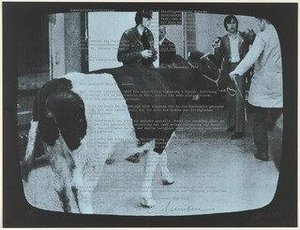
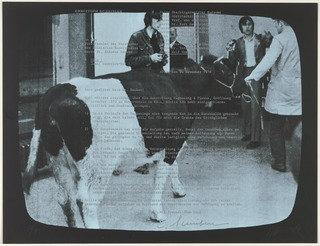
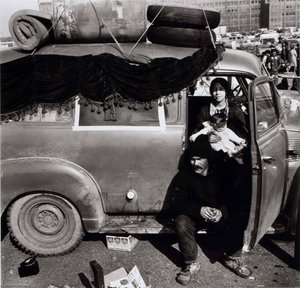
TV Oxen II (TV Ochsen II) from the portfolio Weekend
 Contemporary Realism
 1971
1971 47.0 x 63.0 cm
 Read More
Hand Made Oil Reproduction
Hand-painted oil on canvas in your size and frame, made to order by our artists. ( Buy Print Buy Image)




































Pick from our preset sizes that match the artwork's original proportions.

You may enter your own dimensions to fit a specific frame or space. If your selected size does not match the original image's proportions, we will either crop the artwork or extend the painting with additional hand-painted elements. A digital mockup will be sent for your approval before production begins.
Please note that the on-screen preview does not reflect the actual cropping or extension. Only the mockup will accurately show the final composition.
While custom sizes are available, we recommend selecting a dimension from the predefined list to preserve the original proportions.
After order, ArtsDot.com team will email client for instructions and provide a mockup preview
Worldwide Delivery () in 3/4 weeks instead of standard 5 weeks. (2 September). No compromise on quality.

Free Worldwide Express Shipping

High-Quality Linen Canvas

Full Shipping Insurance

Customs Tax Refund Guarantee

True Color Matching Guarantee

60-Day Return Policy (Defects Only)

100% Money-Back Guarantee

Bulk Discount Offer
 Glass option is only available in size under 110 CM

TV Oxen II (TV Ochsen II) from the portfolio Weekend
Reproduction Medium
Reproduction Size
-


Total Price
$ 313
Related Artworks
Artist Biography
A Revolutionary Spirit: The Life and Art of Wolf Vostell
Wolf Vostell, born in Leverkusen, Germany, in 1932, emerged as a pivotal figure in the post-war art world, relentlessly challenging conventional boundaries and forging new paths at the intersection of art, technology, and societal critique. His career was marked by an unwavering commitment to experimentation, pushing beyond traditional mediums to embrace Happenings, Fluxus events, video installations, and provocative sculptural forms. Vostell wasn’t simply creating art; he was enacting a radical redefinition of what art *could* be, reflecting the anxieties and transformations of a rapidly changing world. From his early apprenticeship as a lithographer in 1953, a grounding in traditional techniques provided a foundation for his later deconstruction of artistic norms. He further honed his skills through studies at the Academy of Applied Art in Wuppertal, followed by periods at the École Nationale Supérieur des Beaux-Arts in Paris and the Düsseldorf Academy of Arts, absorbing diverse influences that would shape his unique vision.Dé-coll/age and the Birth of a New Aesthetic
The genesis of Vostell’s distinctive artistic language can be traced to 1954 with the introduction of *Dé-coll/age*. This wasn't merely an aesthetic technique; it was a philosophical statement. By tearing down posters, fragmenting images, and utilizing the detritus of urban life, Vostell sought to dismantle established values and expose the underlying chaos of modern existence. Dé-coll/age became synonymous with his artistic practice, symbolizing a rejection of pristine perfection in favor of raw, fragmented reality. This process wasn’t about destruction for its own sake; it was about revealing hidden layers, exposing the constructed nature of meaning, and prompting viewers to question the messages bombarding them from the media landscape. It represented a critical distance from media influence, a conscious effort to break free from the homogenizing forces of consumer culture. His early Happenings, like “The Theater is in the Street” staged in Paris in 1958, further amplified this ethos, incorporating unconventional materials – auto parts, televisions – into immersive experiences that blurred the lines between art and life.Fluxus, Technology, and the Expanding Definition of Art
Vostell’s artistic trajectory intersected powerfully with the Fluxus movement in the early 1960s. Collaborating with luminaries like Nam June Paik and George Maciunas, he embraced the spirit of anti-art, performance, and radical experimentation that defined the group. This association fueled his exploration of new technologies, most notably television. Inspired by Karlheinz Stockhausen’s pioneering electronic music, Vostell created his first *Electronic TV Dé-coll/age* in 1959, a landmark moment in the integration of technology into artistic expression. He wasn't simply using television as a subject matter; he was actively manipulating it, disrupting its signals, and transforming it into an active participant in the artwork. This culminated in his groundbreaking “6 TV Dé-coll/age” exhibited at the Smolin Gallery in New York in 1963, solidifying his position as a pioneer of both video art and installation art. Vostell’s work anticipated the pervasive influence of media in contemporary life, foreshadowing our current reality where screens dominate our perceptions and experiences.Concrete, Cars, and the Critique of Consumerism
Perhaps the most iconic aspect of Vostell's later career was his creation of automobile-concrete sculptures. These weren’t simply assemblages; they were powerful statements about consumerism, industrialization, and the ephemerality of modern life. By embedding cars – symbols of freedom, status, and technological progress – within concrete structures, he froze them in time, transforming them into archaeological relics of a disposable culture. “Ruhender Verkehr” (Stationary Traffic) in Cologne stands as a prime example, a monumental testament to his artistic vision. These sculptures weren’t intended to celebrate the automobile; they were meant to critique its dominance and expose the destructive consequences of unchecked consumerism. The concrete itself became a metaphor for the rigid structures of society, trapping these symbols of mobility within an unyielding embrace. His 1976 sculpture “VOAEX (Viaje de (H)ormigón por la Alta Extremadura)” in Spain further exemplifies this exploration, connecting themes of travel and landscape with his signature material combination.Legacy and Enduring Influence
Wolf Vostell’s impact on the art world is undeniable. He was a true innovator, anticipating many of the developments that would define contemporary media art. His pioneering use of television, video, and installation techniques paved the way for generations of artists working with digital technologies. The Vostell Archive, established by the artist himself and now housed in the Museo Vostell Malpartida, serves as an invaluable resource for scholars and researchers, preserving his vast body of work and documenting the broader Fluxus movement. His critique of consumer culture remains remarkably relevant today, resonating with contemporary concerns about environmental sustainability, social inequality, and the pervasive influence of media. Vostell’s legacy isn't simply about the artworks he created; it’s about the questions he raised, the boundaries he challenged, and the enduring power of his vision to inspire critical thinking and artistic innovation. He demonstrated that art could be a powerful tool for social commentary, a catalyst for change, and a reflection of the complex realities of the modern world.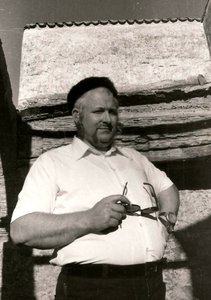
Wolf Vostell
1932 - 1998 , Germany
Quick Facts
- Artistic Movement Or Style: Fluxus, Happening, Video Art
- Artists Or Movements Influenced By This Artist: ['Contemporary media artists']
- Artists Who Influenced This Artist: ['Karlheinz Stockhausen']
- Date Of Birth: 1932
- Date Of Death: 1998
- Full Name: Wolf Vostell
- Nationality: German
- Notable Artworks:
- The Black Room
- Miss Vietnam
- VOAEX
- TV Oxen II
- Place Of Birth: Leverkusen, Germany
Related Articles

Monochrome Visions: Exploring the Aesthetic & Historical Significance of Black & White Photography
Explore the rich history & artistic power of black and white photography. From early techniques to iconic masters like Ansel Adams, discover why monochrome continues to captivate art lovers today. Expert insights for collectors.

White on Canvas: 10 Masterpieces & Timeless Elegance for Your Home Decor
Explore 10 iconic white paintings by Monet, Whistler & Rothko! Discover the stories behind these serene masterpieces and their impact on art history. Find museum-quality reproductions for your home decor at .
Timeless & Chic: Elevating Your New Home with the Sophistication of Black and White Photography
Transform your new home with the timeless allure of black and white photography. ArtsDot.com specializes in elegant monochrome decor and custom hand-painted wedding portraits that turn cherished milestones into lasting, soulful masterpieces. Elevate your space with ease.
Beyond the Lens: Photography's Enduring Influence on Modern & Contemporary Art
Explore photography's pivotal role in shaping modern & contemporary art. Discover key movements, influential artists like Stieglitz, and expert collecting advice from ArtsDot.

Dark Masterpieces: 10 Iconic Paintings Dominated by Black Tones |
Explore 10 iconic paintings dominated by black tones, from Rembrandt’s chiaroscuro to Goya's dark expressions. Discover the stories behind these masterpieces & find museum-quality art reproductions for your home at .