 Preview
 Send
Send Share
Share
 Details

 Download
 Similars
 X-Ray
X-Ray Diaporama
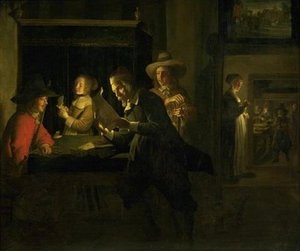
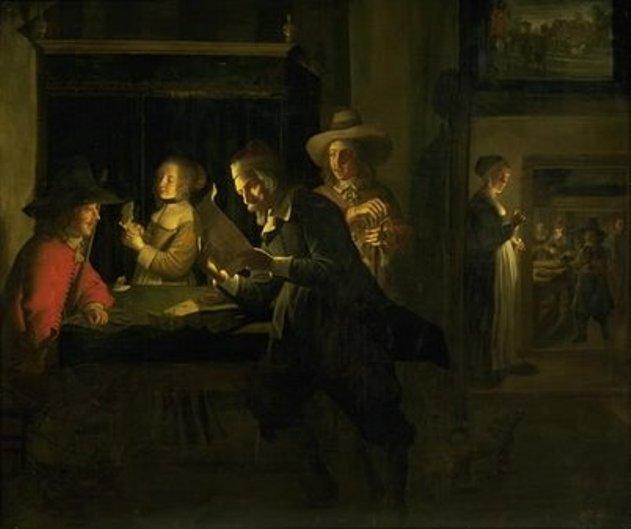
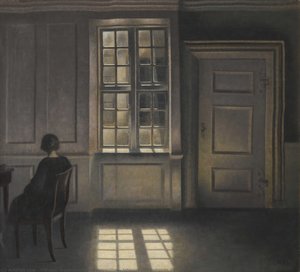
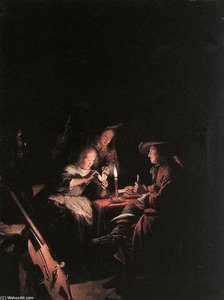
Evening Interior
 1651
1651 108.0 x 93.0 cm
 Statens Museum For Kunst
 Read More
Hand Made Oil Reproduction
Hand-painted oil on canvas in your size and frame, made to order by our artists. ( Buy Print Buy Image)




































Pick from our preset sizes that match the artwork's original proportions.

You may enter your own dimensions to fit a specific frame or space. If your selected size does not match the original image's proportions, we will either crop the artwork or extend the painting with additional hand-painted elements. A digital mockup will be sent for your approval before production begins.
Please note that the on-screen preview does not reflect the actual cropping or extension. Only the mockup will accurately show the final composition.
While custom sizes are available, we recommend selecting a dimension from the predefined list to preserve the original proportions.
After order, ArtsDot.com team will email client for instructions and provide a mockup preview
Worldwide Delivery () in 3/4 weeks instead of standard 5 weeks. (17 August). No compromise on quality.

Free Worldwide Express Shipping

High-Quality Linen Canvas

Full Shipping Insurance

Customs Tax Refund Guarantee

True Color Matching Guarantee

60-Day Return Policy (Defects Only)

100% Money-Back Guarantee

Bulk Discount Offer
 Glass option is only available in size under 110 CM

Evening Interior
Reproduction Medium
Reproduction Size
-


Total Price
$ 263
Related Artworks
Artist Biography
Wolfgang Heimbach: A Silent Witness to Danish Royalty
Wolfgang Heimbach (dates unknown) stands as a singular figure in the artistic landscape of 17th-century Denmark – a painter who defied convention not only through his deafness but also by achieving remarkable visual precision despite his inability to perceive sound. Born into the noble House of Oldenburg, he embarked on an artistic journey marked by rigorous study and international exposure, ultimately establishing himself as one of the most celebrated court painters of his era. His early life remains shrouded in some mystery, though records indicate a comprehensive education encompassing Latin, Greek, mathematics, and music – disciplines deemed crucial for intellectual development during that period. Recognizing his talent for drawing and painting, he pursued formal training primarily in Germany and subsequently traveled extensively throughout the Low Countries, absorbing influences from Flemish masters renowned for their meticulous realism and dramatic compositions. These formative experiences instilled within him a dedication to observation and an unwavering commitment to capturing the essence of his subjects with unparalleled accuracy. Heimbach’s career ascended swiftly upon his appointment as court painter to Anton Günter, Count of Oldenburg, where he honed his skills in depicting portraits and ceremonial scenes. However, it was his subsequent service under Frederick III of Denmark-Norway that cemented his reputation as a visionary artist. During this period – spanning from 1653 to 1662/63 – Heimbach traveled to Italy, immersing himself in the artistic fervor of Rome and Florence. This immersion proved invaluable; he collaborated with prominent noble families like the Doria Pamphilj and Medici, gaining experience in executing ambitious projects that demanded technical mastery and stylistic innovation. Notably, his depiction of Frederick III’s homage ceremony in 1660 stands as a testament to his extraordinary observational abilities – an almost photographic record capturing every nuance of posture and expression with breathtaking detail. From 1670 until his death, Heimbach served as court painter to Christoph Bernhard von Galen, Bishop of Münster, continuing to produce works that reflected both artistic excellence and religious devotion. His oeuvre encompasses a diverse range of subjects – portraits of royal figures, opulent interiors adorned with elaborate ornamentation, and evocative landscapes imbued with atmospheric perspective—all executed with meticulous technique and infused with a profound understanding of humanist ideals. Despite his deafness, Heimbach’s legacy endures as an artist who transcended physical limitations to achieve artistic greatness. His paintings are celebrated for their realism, elegance, and psychological insight, reflecting the spirit of the Baroque period while simultaneously embodying a singular vision born from a unique perspective. Wolfgang Heimbach remains an enduring symbol of artistic perseverance and a captivating exemplar of how creativity can flourish even in the absence of sensory experience—a silent witness to the grandeur of Danish royalty and a cornerstone of European art history.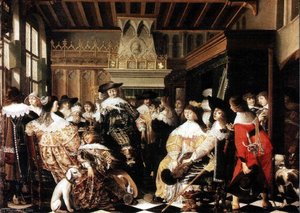
Quick Facts
- Artistic Movement Or Style: Baroque
- Date Of Death: Living
- Full Name: Wolfgang Heimbach
- Nationality: German
- Notable Artworks: ['Homage to Frederik III']
- Place Of Birth: Oldenburg