 Preview
 Send
Send Share
Share
 Details

 Download
 Similars
 X-Ray
X-Ray Diaporama
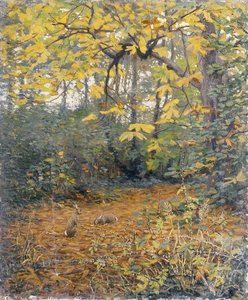
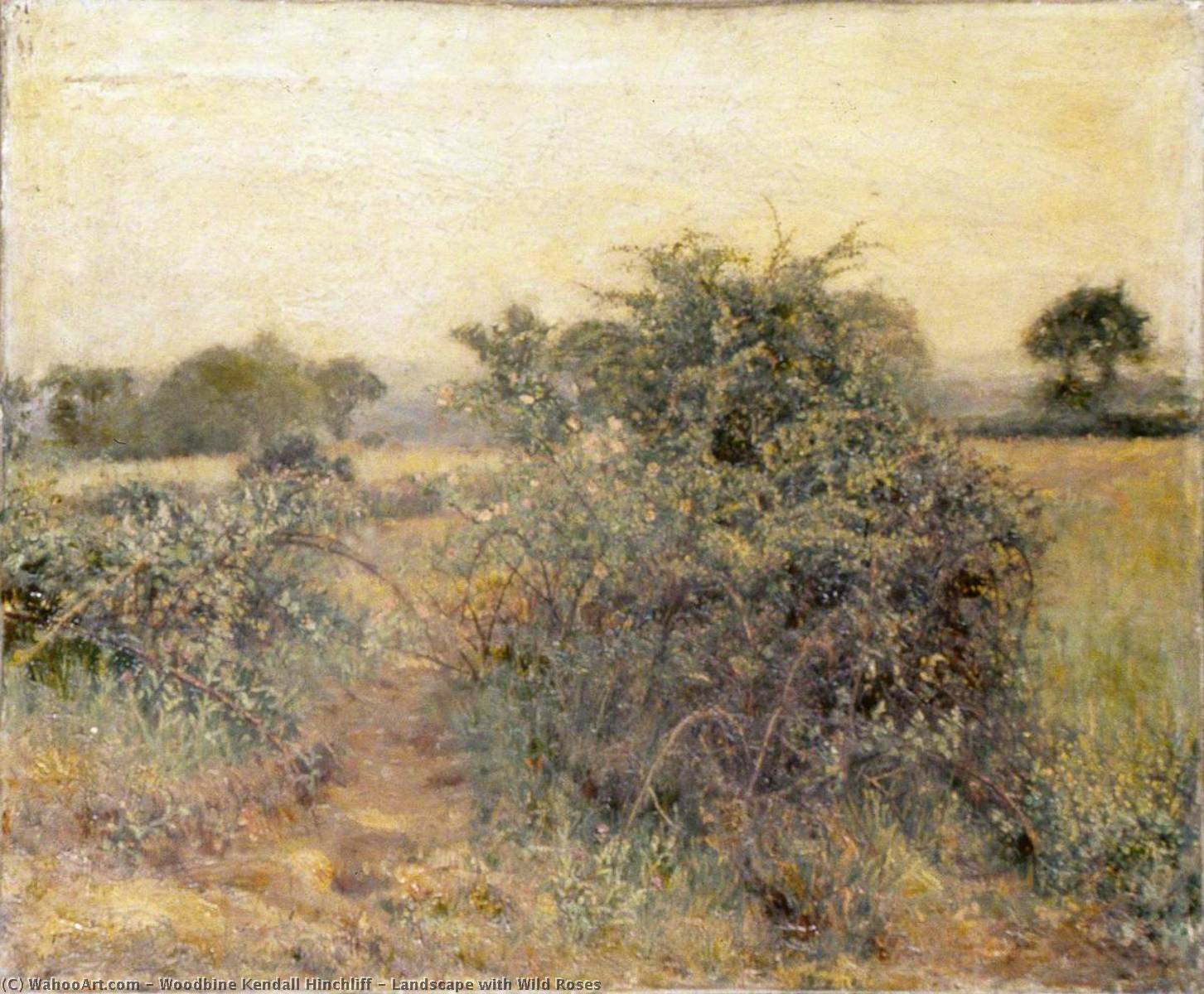
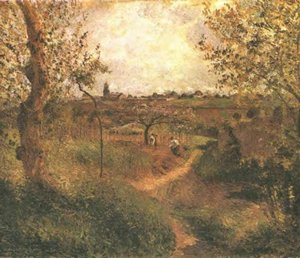
Landscape with Wild Roses
 51.0 x 61.0 cm
 Read More
Giclée / Art Print
Museum-quality giclée or canvas print with fast production and flexible finish options. ( Buy Hand Made Painting Buy Image)




































Pick from our preset sizes that match the artwork's original proportions.

You may enter your own dimensions to fit a specific frame or space. If your selected size does not match the original image's proportions, we will either crop the artwork or extend the image with a mirrored or solid-fill edge. A digital mockup will be sent for your approval before production begins.
Please note that the on-screen preview does not reflect the actual cropping or extension. Only the mockup will accurately show the final composition.
While custom sizes are available, we recommend selecting a dimension from the predefined list to preserve the original proportions.
Worldwide Delivery () in 2 weeks instead of standard 4/5 weeks. (23 August)

Free Worldwide Express Shipping

High-Quality Linen Canvas

Full Shipping Insurance

Customs Tax Refund Guarantee

True Color Matching Guarantee

60-Day Return Policy (Defects Only)

100% Money-Back Guarantee

Bulk Discount Offer
 Glass option is only available in size under 110 CM

Landscape with Wild Roses
Giclée / Art Print
Reproduction Size
-


Total Price
$ 63
Related Artworks









Artist Biography
Woodbine Kendall Hinchliff: A Highland Visionary
Woodbine Kendall Hinchliff, a name perhaps less familiar than many of his contemporaries, nevertheless possessed a remarkable talent for capturing the raw beauty and dramatic grandeur of the Scottish Highlands. Born in 1874 in Edinburgh, Scotland, Hinchliff’s artistic journey was one shaped by a deep connection to the landscape – a connection that would ultimately define his distinctive style and enduring legacy. His life, though tragically cut short at the age of forty-one in 1915, produced a body of work that continues to resonate with viewers today, offering glimpses into a world of rugged mountains, shimmering lochs, and the timeless spirit of the Scottish wilderness.
Hinchliff’s early life provided little indication of his future artistic pursuits. He received a relatively informal education, focusing primarily on drawing and sketching as a pastime. However, it was during a period of travel in the late 1890s that he truly discovered his passion – immersing himself in the landscapes of Scotland and Ireland. These formative experiences instilled within him an acute appreciation for light, color, and the evocative power of nature. He began to meticulously record his observations through watercolor and pencil, developing a keen eye for detail and a sensitivity to atmospheric effects.
Returning to Edinburgh, Hinchliff initially pursued a career as a draughtsman, working for a firm involved in architectural surveys. This practical experience honed his technical skills and provided him with valuable insights into perspective and composition. Yet, the pull of the landscape remained strong, and he steadily devoted more time to his own artistic endeavors. His style evolved during this period, moving away from purely representational depictions towards a more expressive approach – one characterized by loose brushwork, vibrant color palettes, and a palpable sense of movement. Influences can be traced back to the Romantic painters like Turner and Constable, but Hinchliff forged his own unique voice, imbuing his work with a distinctly Scottish sensibility.
The Highland Landscape: A Painter's Obsession
Hinchliff’s artistic focus centered almost exclusively on the Highlands of Scotland. He embarked on numerous expeditions to remote regions, often traveling alone and relying on local guides for assistance. These journeys were not merely excursions; they were deeply personal pilgrimages – a quest to understand and translate the essence of this extraordinary environment onto canvas. His subjects ranged from towering mountain peaks and vast moorlands to tranquil lochs and dramatic waterfalls. He was particularly drawn to scenes of atmospheric drama, capturing the shifting light, swirling mists, and brooding skies that are so characteristic of the Highland weather.
A key element of Hinchliff’s technique involved a deliberate simplification of forms, prioritizing the overall impression over precise detail. He employed loose, gestural brushstrokes to convey the texture of rock and heather, and used color with a bold, expressive quality. His palette was dominated by earthy tones – browns, greens, and grays – but he frequently introduced flashes of vibrant blue and purple to capture the brilliance of the sky or the reflections in the water. His paintings weren’t simply depictions; they were emotional responses to the grandeur of the landscape.
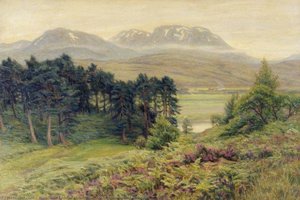
The artist's dedication to capturing the Highland light is particularly evident in works like “Scottish Mountain Landscape,” a stunning 1910s painting that exemplifies his mastery of atmospheric perspective and color. The composition, dominated by towering peaks shrouded in mist, creates a sense of both scale and intimacy – inviting the viewer to lose themselves within the vastness of the wilderness.
A Life Interrupted: Tragedy and Legacy
Despite his artistic success, Hinchliff’s life was tragically cut short. In 1915, during one of his Highland expeditions, he succumbed to pneumonia – a consequence of exposure to the harsh elements. His untimely death left behind a relatively small body of work, but it is a remarkably consistent and compelling collection that speaks volumes about his artistic vision.
Hinchliff’s paintings are now held in several notable collections, including the Brighton Museum & Art Gallery. His work has been recognized for its evocative power and its ability to transport viewers to the heart of the Scottish Highlands. While he may not be as widely celebrated as some of his contemporaries, Woodbine Kendall Hinchliff deserves recognition as a significant figure in British landscape painting – a painter who captured the spirit of a nation’s wilderness with remarkable skill and sensitivity.
Key Characteristics & Influences
Technique: Loose brushwork, expressive color palettes, emphasis on atmospheric perspective. He favored watercolor and pencil, often combining them in his compositions.
Subject Matter: Primarily the Scottish Highlands – mountains, lochs, moorlands, and dramatic weather conditions.
Influences: The Romantic painters (Turner, Constable), particularly their use of light and color to evoke emotion. Also influenced by traditional Highland folklore and landscape traditions.
Distinctive Features: A strong sense of movement and drama; a focus on capturing the *feeling* of the Highlands rather than simply replicating visual details. His work possesses a quiet intensity, reflecting his deep connection to the land.
woodbine kendall hinchliff
1874 - 1915
Quick Facts
- Artistic Movement Or Style: Romantic Landscape
- Artists Or Movements Influenced By This Artist: ['None listed']
- Artists Who Influenced This Artist: ['George Romney']
- Date Of Birth: 1874
- Date Of Death: 1915
- Full Name: Woodbine Kendall Hinchliff
- Nationality: British
- Notable Artworks: ['Scottish Mountain Landscape']
- Place Of Birth: Edinburgh, Scotland