 Preview
 Send
Send Share
Share
 Details

 Download
 Similars
 X-Ray
X-Ray Diaporama
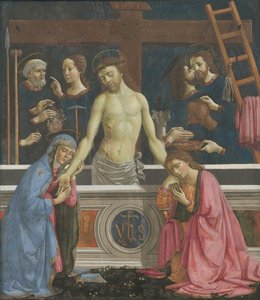
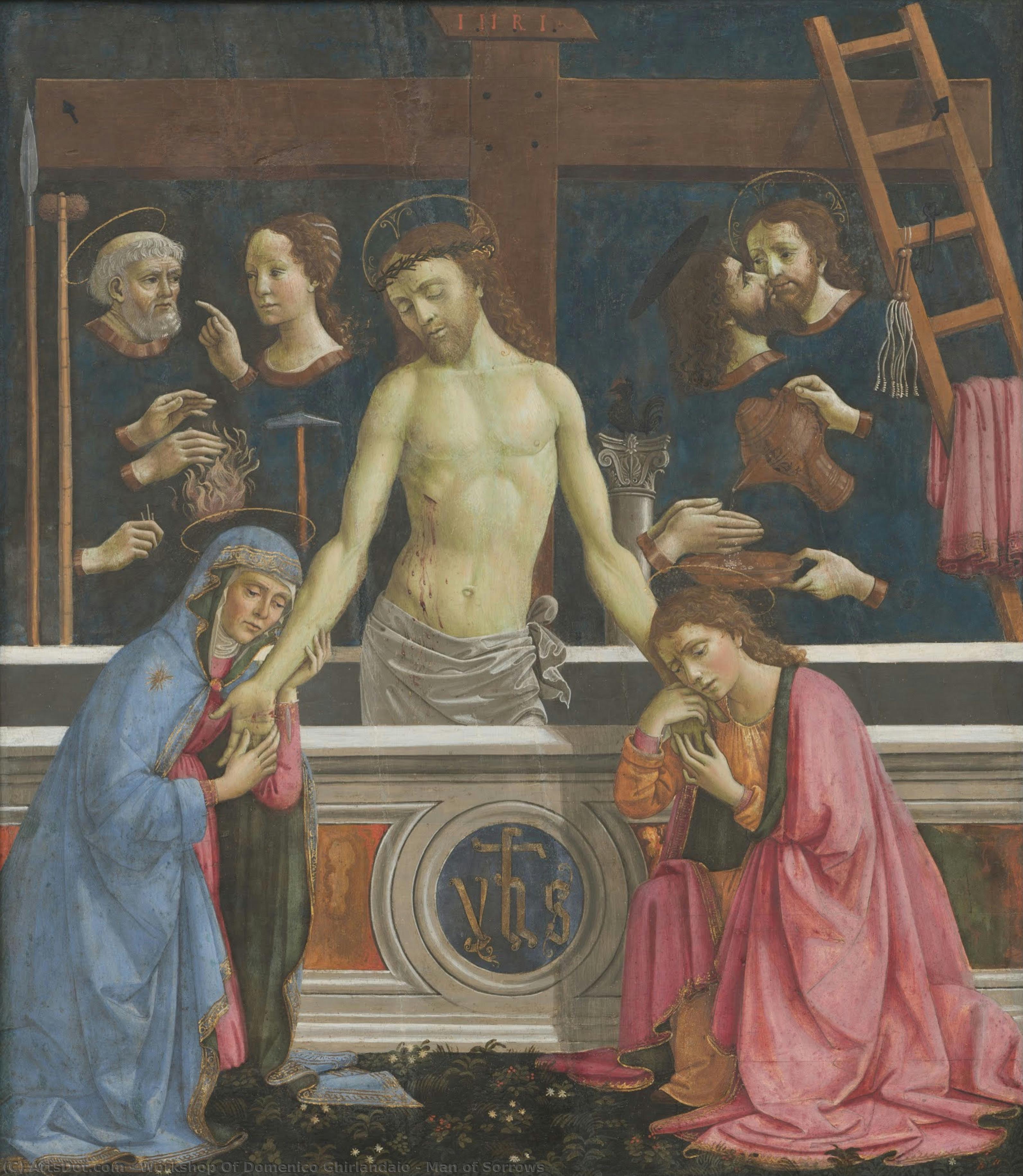
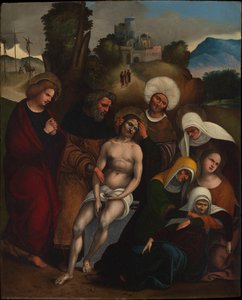
Man of Sorrows

 Read More
Hand Made Oil Reproduction
Hand-painted oil on canvas in your size and frame, made to order by our artists. ( Buy Print Buy Image)




































Pick from our preset sizes that match the artwork's original proportions.

You may enter your own dimensions to fit a specific frame or space. If your selected size does not match the original image's proportions, we will either crop the artwork or extend the painting with additional hand-painted elements. A digital mockup will be sent for your approval before production begins.
Please note that the on-screen preview does not reflect the actual cropping or extension. Only the mockup will accurately show the final composition.
While custom sizes are available, we recommend selecting a dimension from the predefined list to preserve the original proportions.
After order, ArtsDot.com team will email client for instructions and provide a mockup preview
Worldwide Delivery () in 3/4 weeks instead of standard 5 weeks. (28 August). No compromise on quality.

Free Worldwide Express Shipping

High-Quality Linen Canvas

Full Shipping Insurance

Customs Tax Refund Guarantee

True Color Matching Guarantee

60-Day Return Policy (Defects Only)

100% Money-Back Guarantee

Bulk Discount Offer
 Glass option is only available in size under 110 CM

Man of Sorrows
Reproduction Medium
Reproduction Size
-


Total Price
$ 263
Related Artworks








Artist Biography
The Enigmatic Life of Domenico Ghirlandaio
Domenico di Tommaso Curtoni, better known as Domenico Ghirlandaio (1449-1494), remains a pivotal figure in the Florentine Renaissance, though his life is surprisingly less documented than contemporaries like Leonardo da Vinci or Michelangelo. Born into a family of tapestry makers – *ghirlande* meaning garlands, hence his adopted name – he initially followed in their footsteps, training as an artist specializing in decorative painting. This early grounding profoundly shaped his aesthetic, imbuing his work with a meticulous attention to detail and a vibrant sense of pattern that would become hallmarks of his style. Unlike artists who embraced the theoretical complexities of perspective from youth, Ghirlandaio’s journey began with practical application, focusing on surface embellishment before delving into more ambitious narrative compositions. He was registered in the Arte dei Medici e Speziali in 1472, marking his formal entry into the world of painting and signaling a shift towards fresco work, which would ultimately define his legacy. His father’s trade instilled not only technical skill but also an understanding of color and design that set him apart.From Tapestries to Frescoes: A Rising Star in Florence
Ghirlandaio's early commissions were modest – decorations for private chapels and smaller churches around Florence. However, his talent quickly garnered attention, leading to increasingly significant projects. He established a large and highly successful workshop, employing numerous assistants and becoming known for his efficiency and ability to deliver complex works on time and within budget. This pragmatic approach, while sometimes criticized by later art historians as prioritizing quantity over profound artistic innovation, was crucial to his success in the competitive Florentine art scene. His reputation blossomed with commissions like those at the Church of Santa Maria del Carmine, where he painted the *Life of Saint Fina* (1475-1476). This cycle showcases his burgeoning skill in depicting realistic figures and emotionally resonant scenes, moving beyond mere decorative flourishes to engage viewers on a deeper level. The frescoes are notable for their vivid portrayal of contemporary Florentine life; Ghirlandaio populated the scenes with recognizable citizens, effectively blurring the line between sacred narrative and everyday reality. It was this ability to ground religious stories in the tangible world that made his work so appealing to his patrons.Influences and Artistic Development
While not a radical innovator like Botticelli or Leonardo, Ghirlandaio synthesized influences from various sources to forge his distinctive style. He absorbed lessons from earlier masters such as Masaccio – particularly in the use of chiaroscuro and anatomical accuracy – but adapted them to suit his own preferences for clarity and decorative richness. The influence of Fra Angelico is also evident in his early works, especially in the delicate rendering of details and the harmonious color palettes. However, Ghirlandaio’s most significant contribution lay in his masterful depiction of portraiture within narrative cycles. He possessed an exceptional ability to capture individual likenesses with remarkable precision, imbuing his figures with psychological depth and a sense of individuality rarely seen in earlier Renaissance art. This skill was likely honed through his workshop's practice of creating decorative panels featuring portraits of prominent Florentine families. His development wasn’t about rejecting established conventions but refining them, adding layers of realism and emotional nuance that resonated with the humanist spirit of the age.The Tornabuoni Chapel: A Masterpiece of Renaissance Portraiture
Ghirlandaio's magnum opus is undoubtedly the Tornabuoni Chapel in Santa Maria Novella (1485-1490), commissioned by Giovanni Tornabuoni, a powerful banker and member of the Medici circle. This extensive fresco cycle, depicting scenes from the *Life of the Virgin* and the *Passion of Christ*, represents the pinnacle of his artistic achievement. The chapel is not merely a religious narrative but also a stunning gallery of portraits featuring members of the Florentine elite – including Lorenzo de’ Medici himself. These portraits are rendered with an unprecedented level of realism and psychological insight, offering a fascinating glimpse into the lives and personalities of Renaissance society. The attention to detail in the costumes, hairstyles, and facial expressions is extraordinary, showcasing Ghirlandaio's unparalleled skill as a portraitist. The composition is meticulously planned, creating a harmonious balance between narrative scenes and individual portraits. It’s a testament to his ability to seamlessly integrate religious iconography with contemporary life.Legacy and Historical Significance
Domenico Ghirlandaio died relatively young in 1494, leaving behind a substantial body of work that profoundly influenced the next generation of Florentine artists. His workshop continued to thrive after his death, disseminating his style throughout Italy. Perhaps his most famous pupil was Michelangelo Buonarroti, who began his artistic training under Ghirlandaio’s tutelage before moving on to study sculpture with Bertoldo di Giovanni. While Michelangelo would eventually surpass his master in terms of sheer artistic genius, the foundations of his technical skill and understanding of anatomy were undoubtedly laid during his apprenticeship with Ghirlandaio. Ghirlandaio's emphasis on realism, portraiture, and decorative richness paved the way for High Renaissance artists like Raphael and Leonardo da Vinci. His frescoes remain a vital source of information about Florentine life in the 15th century, offering invaluable insights into the social, political, and cultural context of the Renaissance.- His innovative use of portraiture within religious narratives.
- The meticulous detail and vibrant color palettes characteristic of his style.
- His influence on Michelangelo and subsequent generations of artists.

Quick Facts
- Artistic Movement Or Style: Early Renaissance painting
- Artists Or Movements Influenced By This Artist: ['Early Renaissance artists']
- Artists Who Influenced This Artist: ['Domenico Ghirlandaio']
- Date Of Death: Living
- Full Name: Workshop Of Domenico Ghirlandaio
- Nationality: Italian
- Notable Artworks:
- Frescoes in the Tornabuoni Chapel
- Madonna with Saints
- Adoration of the Magi