Preview
 Send
Send Share
Share
 Details

 Download
 Similars
 X-Ray
X-Ray Diaporama
 Stats
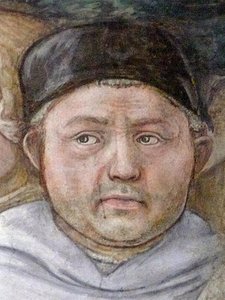
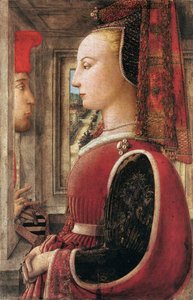
StatsPortrait of a Woman with a Man at a Casement
 1440
1440 64.0 x 41.0 cm
 Metropolitan Museum of Art
 Read More
Purchase a high-resolution, enhanced digital image, far superior to the online preview.
Each file is meticulously prepared by our in-house specialists using advanced tools and expert manual retouching. We ensure every image has exceptional clarity, precise color accuracy, and fine detail.
The final file is delivered via email within 72 hours, optimized for immediate use in professional, editorial, and print environments. This is the same quality trusted by top-tier design studios, publishers, and galleries.
Digital Image
Download a high-resolution file for personal display, printing, and creative projects. ( Switch to Print Buy Hand Made Painting)
Included in Every Digital Image Order
Expert Digital Delivery, Guaranteed
When you choose ArtsDot.com, you're not just getting an image - you're receiving a professionally enhanced digital artwork, crafted with precision and backed by a satisfaction guarantee. Here's everything that comes with your order, automatically:

Fast Email Delivery
Your high-resolution digital image file will be emailed to you within 72 hours of ordering - ready for immediate use.

AI-Enhanced Digital File
Your artwork is professionally optimized using advanced AI tools and manual editing, ensuring maximum detail, clarity, and color accuracy.

Free Lifetime Re-Delivery
Accidentally deleted or lost your file? No worries - we'll resend it to you anytime, free of charge.

No Import Fees - Ever
Enjoy your artwork instantly with zero customs, duties, or delivery fees - digital downloads are always tax-free.

Color Accuracy Guarantee
We ensure your digital image reflects the original colors as closely as possible using professional tools and color management.

100-Day Satisfaction Guarantee
If you're not satisfied with your digital image, we'll revise it or refund 100% within 100 days - no questions asked.

100% Money-Back Guarantee
Not satisfied? Get a full refund within 100 days of receiving your digital file - no questions asked.

Bulk Order Discounts
Buy 3 images, save 10% - Buy 5, save 15% - Buy 10+, save 20%. Great for creative projects, galleries, and agencies.
Related Artworks




Artist Biography
The Enigmatic World of the Workshop of Fra Filippo Lippi
The name “Workshop of Fra Filippo Lippi” represents a fascinating, and often frustratingly ambiguous, presence in the early Renaissance art world. It isn’t a single artist we speak of, but rather a collective – the studio environment surrounding one of Florence's most innovative and personally compelling painters, Fra Filippo Lippi (c. 1406-1469). Understanding this workshop is crucial to appreciating not only Lippi’s prolific output, but also the dissemination of his style and the training of numerous artists who would carry his legacy forward. Lippi himself was a Carmelite friar, a fact that profoundly shaped both his life and art, creating a tension between religious devotion and a deeply humanistic sensibility. His early life remains somewhat shrouded in mystery; born to a goldsmith, he entered the monastery at a young age but quickly demonstrated an aptitude for painting, becoming a student of Masaccio.
Lippi’s initial training under Masaccio was pivotal. He absorbed Masaccio's revolutionary use of perspective and naturalism – the weight and volume of figures, the dramatic chiaroscuro (light and shadow) that gave his paintings an unprecedented sense of realism. However, Lippi wasn’t merely a copyist. He infused Masaccio’s innovations with a lyrical grace and elegance all his own. His early works, such as the Annunciation in the San Lorenzo Chapel, already hint at this distinctive style: figures are elongated, faces possess a delicate beauty, and compositions are imbued with a gentle narrative quality. This marked a departure from the more monumental and austere style of Masaccio, leaning towards a greater emphasis on decorative detail and emotional expression.
A Prolific Output & The Role of Assistants
Fra Filippo Lippi’s career was remarkably productive, yet complicated by his monastic vows and frequent commissions. He traveled extensively throughout Italy – Prato, San Gimignano, Spoleto – undertaking large-scale fresco cycles for churches and altarpieces. The sheer volume of work produced during his lifetime suggests a substantial workshop operation. While Lippi undoubtedly executed key elements of many paintings himself, particularly the faces and hands of central figures, he relied heavily on assistants to handle backgrounds, drapery, and less prominent details. Identifying the precise contributions of these assistants is often difficult, leading to ongoing scholarly debate about attribution.
The workshop functioned as a hierarchical system. Apprentices would begin with grinding pigments and preparing panels, gradually progressing to more complex tasks under the supervision of Lippi and his trusted *compagni* (companions). These companions were typically experienced painters in their own right, capable of executing significant portions of a commission. The style of paintings attributed to the workshop often exhibits variations in quality, reflecting the differing skill levels of those involved. However, a consistent thread runs through all these works: Lippi’s characteristic elegance, refined color palette, and emphasis on narrative clarity.
Influences & Artistic Development
Beyond Masaccio, Fra Filippo Lippi drew inspiration from a diverse range of sources. He was deeply influenced by International Gothic painting, particularly the elegant line work and decorative patterns found in the works of Gentile da Fabriano. This influence is evident in his early altarpieces, where figures are often set against elaborate gold backgrounds adorned with intricate floral motifs. As his career progressed, Lippi also absorbed elements from Flemish painting, adopting a greater attention to detail and realism in rendering textures and materials.
His artistic development can be traced through several key phases. The early works demonstrate the strong influence of Masaccio and International Gothic styles. In the 1440s, his style became more refined and lyrical, characterized by elongated figures, delicate faces, and a greater emphasis on emotional expression. The frescoes in the Prato Cathedral (c. 1452-1465) represent a high point of his career, showcasing his mastery of narrative composition and psychological insight. Later works, such as the *Vision of Saint Bernard*, reveal a growing interest in atmospheric perspective and a more sophisticated use of light and shadow.
Major Achievements & Lasting Legacy
Fra Filippo Lippi’s most celebrated achievements include the frescoes in the San Lorenzo Chapel in Florence, the altarpiece for the church of Sant'Ambrogio in Florence, and the extensive fresco cycle in the Prato Cathedral. These works are remarkable not only for their artistic quality but also for their innovative compositions and psychological depth. His portraits, particularly those of noblewomen, are renowned for their delicate beauty and realistic portrayal of character.
The workshop’s influence extended far beyond Lippi’s lifetime. His son, Filippino Lippi, continued his father's artistic tradition, further developing his style and becoming a leading painter in Florence. Numerous other artists who passed through the workshop – including Botticelli – absorbed Lippi’s techniques and aesthetic principles, contributing to the flourishing of Renaissance art. The legacy of the Workshop of Fra Filippo Lippi lies not only in the paintings it produced but also in its role as a vital center for artistic training and innovation, shaping the course of early Renaissance painting.
- Key Characteristics: Elegant figures, delicate faces, refined color palette, narrative clarity, lyrical grace.
- Influences: Masaccio, International Gothic (Gentile da Fabriano), Flemish Painting.
- Major Works: Frescoes in the San Lorenzo Chapel, Altarpiece for Sant'Ambrogio, Prato Cathedral frescoes.