 Preview
 Send
Send Share
Share
 Details

 Download
 Similars
 X-Ray
X-Ray Diaporama
 Stats
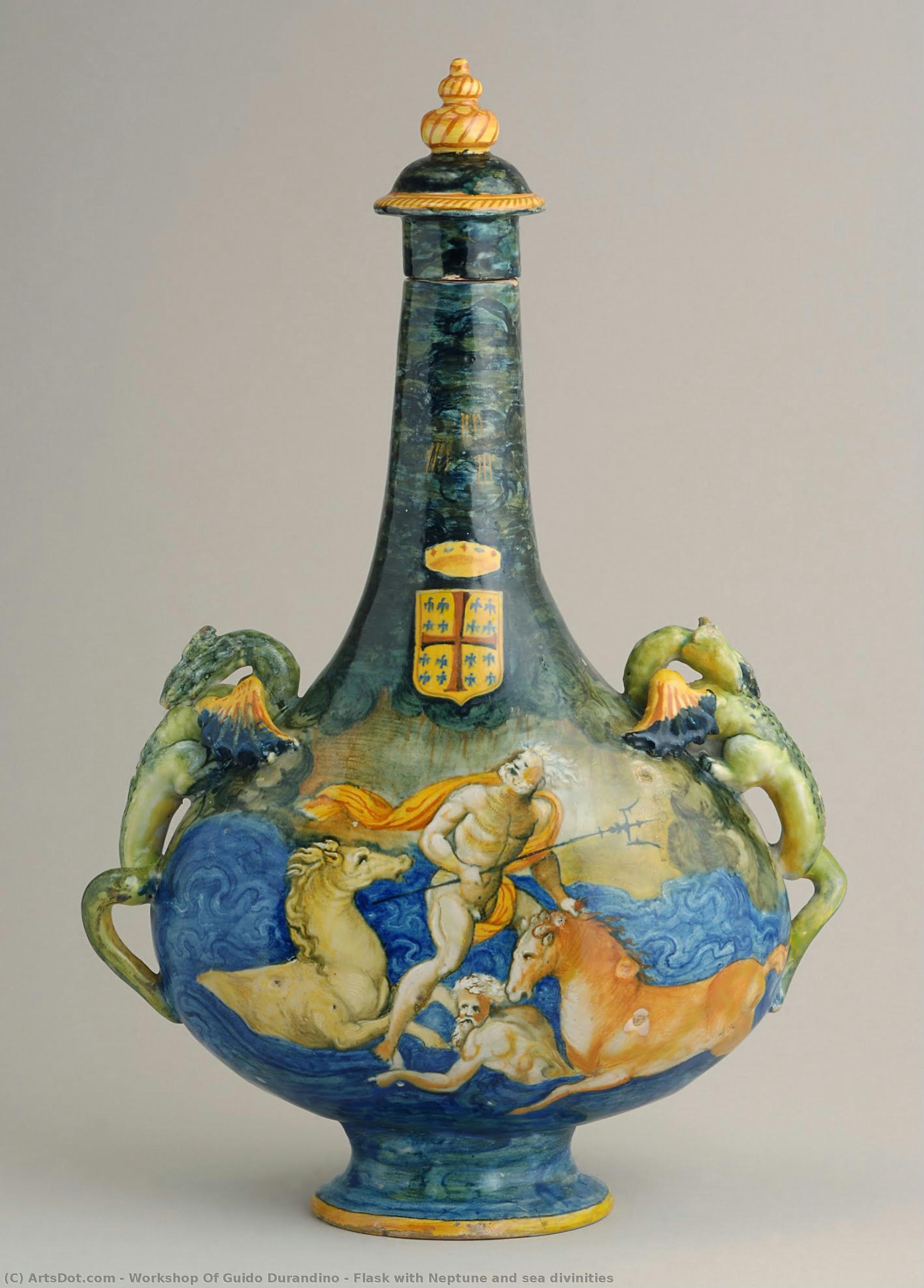
StatsFlask with Neptune and sea divinities

 Read More
Hand Made Oil Reproduction
Hand-painted oil on canvas in your size and frame, made to order by our artists. ( Switch to Print Switch to Digital Image)




































Pick from our preset sizes that match the artwork's original proportions.

You may enter your own dimensions to fit a specific frame or space. If your selected size does not match the original image's proportions, we will either crop the artwork or extend the painting with additional hand-painted elements. A digital mockup will be sent for your approval before production begins.
Please note that the on-screen preview does not reflect the actual cropping or extension. Only the mockup will accurately show the final composition.
While custom sizes are available, we recommend selecting a dimension from the predefined list to preserve the original proportions.
After order, ArtsDot.com team will email client for instructions and provide a mockup preview
Worldwide Delivery () in 3/4 weeks instead of standard 5 weeks. (10 September). No compromise on quality.

Free Worldwide Express Shipping

High-Quality Linen Canvas

Full Shipping Insurance

Customs Tax Refund Guarantee

True Color Matching Guarantee

100-Day Return Policy (Defects Only)

100% Money-Back Guarantee

Bulk Discount Offer
 Glass option is only available in size under 110 CM

Flask with Neptune and sea divinities
Reproduction Medium
Reproduction Size
-


Total Price
$ 263
Related Artworks









Artist Biography
The Renaissance Potter of Urbino: Guido Durantino and the Flourishing of Maiolica
Guido Durantino, a name synonymous with the golden age of Italian maiolica, stands as a pivotal figure in the artistic landscape of 16th-century Urbino. While biographical details remain somewhat fragmented, his impact on ceramic production is undeniable. Emerging around 1519, Durantino quickly established himself not merely as a potter but as an orchestrator of artistry, transforming humble earthenware into breathtaking canvases of mythological scenes and intricate designs. His story isn’t one of solitary genius, but rather of a workshop—a vibrant hub where skilled painters translated the humanist ideals of the Renaissance onto lustrous tin-glazed surfaces.
Early Life and Establishment in Urbino
Born Guido di Nicolò Schippe, his origins lie in Castel Durante, a town already recognized for its ceramic traditions. By 1516, he appears as a witness to documents, hinting at an early involvement within the artisan community. The move to Urbino around 1515 was crucial; his uncle’s leather business likely provided initial connections, but it was in this ducal court—a center of refined taste and burgeoning artistic patronage—that Durantino truly flourished. He married into an Urbino family in 1519, solidifying his place within the city's social fabric and officially adopting the designation “the potter of Castel Durante.” This period marked a transition from potential apprentice to independent workshop owner, laying the foundation for what would become a remarkably successful enterprise.
A Workshop of Collaboration: Technique and Style
Durantino’s genius lay not solely in his hands but in his ability to assemble a team of exceptional talents. His workshop wasn't simply a place of production; it was a collaborative space where painters, likely including his sons Nicolò, Camillo, and Orazio Fontana, brought their individual skills to bear on each piece. The technique itself—maiolica—involved applying an opaque tin glaze to earthenware, creating a brilliant white surface ideal for vibrant painting. Durantino’s workshop excelled in *istoriato* maiolica, meaning “painted with stories.” These weren't mere decorative motifs; they were carefully rendered scenes drawn from classical mythology, biblical narratives, and contemporary events. The style is characterized by its elegance, clarity of form, and a sophisticated use of color. While Durantino may not have been the primary painter himself, his discerning eye ensured a consistent level of quality and artistic vision.
Major Achievements and Patronage
The workshop’s output was remarkably diverse, ranging from elaborate serving dishes and flasks to decorative tiles and candlesticks. One particularly significant commission came in 1535: a service created for Anne de Montmorency, the Grand Master of France. This expansive collection, featuring scenes from the Trojan War adorned with Montmorency’s coat of arms, exemplifies Durantino's ability to cater to aristocratic tastes and execute large-scale projects with exceptional finesse. The pieces are inscribed with his name and the date, providing valuable documentation of his work. Beyond this prestigious commission, Durantino supplied tiles for Duke Francesco Mario of Urbino in 1523, demonstrating a broader clientele within the ducal court. His success wasn’t accidental; it stemmed from a keen understanding of market demands and an unwavering commitment to artistic excellence.
Legacy and Historical Significance
Guido Durantino's influence extended far beyond his lifetime. He died around 1576, but the workshop continued under the guidance of his sons, particularly Orazio Fontana, who established a separate business in 1565. The legacy of Urbino maiolica—characterized by its refined aesthetic and narrative richness—is inextricably linked to Durantino’s name. His work represents a high point in Italian Renaissance ceramics, bridging the gap between functional objects and works of art. His pieces are now highly sought after by museums and collectors worldwide, serving as tangible reminders of a vibrant artistic culture and the enduring power of collaboration. The workshop's impact can be seen in the subsequent development of maiolica production throughout Italy, solidifying Durantino’s position as a true innovator and master craftsman. He wasn’t just creating pottery; he was crafting stories, embodying humanist ideals, and leaving an indelible mark on the artistic heritage of the Renaissance.

Quick Facts
- Artistic Movement Or Style: Renaissance maiolica
- Date Of Birth: 1516
- Date Of Death: 1576
- Full Name: Workshop Of Guido Durandino
- Nationality: Italian
- Notable Artworks:
- Flask with Neptune
- Candlestick (candeliere)
- Place Of Birth: Urbino, Italy