 Preview
 Send
Send Share
Share
 Details

 Download
 Similars
 X-Ray
X-Ray Diaporama
 Stats
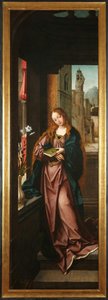
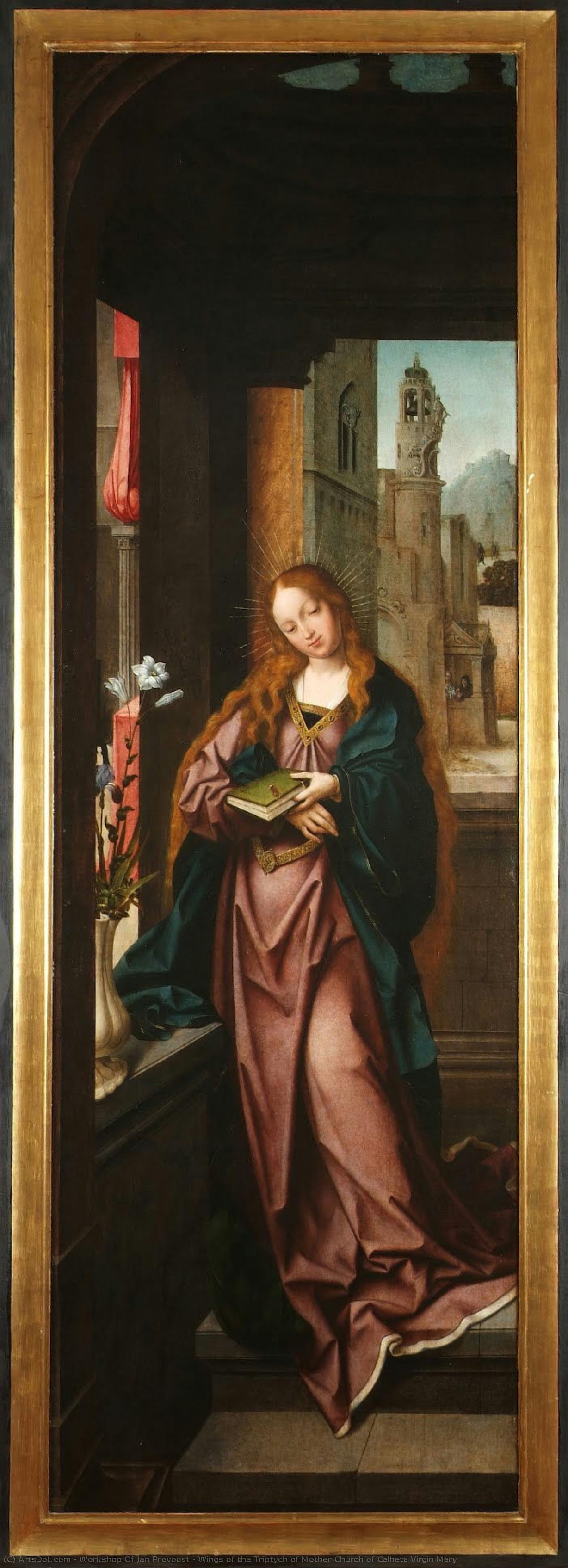
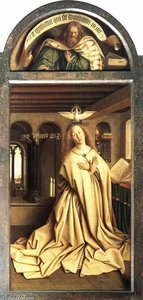
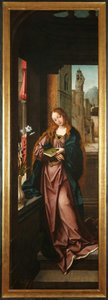
StatsWings of the Triptych of Mother Church of Calheta Virgin Mary
 1529
1529 88.0 x 274.0 cm
 Sacred Art Museum of Funchal
 Read More
Giclée / Art Print
Museum-quality giclée or canvas print with fast production and flexible finish options. ( Buy Hand Made Painting Switch to Digital Image)




































Pick from our preset sizes that match the artwork's original proportions.

You may enter your own dimensions to fit a specific frame or space. If your selected size does not match the original image's proportions, we will either crop the artwork or extend the image with a mirrored or solid-fill edge. A digital mockup will be sent for your approval before production begins.
Please note that the on-screen preview does not reflect the actual cropping or extension. Only the mockup will accurately show the final composition.
While custom sizes are available, we recommend selecting a dimension from the predefined list to preserve the original proportions.
Worldwide Delivery () in 2 weeks instead of standard 4/5 weeks. (9 September)

Free Worldwide Express Shipping

High-Quality Linen Canvas

Full Shipping Insurance

Customs Tax Refund Guarantee

True Color Matching Guarantee

100-Day Return Policy (Defects Only)

100% Money-Back Guarantee

Bulk Discount Offer
 Glass option is only available in size under 110 CM

Wings of the Triptych of Mother Church of Calheta Virgin Mary
Giclée / Art Print
Reproduction Size
-


Total Price
$ 63
Related Artworks








Artist Biography
The Enigmatic World of the Workshop of Jan Provoost
The name Jan Provoost resonates within the annals of early Netherlandish painting, yet attributing specific works solely to his hand remains a complex undertaking. More accurately understood as a prolific workshop – a bustling center of artistic production in Bruges during the late 15th and early 16th centuries – the studio’s output reveals a fascinating blend of stylistic influences and technical mastery. While biographical details concerning Provoost himself are scarce, piecing together evidence from archival records and stylistic analysis allows us to glimpse the workings of this important atelier and its contribution to the flourishing art scene of the period. He is documented as active in Bruges from 1493, becoming a master of the Guild of Saint Luke in 1502, and consistently receiving commissions from both local nobility and international patrons. This consistent demand speaks volumes about the quality and appeal of the work emanating from his studio.A Synthesis of Styles: Influences and Early Development
The artistic landscape Provoost navigated was one of remarkable innovation. He absorbed the lessons of Jan van Eyck, whose pioneering oil techniques and meticulous realism continued to exert a powerful influence on painters throughout Flanders. However, Provoost’s workshop wasn't merely imitative. A clear debt is also owed to Hugo van der Goes, particularly in the emotional intensity and expressive characterization seen in some figures. The delicate lyricism of Hans Memling, another prominent Bruges artist, also found its way into the studio’s repertoire. Early works attributed to Provoost – or more precisely, to his immediate circle – often exhibit a blend of these characteristics: van Eyck's precision combined with van der Goes’ psychological depth and Memling’s refined elegance. This synthesis wasn’t accidental; Bruges was a cosmopolitan hub where artists readily exchanged ideas and techniques, fostering a climate of experimentation and cross-pollination. The workshop likely produced a wide range of paintings, from small devotional panels to larger altarpieces, catering to diverse tastes and budgets.Themes and Techniques: Defining the Workshop’s Aesthetic
The subject matter favored by the Workshop of Jan Provoost reflects the religious piety prevalent in late medieval society. Virgin and Child compositions are particularly common, often depicted with a tender intimacy that invites contemplation. Scenes from the life of Christ – the Annunciation, the Nativity, the Crucifixion – also feature prominently, rendered with a dramatic flair that emphasizes their emotional impact. Portraits, both individual and group portraits, were another important source of income for the studio. These works are notable for their detailed rendering of fabrics, jewelry, and hairstyles, providing valuable insights into the fashion and material culture of the period. Technically, the workshop excelled in oil painting, employing layered glazes to achieve a luminous quality and remarkable depth of color. Attention to detail was paramount, evident in the meticulous depiction of textures, patterns, and individual features. The use of symbolism was also widespread, with objects and motifs carefully chosen to convey deeper religious meanings. For example, lilies often represented purity, while fruit symbolized fertility or temptation.Attribution Challenges and Legacy
The very nature of a workshop – the collaborative effort of master, assistants, and apprentices – presents significant challenges when it comes to attribution. It is rare to find paintings that can be definitively attributed solely to Provoost’s hand; most works are considered products of his studio, with varying degrees of his personal involvement. Scholars often distinguish between paintings executed “by the Master’s hand,” those "from the workshop," and those produced "in the manner of" Provoost. This nuanced approach acknowledges the collaborative nature of artistic production while recognizing the distinctive aesthetic qualities that characterize the studio's output. Despite these challenges, the Workshop of Jan Provoost left an indelible mark on early Netherlandish painting. His influence can be seen in the work of later artists who adopted his techniques and stylistic innovations. The workshop’s paintings continue to captivate viewers with their beauty, detail, and emotional depth, offering a glimpse into the artistic world of Bruges during a period of remarkable creativity and religious fervor.Major Achievements and Historical Significance
While pinpointing specific masterpieces solely attributable to Provoost is difficult, the overall body of work produced by his workshop represents a significant achievement in early Netherlandish art. The consistent quality and demand for their paintings demonstrate the studio’s mastery of technique and its ability to cater to diverse tastes.- The workshop played a crucial role in disseminating new artistic ideas and techniques throughout Flanders.
- Their portraits provide valuable insights into the fashion, material culture, and social life of the period.
- The religious paintings reflect the piety and emotional intensity characteristic of late medieval society.
- The workshop’s influence can be seen in the work of later artists who adopted their stylistic innovations.
Quick Facts
- Artistic Movement Or Style: Northern Renaissance, Early Netherlandish painting
- Date Of Death: Living
- Full Name: Workshop Of Jan Provoost
- Nationality: Flemish
- Notable Artworks:
- Portrait of a Lady with Prayer Book
- Saint Luke Painting the Virgin
- The Lamentation of Christ