

 Preview
 Send
Send Share
Share
 Details

 Download
 Similars
 X-Ray
X-Ray Diaporama
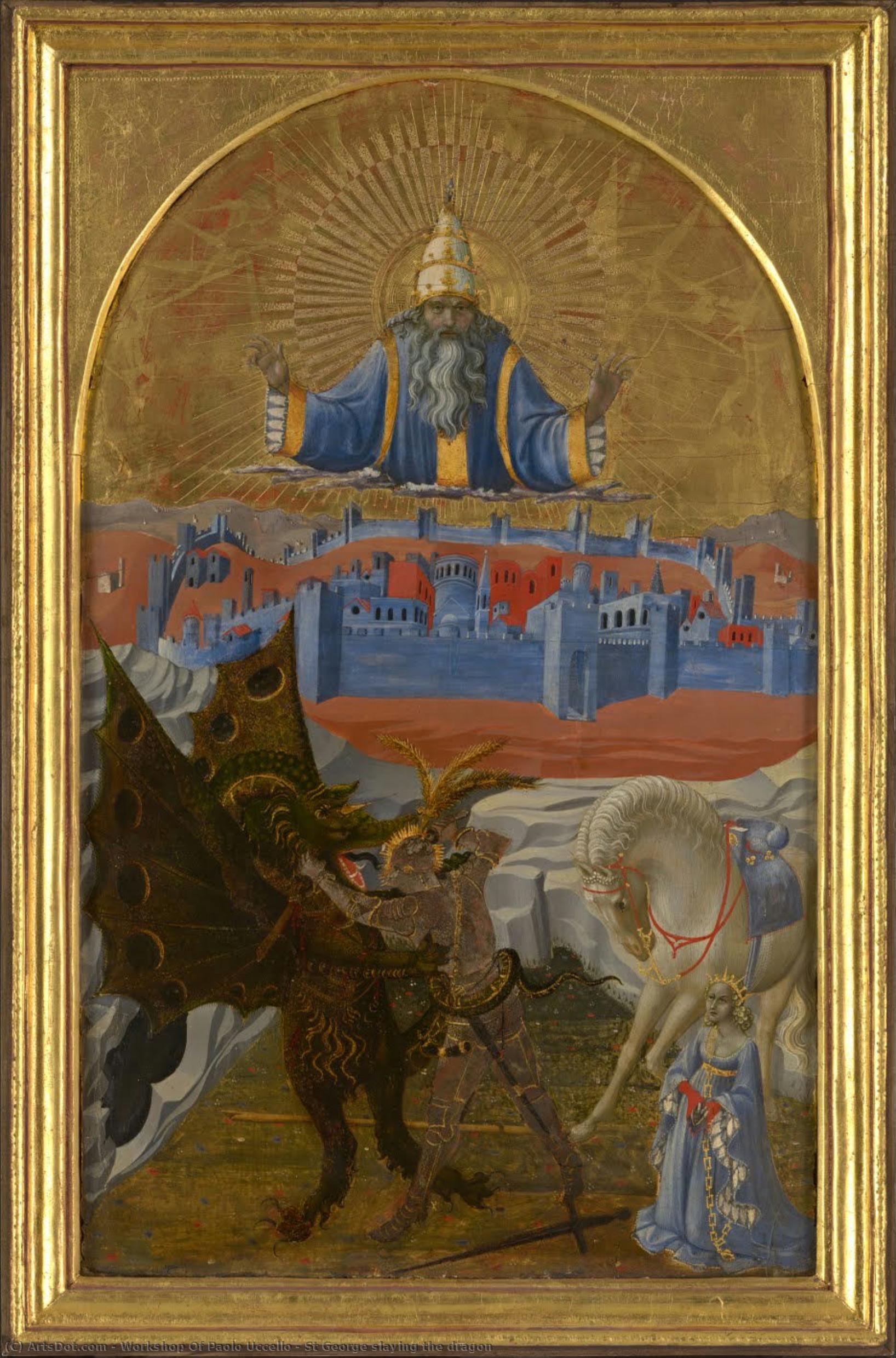
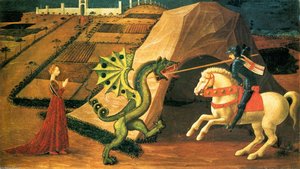
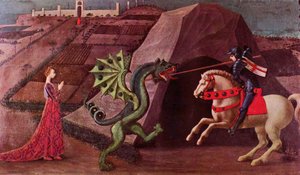
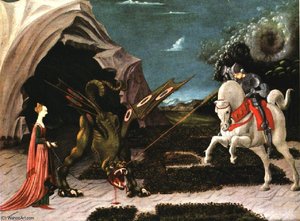
St George slaying the dragon
 Tempera On Panel
- Early Renaissance
 1430
1430- Renaissance
 62.0 x 38.0 cm
 National Gallery of Victoria
 Read More
Purchase a high-resolution, enhanced digital image, far superior to the online preview.
Each file is meticulously prepared by our in-house specialists using advanced tools and expert manual retouching. We ensure every image has exceptional clarity, precise color accuracy, and fine detail.
The final file is delivered via email within 72 hours, optimized for immediate use in professional, editorial, and print environments. This is the same quality trusted by top-tier design studios, publishers, and galleries.
Digital Image
Download a high-resolution file for personal display, printing, and creative projects. ( Buy Print Buy Hand Made Painting)
Included in Every Digital Image Order
Expert Digital Delivery, Guaranteed
When you choose ArtsDot.com, you're not just getting an image - you're receiving a professionally enhanced digital artwork, crafted with precision and backed by a satisfaction guarantee. Here's everything that comes with your order, automatically:

Fast Email Delivery
Your high-resolution digital image file will be emailed to you within 72 hours of ordering - ready for immediate use.

AI-Enhanced Digital File
Your artwork is professionally optimized using advanced AI tools and manual editing, ensuring maximum detail, clarity, and color accuracy.

Free Lifetime Re-Delivery
Accidentally deleted or lost your file? No worries - we'll resend it to you anytime, free of charge.

No Import Fees - Ever
Enjoy your artwork instantly with zero customs, duties, or delivery fees - digital downloads are always tax-free.

Color Accuracy Guarantee
We ensure your digital image reflects the original colors as closely as possible using professional tools and color management.

60-Day Satisfaction Guarantee
If you're not satisfied with your digital image, we'll revise it or refund 100% within 60 days - no questions asked.

100% Money-Back Guarantee
Not satisfied? Get a full refund within 60 days of receiving your digital file - no questions asked.

Bulk Order Discounts
Buy 3 images, save 10% - Buy 5, save 15% - Buy 10+, save 20%. Great for creative projects, galleries, and agencies.
Collectible Description
Related Artworks
![Legend Of St Francis - [10] - Exorcism Of The Demons At Arezzo — Giotto Di Bondone, Proto Renaissance](/media/artworks/images-thumb/32/fe/32feac3fd8001d937862a24f531e4253.jpg)
Artist Biography
The Enigmatic Legacy of the Workshop of Paolo Uccello
Paolo Uccello, a pivotal figure of the Florentine Renaissance, remains somewhat elusive despite his enduring contributions to art history. To speak of the “Workshop of Paolo Uccello” is to acknowledge not merely a single artist’s hand but a collaborative enterprise—a studio brimming with apprentices and assistants who carried forward his innovative vision long after his death in 1475. While biographical details about Uccello himself are fragmented, pieced together from archival documents and the analysis of his paintings, the workshop's continued production offers a fascinating glimpse into the dissemination and adaptation of his unique style. Born in Florence around 1397 as Paolo di Dono, he adopted the surname “Uccello” – meaning "bird" – perhaps indicative of his family’s emblem or simply a personal inclination. His early training likely occurred under the tutelage of Lorenzo Ghiberti, whose influence is visible in Uccello's initial forays into painting and sculpture. However, it was his relentless pursuit of perspective that would define his artistic trajectory.A Revolutionary Approach to Space
Uccello’s obsession with representing three-dimensional space on a two-dimensional surface wasn’t born from mere aesthetic curiosity; it stemmed from a deep intellectual engagement with mathematics and optics. He devoured treatises on geometry, meticulously studying the principles of linear perspective—a system that had only recently been codified by Filippo Brunelleschi and Leon Battista Alberti. Unlike his contemporaries who sought to create convincingly realistic depictions of depth, Uccello embraced a more analytical approach. His paintings are not so much windows onto the world as they are carefully constructed diagrams, showcasing his mastery of vanishing points, orthogonals, and foreshortening. This is particularly evident in works like *The Battle of San Romano*, a series of panels commissioned by Federico da Montefeltro, Duke of Urbino. The fragmented compositions, with their dramatically receding planes and stylized figures, create a dynamic yet somewhat unsettling effect. While some critics have dismissed Uccello’s perspective as flawed or naive, it is precisely this unconventional approach that sets him apart. He wasn't striving for photographic realism but rather exploring the very *idea* of space—its possibilities and limitations.The Workshop’s Continued Production
Following Uccello’s death, his workshop continued to operate under the direction of his son, Andrea di Paolo, and other skilled assistants. These artists didn't simply copy their master’s works; they adapted and reinterpreted his style, often incorporating new motifs and techniques. The paintings produced by the workshop during this period are characterized by a similar emphasis on perspective, though generally executed with greater refinement and attention to detail than Uccello’s earlier works. They also demonstrate a growing interest in narrative clarity and emotional expression. Identifying works definitively attributed to the workshop can be challenging, as signatures were often omitted or ambiguous. However, stylistic analysis—examining brushwork, color palettes, and compositional elements—allows art historians to distinguish between paintings executed by Uccello himself and those produced by his followers.- Themes & Motifs: The workshop consistently revisited themes prevalent in Uccello’s oeuvre, including biblical scenes, historical battles, and allegorical subjects.
- Color Palette: A preference for bright, saturated colors—particularly reds, blues, and golds—remained a hallmark of the workshop's style.
- Perspective Techniques: While maintaining Uccello’s focus on perspective, workshop artists often employed more sophisticated techniques to create a greater sense of depth and realism.
Influence and Historical Significance
The Workshop of Paolo Uccello's legacy extends far beyond the confines of Renaissance Florence. His innovative approach to perspective profoundly influenced subsequent generations of artists, including Piero della Francesca and Leonardo da Vinci. While his work wasn’t widely celebrated during his lifetime—Vasari famously described him as “somewhat eccentric”—it has garnered increasing recognition in modern times. Uccello's paintings are now considered masterpieces of early Renaissance art, prized for their intellectual rigor, stylistic originality, and enduring beauty. The Battle of San Romano, for example, continues to captivate viewers with its dynamic composition, vibrant colors, and enigmatic atmosphere. The workshop’s continued production ensured that Uccello's ideas were disseminated throughout Italy, shaping the course of Renaissance painting and paving the way for new artistic developments. His exploration of perspective wasn’t merely a technical achievement; it was a fundamental shift in how artists perceived and represented the world—a legacy that continues to resonate today.
Quick Facts
- Artistic Movement Or Style: Early Renaissance painting
- Artists Or Movements Influenced By This Artist: ['Renaissance artists']
- Artists Who Influenced This Artist: ['Paolo Uccello']
- Date Of Death: Living
- Full Name: Workshop Of Paolo Uccello
- Nationality: Italian
- Notable Artworks:
- The Battle of San Romano
- Hunting Scene
- St. Martin and the Beggar

