 Preview
 Send
Send Share
Share
 Details

 Download
 Similars
 X-Ray
X-Ray Diaporama
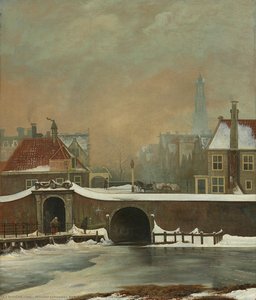
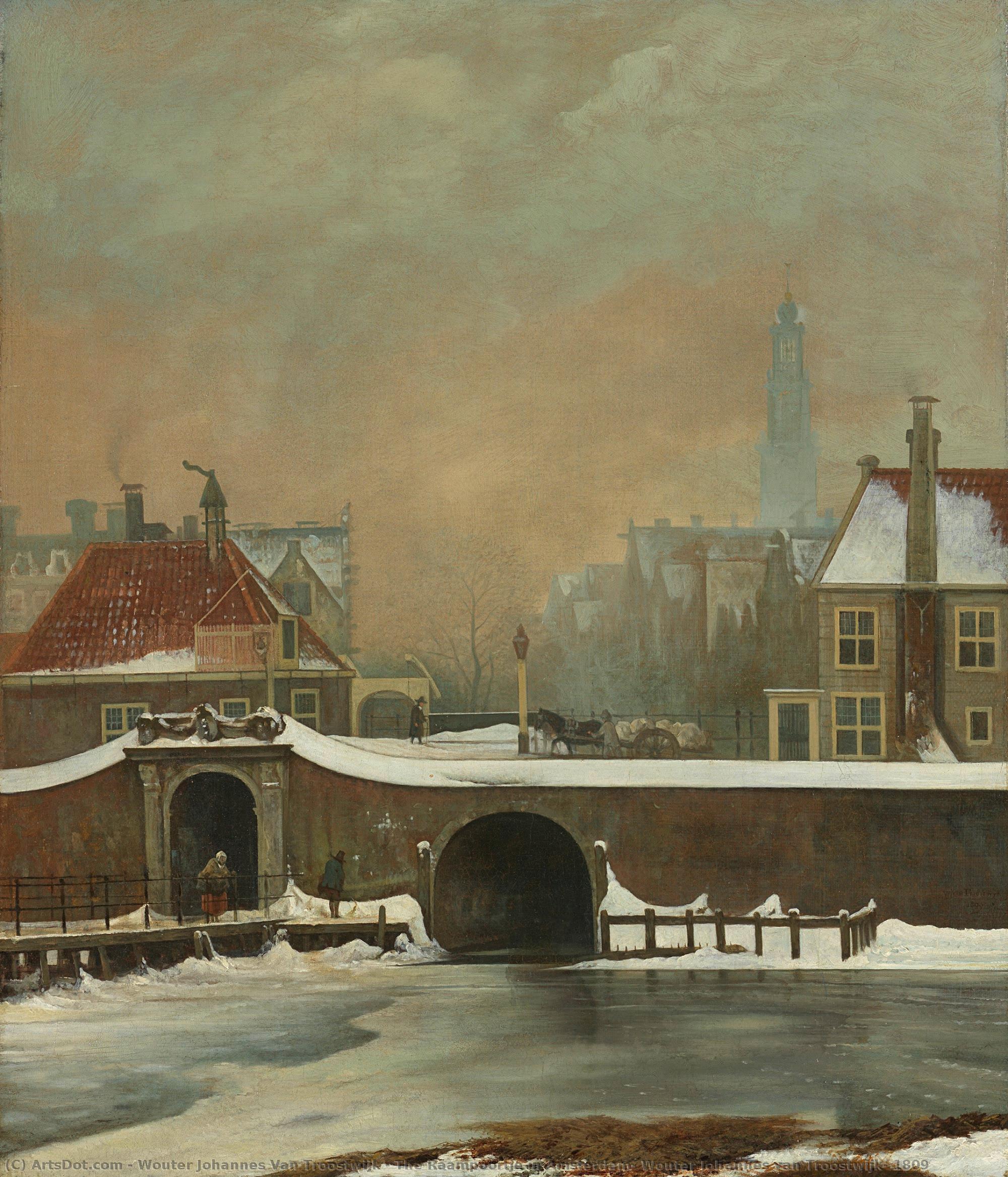
The Raampoortje in Amsterdam, Wouter Johannes van Troostwijk, 1809
 1809
1809 57.0 x 48.0 cm
 Read More
Giclée / Art Print
Museum-quality giclée or canvas print with fast production and flexible finish options. ( Buy Hand Made Painting Buy Image)




































Pick from our preset sizes that match the artwork's original proportions.

You may enter your own dimensions to fit a specific frame or space. If your selected size does not match the original image's proportions, we will either crop the artwork or extend the image with a mirrored or solid-fill edge. A digital mockup will be sent for your approval before production begins.
Please note that the on-screen preview does not reflect the actual cropping or extension. Only the mockup will accurately show the final composition.
While custom sizes are available, we recommend selecting a dimension from the predefined list to preserve the original proportions.
Worldwide Delivery () in 2 weeks instead of standard 4/5 weeks. (26 August)

Free Worldwide Express Shipping

High-Quality Linen Canvas

Full Shipping Insurance

Customs Tax Refund Guarantee

True Color Matching Guarantee

60-Day Return Policy (Defects Only)

100% Money-Back Guarantee

Bulk Discount Offer
 Glass option is only available in size under 110 CM

The Raampoortje in Amsterdam, Wouter Johannes van Troostwijk, 1809
Giclée / Art Print
Reproduction Size
-


Total Price
$ 63
Collectible Description
Related Artworks









Artist Biography
A Life Captured in Light and Shadow
The story of Wouter Johannes van Troostwijk is one of profound brilliance interrupted by tragic brevity. Born in Amsterdam in 1782, Van Troostwijk emerged from a household where the boundaries between art and science were beautifully blurred. His father, Adriaan Paets, was a man of significant intellect—a cloth merchant whose true legacy lay in his contributions to chemistry and physics. This environment, filled with visiting scientists and the rigorous pursuit of natural truth, instilled in the young artist an early fascination with the mechanics of the natural world. It was not merely about seeing nature, but understanding its essence, a drive that would later manifest in his meticulous depictions of the Dutch countryside.
Van Troostwijk’s journey into the heart of the Dutch landscape began with the guidance of masters. His prodigious talent for drawing led him to the tutelage of Anthonie Andriessen and Juriaan Andriessen, brothers who were pillars of the contemporary art scene. This foundational training provided him with the technical rigor necessary to translate the fleeting nuances of light onto canvas. By 1803, his formal studies at the Amsterdam Municipal Academy of Drawing had solidified a vision that was both technically precise and emotionally resonant. His ascent within the artistic community was swift; his membership in the prestigious Felix Meritis Society and the receipt of two distinguished medals served as early heralds of a career that promised to redefine the Dutch landscape tradition.
The Legacy of the Masters
To understand the soul of Van Troostwijk’s work, one must look back to the titans of the Dutch Golden Age. He did not merely imitate the past; he breathed new life into its established techniques. The influence of Paulus Potter is unmistakable in his treatment of animals, particularly cattle, where a profound sensitivity to texture and form brings a sense of living weight to every creature. Yet, it was the atmospheric mastery of Jacob van Ruisdael that perhaps most deeply informed his spirit. From Ruisdael, Van Troostwijk learned the art of the sky—how to use light and shadow to create a sense of infinite depth and movement within a single frame.
His development as an artist was characterized by a commitment to what would later be known as en plein aire painting. He sought the truth of the moment, often venturing into the elements to capture the precise atmosphere of a scene. This dedication came at a heavy cost. It is whispered in art history that his life was cut short by a sudden illness—a cold caught while sketching outdoors under the cover of night. Dying in 1810 at the tender age of twenty-eight, he left behind a body of work that serves as a bridge between the classical traditions of the seventeenth century and the burgeoning naturalism of the nineteenth.
A Visionary of the Dutch Landscape
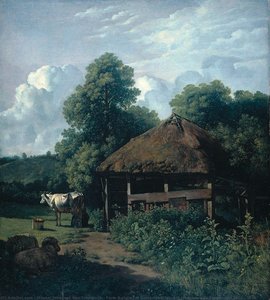
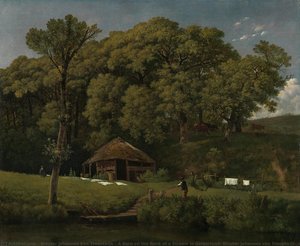
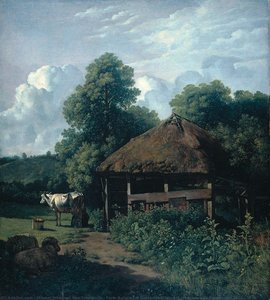
The breadth of Van Troostwijk’s oeuvre reflects a dual fascination with the pastoral and the urban. His landscapes, often set in regions like Gelderland, are masterclasses in narrative stillness. In works such as A Barn on the Bank of a Stream, he captures the quiet industry of rural life—the drying of linens on a lawn or the steady movement of cattle—with an eye for both detail and atmosphere. Conversely, his cityscapes, such as his evocative depiction of The Raampoortje in Amsterdam, reveal a romantic's heart, capturing the wintry, snow-dusted streets of his home city with a sense of nostalgic grandeur.
Ultimately, Wouter Johannes van Troostwijk remains a trailblazer. He was part of a generation of young artists who looked at the Dutch landscape with fresh, unburdened eyes, stripping away artifice to find the raw beauty of the land. His significance lies not just in his technical skill as a painter and etcher, but in his ability to infuse the familiar—a cow in a field, a gate in a city, a farm building in the sun—with a sense of scientific wonder and poetic grace. Though his time was fleeting, his impact on the Dutch artistic landscape remains etched in the very light he so lovingly pursued.
wouter johannes van troostwijk
1782 - 1810 , Netherlands
Quick Facts
- Artistic Movement Or Style: Romanticism; Inspired by Potter & Ruisdael
- Artists Or Movements Influenced By This Artist: ['Late 19th Century Dutch Painters']
- Artists Who Influenced This Artist:
- Paulus Potter
- Jacob van Ruisdael
- Date Of Birth: Amsterdam, Netherlands (1782)
- Date Of Death: Amsterdam, Netherlands (1810)
- Full Name: Wouter Johannes van Troostwijk
- Nationality: Dutch
- Notable Artworks:
- A Barn on the Bank of a Stream in Gelderland
- Farm Building in Gelderland
- Place Of Birth: Amsterdam