

 Preview
 Send
Send Share
Share
 Details

 Download
 Similars
 X-Ray
X-Ray Diaporama
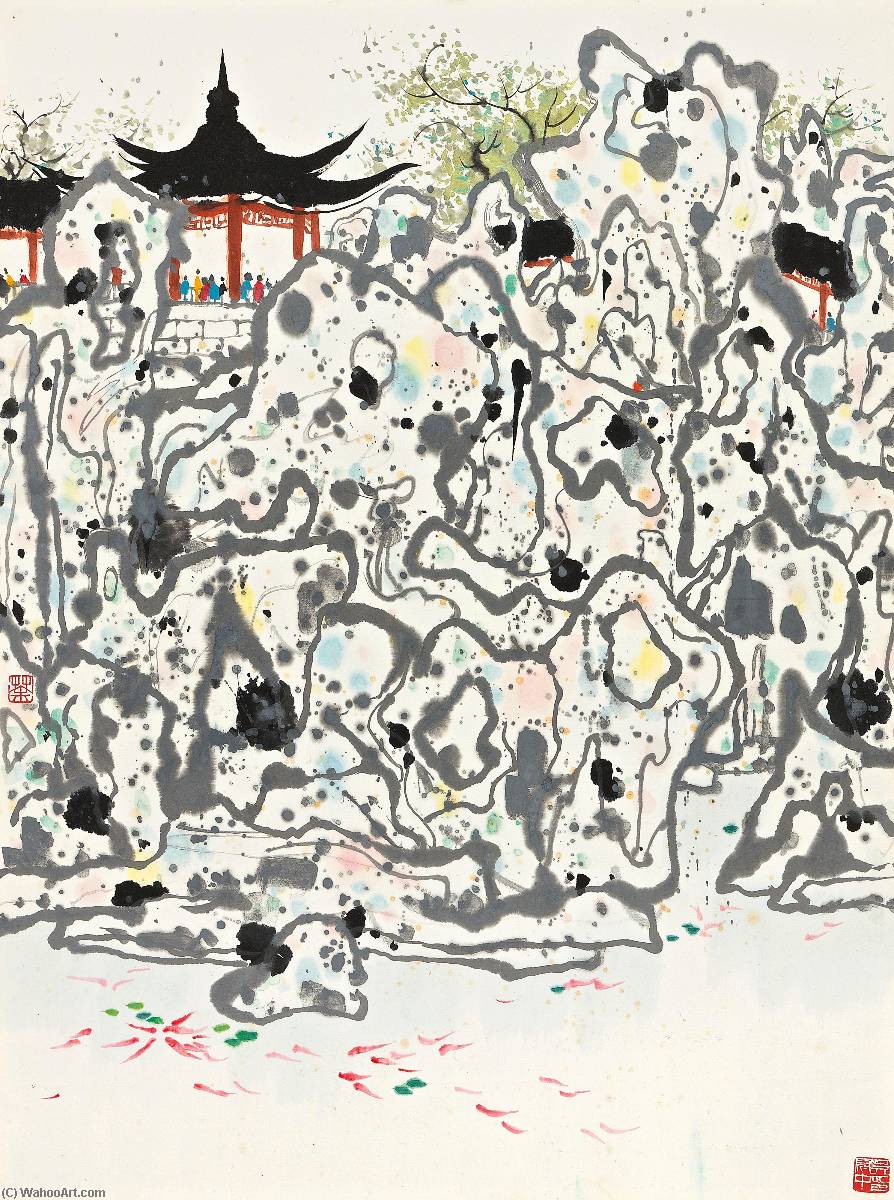
TAIHU ROCK
 83.0 x 62.0 cm
 Read More
Purchase a high-resolution, enhanced digital image, far superior to the online preview.
Each file is meticulously prepared by our in-house specialists using advanced tools and expert manual retouching. We ensure every image has exceptional clarity, precise color accuracy, and fine detail.
The final file is delivered via email within 72 hours, optimized for immediate use in professional, editorial, and print environments. This is the same quality trusted by top-tier design studios, publishers, and galleries.
Digital Image
Download a high-resolution file for personal display, printing, and creative projects. ( Buy Print Buy Hand Made Painting)
Included in Every Digital Image Order
Expert Digital Delivery, Guaranteed
When you choose ArtsDot.com, you're not just getting an image - you're receiving a professionally enhanced digital artwork, crafted with precision and backed by a satisfaction guarantee. Here's everything that comes with your order, automatically:

Fast Email Delivery
Your high-resolution digital image file will be emailed to you within 72 hours of ordering - ready for immediate use.

AI-Enhanced Digital File
Your artwork is professionally optimized using advanced AI tools and manual editing, ensuring maximum detail, clarity, and color accuracy.

Free Lifetime Re-Delivery
Accidentally deleted or lost your file? No worries - we'll resend it to you anytime, free of charge.

No Import Fees - Ever
Enjoy your artwork instantly with zero customs, duties, or delivery fees - digital downloads are always tax-free.

Color Accuracy Guarantee
We ensure your digital image reflects the original colors as closely as possible using professional tools and color management.

60-Day Satisfaction Guarantee
If you're not satisfied with your digital image, we'll revise it or refund 100% within 60 days - no questions asked.

100% Money-Back Guarantee
Not satisfied? Get a full refund within 60 days of receiving your digital file - no questions asked.

Bulk Order Discounts
Buy 3 images, save 10% - Buy 5, save 15% - Buy 10+, save 20%. Great for creative projects, galleries, and agencies.
Collectible Description
A Timeless Encounter with Nature: Wu Guanzhong's "Taihu Rock"
Wu Guanzhong’s “Taihu Rock” is more than just a landscape painting; it's an evocative meditation on the enduring power of nature and humanity's place within it. This striking work, measuring 83 x 62 cm, captures the essence of Taihu Rock formations—a celebrated natural landmark in China—through a lens of modern abstraction. Created sometime before 2010, this piece exemplifies Guanzhong’s unique ability to synthesize Eastern and Western artistic traditions.
Style & Technique: Bridging East and West
The painting is firmly rooted in the tradition of Shui-mo hua, or Chinese ink wash painting. However, Guanzhong doesn't simply replicate traditional forms. He infuses his work with a distinctly modern sensibility, drawing inspiration from Western Fauvism—evident in the expressive use of color and bold brushstrokes. The technique involves layering washes of diluted ink (sumi) and watercolors on rice paper or silk. Notice how the artist employs loose, gestural strokes to build up texture and depth, creating a dynamic interplay between light and shadow. The contrast between the organic shapes of the rocks and the geometric precision of the pavilion highlights this fascinating fusion of styles.
Subject & Symbolism: A Landscape of Tranquility
Taihu Rock itself holds cultural significance in China, revered for its unique geological formations and scenic beauty. Guanzhong’s depiction isn't a literal representation; instead, he captures the *feeling* of being immersed in this landscape. The inclusion of the traditional Chinese pavilion atop the rocks symbolizes humanity’s appreciation and harmonious relationship with nature—a recurring theme in classical Chinese art. The muted color palette – primarily whites, grays, and blues punctuated by touches of pink, green, red, and brown – evokes a sense of tranquility and atmospheric perspective, mimicking the misty conditions often found around Taihu Lake.
Emotional Impact & Historical Context
Wu Guanzhong (1919-2010) was a pivotal figure in modern Chinese art. His work emerged during a period of significant social and political change in China, as the nation grappled with modernization while striving to preserve its cultural heritage. As a founder of modern Chinese painting, Guanzhong sought to break away from traditional representational styles, exploring abstraction and experimentation. “Taihu Rock” embodies this spirit of innovation, offering viewers not just a visual experience but also an emotional one—a sense of awe, serenity, and the profound beauty of the natural world. His ability to blend Western influences with deeply rooted Chinese artistic principles solidified his place as one of China’s most important 20th-century artists.
Related Artworks
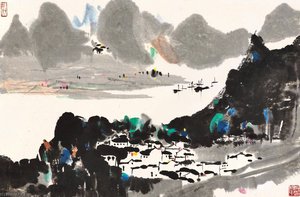
Artist Biography
Early Life and Artistic Awakening
Wu Guanzhong’s journey began in the idyllic town of Yixing, China, in 1919, a place that would deeply imprint itself upon his artistic sensibility. Initially destined to follow in his father's footsteps as an educator, fate intervened through a pivotal encounter with art student Zhu Dequn. This meeting sparked a transformative shift, leading Wu to abandon his studies in electrical engineering at Zhejiang Industrial School in 1936 and embrace the world of fine art at the National Hangzhou Academy of Art. There, under the tutelage of masters like Pan Tianshou, Fang Ganmin, and Lin Fengmian, he immersed himself in both Chinese and Western painting traditions. However, his formal education was dramatically interrupted by the outbreak of the Sino-Japanese War, a period that forced relocation and exposed him to the diverse landscapes of China – experiences that would later become central themes in his work. These years weren’t merely about survival; they were an immersive study of his homeland, shaping his eye for form and color, and instilling a deep connection to the land.Parisian Influences and the Synthesis of Styles
Graduating from Hangzhou National Academy of Art in 1942, Wu’s ambition led him to seek further training abroad. In 1947, he received a government scholarship that enabled him to study at the prestigious École nationale supérieure des Beaux-Arts in Paris. This period proved profoundly influential. He was captivated by the post-impressionist masters – Van Gogh, Gauguin, and Cézanne – drawn to Van Gogh’s passionate expressionism and Gauguin's pursuit of artistic ideals beyond mere representation. He absorbed the principles of Western formalism, understanding its emphasis on structure and composition. Yet, his time in Europe wasn’t simply about imitation; it was a process of critical engagement. Wu keenly observed the cultural and religious differences between East and West, recognizing how these distinctions shaped artistic perspectives. This awareness fueled his desire to forge a unique path, one that would synthesize Western techniques with the essence of Chinese aesthetics. He didn't just learn *how* to paint; he learned *why* art was made, and what it could communicate.Return to China and Artistic Resilience
Wu Guanzhong returned to a newly established People’s Republic of China in 1950, eager to contribute his skills and knowledge. He took up teaching positions at the Central Academy of Fine Art in Beijing (1950-1953) and later at Tsinghua University (1953-1964), introducing Western art concepts to a new generation of Chinese artists. However, this period was marked by significant challenges. His embrace of formalism clashed with the prevailing Social Realist style favored by the government, leading to criticism and periods of isolation. Despite these obstacles, Wu remained steadfast in his artistic vision. He embarked on extensive travels across China, immersing himself in its landscapes – from towering mountains to tranquil rivers and bustling villages. These journeys became the cornerstone of his artistic focus, providing endless inspiration for his paintings. It was a time of quiet defiance, where he continued to develop his unique style amidst political pressures.A Legacy of Modern Chinese Painting
Wu Guanzhong’s artistic legacy lies in his groundbreaking fusion of Western Fauvism with Eastern Chinese calligraphy and ink wash techniques. His paintings are not mere depictions of landscapes; they are emotional responses to the natural world, capturing its essence through bold colors, expressive brushstrokes, and innovative compositions. He depicted a wide range of subjects – architecture, plants, animals, people, waterscapes – all filtered through his distinctive artistic lens. He is rightfully recognized as a founder of modern Chinese painting, bridging traditional techniques with contemporary approaches. His work often possesses an impressionistic quality, prioritizing the feeling and atmosphere of a scene over precise detail. Jiangnan River Town, Wu Gorge, and River Town are prime examples of his ability to distill complex landscapes into their most essential forms. Despite facing adversity and political scrutiny throughout his career, Wu Guanzhong remained committed to his artistic vision, leaving behind a body of work that continues to inspire and captivate audiences worldwide. His paintings are now highly valued in the international art market and displayed in major museums, solidifying his position as a pivotal figure in 20th-century Chinese art – an artist who dared to blend tradition with innovation, and feeling with fact. He passed away in Beijing in 2010, leaving behind a legacy that continues to resonate today.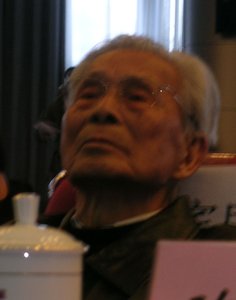
Wu Guanzhong
1919 - 2010 , China
Quick Facts
- Artistic Movement Or Style: Modern Chinese painting
- Artists Or Movements Influenced By This Artist: Modern Chinese art
- Artists Who Influenced This Artist:
- Van Gogh
- Gauguin
- Cézanne
- Date Of Birth: 1919
- Date Of Death: 2010
- Full Name: Wu Guanzhong
- Nationality: Chinese
- Notable Artworks:
- Jiangnan River Town
- Wu Gorge
- River Town
- Place Of Birth: Yixing, China

