 Preview
 Send
Send Share
Share
 Details

 Download
 Similars
 X-Ray
X-Ray Diaporama
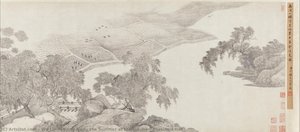
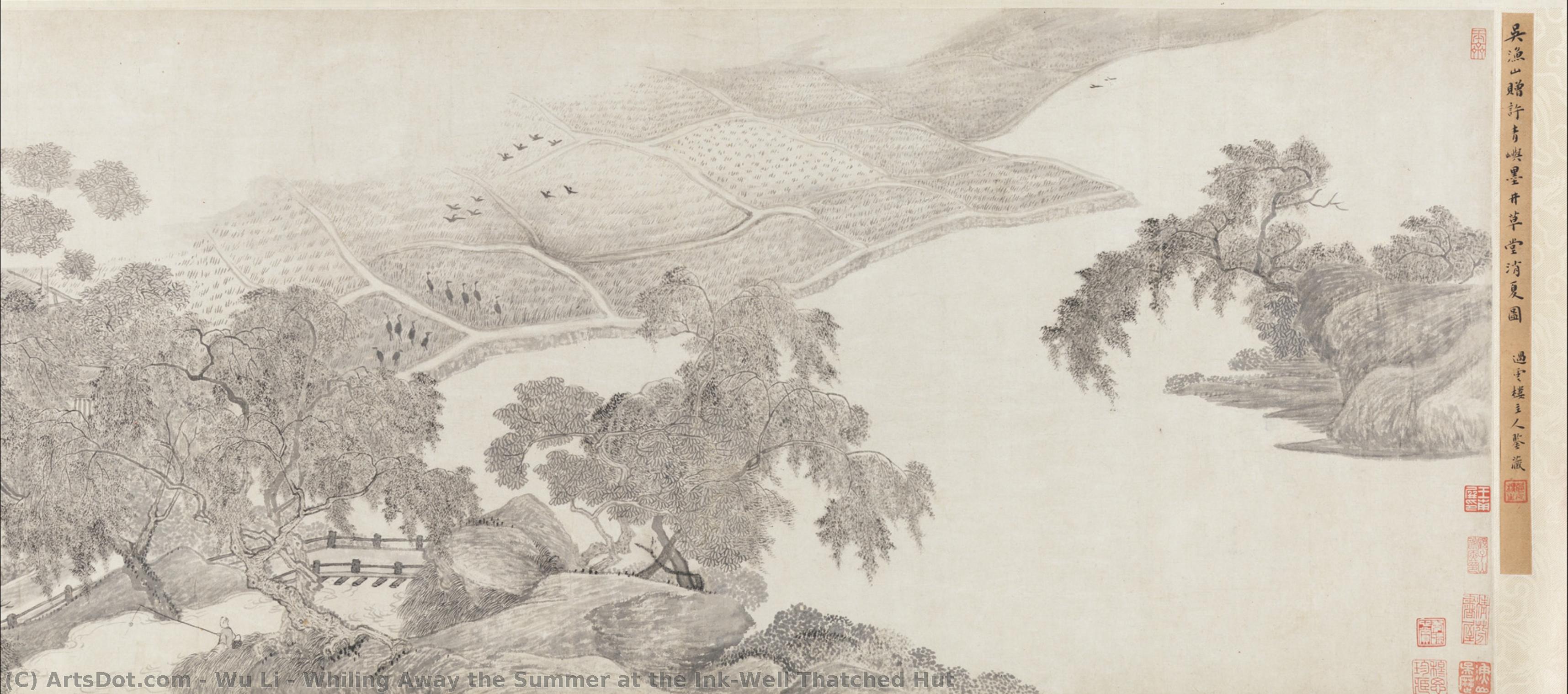
Whiling Away the Summer at the Ink-Well Thatched Hut
 1679
1679 36.0 x 269.0 cm
 Read More
Hand Made Oil Reproduction
Hand-painted oil on canvas in your size and frame, made to order by our artists. ( Buy Print Buy Image)




































Pick from our preset sizes that match the artwork's original proportions.

You may enter your own dimensions to fit a specific frame or space. If your selected size does not match the original image's proportions, we will either crop the artwork or extend the painting with additional hand-painted elements. A digital mockup will be sent for your approval before production begins.
Please note that the on-screen preview does not reflect the actual cropping or extension. Only the mockup will accurately show the final composition.
While custom sizes are available, we recommend selecting a dimension from the predefined list to preserve the original proportions.
After order, ArtsDot.com team will email client for instructions and provide a mockup preview
Worldwide Delivery () in 3/4 weeks instead of standard 5 weeks. (24 August). No compromise on quality.

Free Worldwide Express Shipping

High-Quality Linen Canvas

Full Shipping Insurance

Customs Tax Refund Guarantee

True Color Matching Guarantee

60-Day Return Policy (Defects Only)

100% Money-Back Guarantee

Bulk Discount Offer
 Glass option is only available in size under 110 CM

Whiling Away the Summer at the Ink-Well Thatched Hut
Reproduction Medium
Reproduction Size
-


Total Price
$ 263
Artwork Description
Related Artworks







Artist Biography
A Life Bridging Worlds: The Art of Wu Li
Wu Li (1632–1718), a name resonating with the unique confluence of Chinese artistic tradition and Jesuit missionary zeal, stands as a compelling figure in the early Qing Dynasty. Born in Changzhou, Jiangsu province, his life was one of remarkable transformation—from esteemed landscape painter and poet to dedicated Catholic priest. This journey wasn’t merely a shift in vocation but a profound synthesis of cultural identity and spiritual seeking, reflected powerfully in his art. The tumultuous period following the fall of the Ming Dynasty deeply impacted intellectuals like Wu Li, prompting a search for new meaning and direction. He found resonance in the philosophical teachings of Jesuit missionaries stationed in Macau, embracing Christianity as a path toward both personal fulfillment and national revitalization.From Literati Painter to Christian Convert
Initially recognized within the orthodox school of “literati painting” (wenrenhua), Wu Li’s early artistic development was shaped by masters like Wang Shimin and Wang Jian. He absorbed their techniques, particularly the dry brush strokes and subtle color palettes characteristic of the tradition. His style name, 'Yu Shan', and sobriquet, 'Mojing Daoren', hint at a deep connection to nature and a contemplative spirit—qualities central to literati aesthetics. He studied under great painters like Wang Shimin and was a close friend of Wang Hui and Wang Jian. However, his artistic path took an unexpected turn with his conversion to Catholicism in 1675. This wasn’t a sudden decision but the culmination of years spent engaging with Jesuit missionaries such as Lu Rima and Bai Yingli, drawn by their intellectual depth and the potential for moral and scientific renewal within China. After seven years as a Catholic, at the age of fifty, Wu Li entered St. Paul's College in Macau, embarking on rigorous study of Latin and Jesuit theology—a testament to his dedication.Ordination and Pastoral Service
In 1688, Wu Li achieved another milestone: ordination as one of the first three Chinese Jesuit priests at Nanjing, adopting the name Simon-Xavier a Cunha. This marked a complete embrace of his new faith and commitment to serving the Catholic Church in China. For the remaining thirty years of his life, he tirelessly ministered to rural villages, bridging cultural gaps and offering spiritual guidance. His pastoral work demanded not only religious devotion but also an understanding of local customs and sensitivities—a challenge he met with grace and dedication. Remarkably, despite exposure to Western prints and paintings during his time in Macau, Wu Li remained steadfastly rooted in Chinese artistic traditions, signing all his works with his original Chinese name.The Six Masters and Lasting Legacy
Wu Li’s distinctive style ultimately secured his place among the “Six Masters of the early Qing period,” a prestigious group representing the pinnacle of literati painting. His landscapes are characterized by their delicate brushwork, evocative atmosphere, and subtle symbolism. While deeply influenced by earlier masters like Huang Gongwang and Wang Meng, Wu Li infused his work with a unique sensibility—a blend of Confucian virtues, Buddhist contemplation, and Christian faith. His paintings weren’t merely representations of nature but expressions of inner harmony and spiritual understanding. He led a retiring life, cultivating the ideals of the literati tradition while simultaneously serving as a dedicated priest. His art stands as a testament to his ability to reconcile seemingly disparate worlds—East and West, tradition and innovation, contemplation and action. Wu Li’s legacy extends beyond his artistic achievements; he embodies a fascinating chapter in Sino-Western cultural exchange, demonstrating the power of art to transcend boundaries and illuminate the human spirit.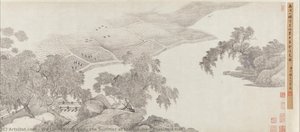
wu lì
1632 - 1718 , China
Quick Facts
- Artistic Movement Or Style: Literati painting
- Artists Or Movements Influenced By This Artist: ['Six Masters']
- Artists Who Influenced This Artist:
- Wang Shimin
- Wang Jian
- Huang Gongwang
- Wang Meng
- Date Of Birth: ca. 1632
- Date Of Death: 1718
- Full Name: Wu Li
- Nationality: Chinese
- Place Of Birth: Changzhou, China