 Preview
 Send
Send Share
Share
 Details

 Download
 Similars
 X-Ray
X-Ray Diaporama
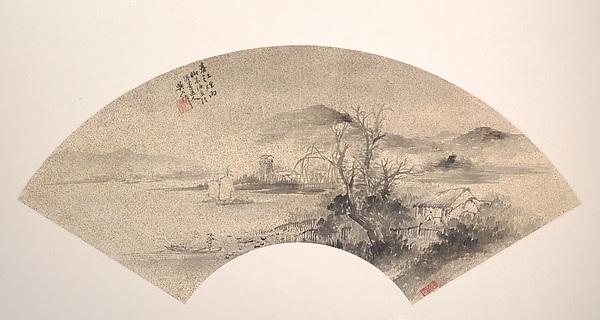
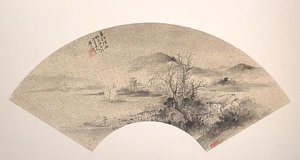
近代 吳石僊 春江煙雨 扇面 Misty Rain on the River in Spring
 Zhe School
 18.0 x 51.0 cm
 Read More
Giclée / Art Print
Museum-quality giclée or canvas print with fast production and flexible finish options. ( Buy Hand Made Painting Buy Image)




P118B $10

P118H $10

P118W $10

P438Z $10

P508JH $12

P508YH $12

P805H $10

P805Z $10

P919BZ $10

P919G $10

P919XJ $10

P959ZH $10

P968JZ $12

W106C $8

W218G $10

W218JH $8

W218Y $10

W307PJ $10

W316G $10

W316PJ $8

W316Y $10

W398PJ $8

W4111J $10

W500HY $15

W500JH $15

W692G $12

W849H $8

W940BG $15

W953PJ $8




Pick from our preset sizes that match the artwork's original proportions.

You may enter your own dimensions to fit a specific frame or space. If your selected size does not match the original image's proportions, we will either crop the artwork or extend the image with a mirrored or solid-fill edge. A digital mockup will be sent for your approval before production begins.
Please note that the on-screen preview does not reflect the actual cropping or extension. Only the mockup will accurately show the final composition.
While custom sizes are available, we recommend selecting a dimension from the predefined list to preserve the original proportions.
Worldwide Delivery () in 2 weeks instead of standard 4/5 weeks. (6 September)

Free Worldwide Express Shipping

High-Quality Linen Canvas

Full Shipping Insurance

Customs Tax Refund Guarantee

True Color Matching Guarantee

100-Day Return Policy (Defects Only)

100% Money-Back Guarantee

Bulk Discount Offer
 Glass option is only available in size under 110 CM

近代 吳石僊 春江煙雨 扇面 Misty Rain on the River in Spring
Giclée / Art Print
Reproduction Size
-


Total Price
$ 63
Related Artworks

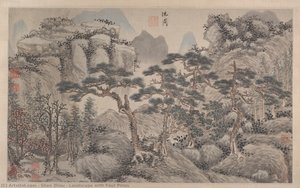
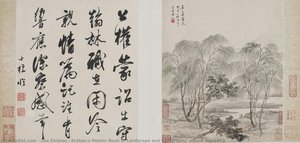
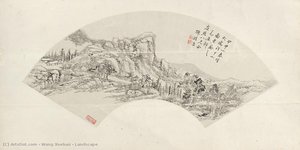
Artist Biography
A Life Woven with Ink and Rain
The story of Wu Shixian (1845 – 1916) is one inextricably linked to the twilight years of the Qing Dynasty, a period of profound transformation in China. Born in Nanjing, Jiangsu province, into a family steeped in intellectual pursuits, Wu’s early life was marked by exposure to traditional learning and a burgeoning interest in Western art—a relatively new phenomenon rapidly infiltrating Shanghai at the time. Unlike many of his contemporaries who embraced overtly political or revolutionary themes, Wu chose to focus on capturing the ephemeral beauty of nature, specifically the evocative power of fog and rain over mountainous landscapes. This dedication to atmospheric realism, coupled with a subtle yet discernible influence from Western techniques, distinguishes him as a unique figure within the broader context of Chinese landscape painting.
His journey took him beyond his birthplace, eventually settling in Shanghai where he immersed himself in the burgeoning artistic scene. Shanghai’s proximity to European influences—particularly French Impressionism—provided Wu with invaluable insights into color theory and brushwork. However, rather than simply mimicking Western styles, Wu skillfully integrated these techniques into a distinctly Chinese aesthetic, creating a synthesis that is both familiar and strikingly original. He adopted the sobriquet “Splash-Ink Monk,” reflecting his deliberate and almost meditative approach to painting – each stroke imbued with intention and a deep connection to the natural world.
The Shixian Style: Fog, Mist, and the Essence of Landscape
Wu Shixian’s artistic signature lies in his masterful depiction of atmospheric conditions. He wasn't interested in rendering landscapes as static representations; instead, he sought to capture their fleeting moods—the dense fog clinging to mountain peaks, the subtle shifts in light filtering through rain clouds, and the overall sense of mystery and tranquility that these elements evoke. This focus on atmosphere is often referred to as “Shixian style,” a term derived from his own artistic name. It’s a style characterized by delicate washes of ink, layered textures created with varying brushstrokes, and an almost ethereal quality that transports the viewer into the heart of the scene.
Unlike many landscape painters who prioritized detailed depictions of flora and fauna, Wu often reduced elements to their essential forms—a suggestion of a pine tree shrouded in mist, a distant peak barely visible through the rain. This simplification wasn’t an act of omission but rather a deliberate choice to emphasize the overall mood and atmosphere of the scene. He was deeply influenced by the Zhe School of painting, known for its emphasis on capturing the essence of nature and conveying subtle emotions through color and brushwork. His work also shows traces of Mi Fu (1521–1605), a renowned landscape painter who pioneered the use of ink washes to create atmospheric effects.
Technique and Materials: A Dance with Ink
Wu Shixian’s technique was rooted in traditional Chinese ink wash painting, but he employed it with remarkable innovation. He utilized a variety of brushstrokes—from delicate washes to bold, expressive marks—to create layers of texture and depth. He favored using rice paper as his support, allowing the ink to bleed and spread naturally, contributing to the hazy, atmospheric effects that define his work. The careful control of water was paramount; it dictated the flow and intensity of the ink, shaping the overall composition.
His palette was deliberately restrained, primarily consisting of black ink and a limited range of colors—often muted blues, greens, and browns—used sparingly to enhance the atmospheric effects. He avoided bright, saturated hues, preferring instead to create subtle gradations of tone that mimic the diffused light of fog and rain. The meticulous layering of ink washes created a sense of depth and luminosity, as if the scene were constantly shifting and evolving.
Legacy and Significance
Wu Shixian’s work represents a pivotal moment in Chinese landscape painting—a bridge between tradition and modernity. While deeply rooted in established artistic conventions, his innovative use of atmospheric effects and subtle color palettes foreshadowed the developments that would characterize 20th-century Chinese art. His paintings are not merely depictions of landscapes; they are evocative explorations of mood, emotion, and the relationship between humanity and nature. Today, Wu Shixian’s work is highly valued by collectors and scholars alike, recognized for its exquisite beauty, technical mastery, and profound artistic vision.
wu shixian
1916 -
Quick Facts
- Artistic Movement Or Style: Shixian Style (Foggy landscapes)
- Artists Who Influenced This Artist: ['Wang Meng']
- Date Of Death: 1916
- Full Name: Wu Shixian (Wu Qingyun)
- Nationality: Chinese
- Notable Artworks:
- Yunfeng's plank road
- Rain and Clouds in Mountains
- Place Of Birth: Nanjing, Jiangsu Province, China
Related Articles

Romantic Landscapes: 10 Masterpieces for Your Home | ArtsDot
Journey through 10 Romantic landscape masterpieces by Friedrich, Turner & Cole. Explore emotional art, sublime nature scenes & iconic 19th-century paintings. Find museum-quality reproductions for your home at ArtsDot.com – discover the full collection online!
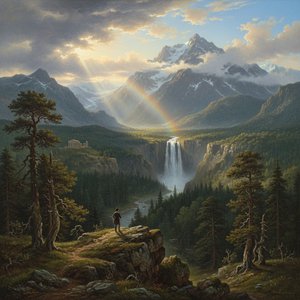
Evoking Nature's Sublime: A Comprehensive Exploration of 19th-Century Landscape Painting
Explore the captivating world of 19th-century landscape painting! Discover renowned artists like Friedrich & Monet, key movements, and find the perfect artwork to bring nature's serenity into your home. Expert insights at ArtsDot.

Evocations of Place: A Historical Journey Through Landscape Art
Explore the rich history of landscape art with ArtsDot. Discover renowned artists, movements like Impressionism & Romanticism, and expert guidance for collecting timeless pieces. Find your perfect serene escape today!
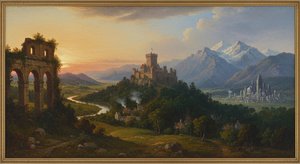
Evocations of Place: A Historical Journey Through Landscape Art
Explore the rich history of landscape art with ArtsDot. Discover renowned artists, movements like Impressionism & tonalism, and expert guidance for collecting timeless pieces. Find your perfect serene escape today!
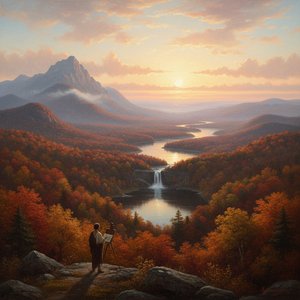
The Sublime Landscape: Exploring the Hudson River School Movement
Explore the captivating world of the Hudson River School! Discover the history, artists, and defining characteristics of this iconic American art movement. Learn about Romanticism's influence & find inspiration for your collection.