 Preview
 Send
Send Share
Share
 Details

 Download
 Similars
 X-Ray
X-Ray Diaporama
 Stats
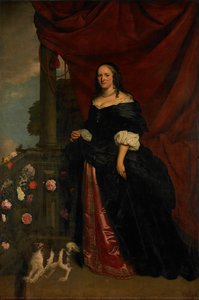
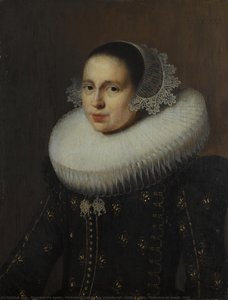
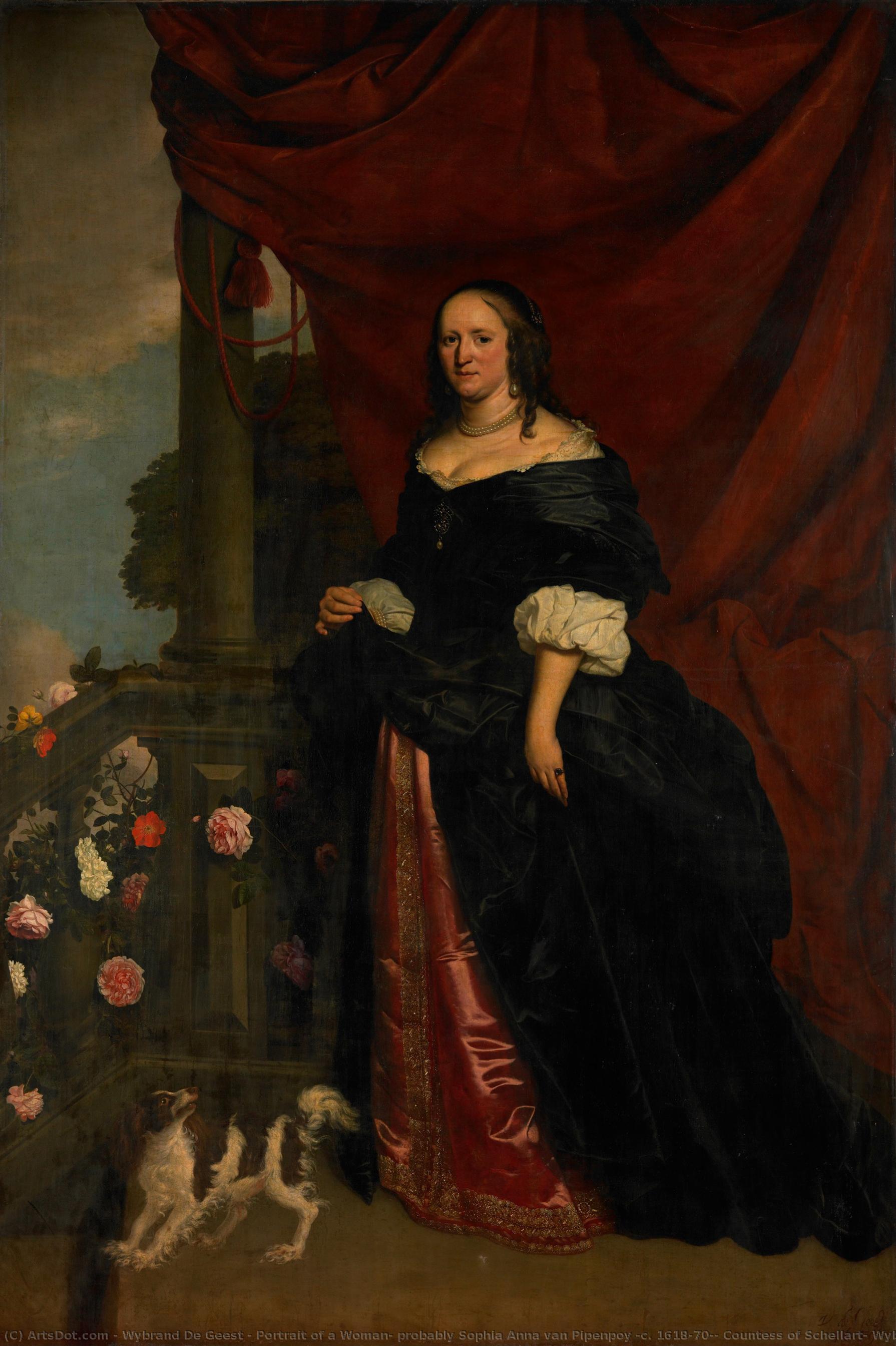
StatsPortrait of a Woman, probably Sophia Anna van Pipenpoy (c. 1618-70), Countess of Schellart, Wybrand de Geest, 1659
 1659
1659 241.0 x 161.0 cm
 Read More
Giclée / Art Print
Museum-quality giclée or canvas print with fast production and flexible finish options. ( Buy Hand Made Painting Switch to Digital Image)




































Pick from our preset sizes that match the artwork's original proportions.

You may enter your own dimensions to fit a specific frame or space. If your selected size does not match the original image's proportions, we will either crop the artwork or extend the image with a mirrored or solid-fill edge. A digital mockup will be sent for your approval before production begins.
Please note that the on-screen preview does not reflect the actual cropping or extension. Only the mockup will accurately show the final composition.
While custom sizes are available, we recommend selecting a dimension from the predefined list to preserve the original proportions.
Worldwide Delivery () in 2 weeks instead of standard 4/5 weeks. (8 September)

Free Worldwide Express Shipping

High-Quality Linen Canvas

Full Shipping Insurance

Customs Tax Refund Guarantee

True Color Matching Guarantee

100-Day Return Policy (Defects Only)

100% Money-Back Guarantee

Bulk Discount Offer
 Glass option is only available in size under 110 CM

Portrait of a Woman, probably Sophia Anna van Pipenpoy (c. 1618-70), Countess of Schellart, Wybrand de Geest, 1659
Giclée / Art Print
Reproduction Size
-


Total Price
$ 63
Related Artworks







Artist Biography
A Frisian Eagle Takes Flight: The Life and Art of Wybrand de Geest
Wybrand Simonsz. de Geest, born in Leeuwarden, Friesland in 1592, occupies a distinguished yet often understated position within the pantheon of Dutch Golden Age painters. He wasn’t a revolutionary like Rembrandt, nor did he possess the genre-bending versatility of Jan Steen; rather, de Geest excelled as a portraitist, becoming *the* preeminent chronicler of Friesland's gentry and nobility. His story is one woven with threads of familial artistic tradition, ambitious travel, and a keen understanding of social dynamics – all culminating in a legacy that continues to resonate through the preserved portraits adorning the walls of the Fries Museum and private collections worldwide. His early training began within his own family; his father, Simon Juckesz de Geest, was a skilled stained-glass worker, providing young Wybrand with an initial grounding in artistic principles and craftsmanship. This foundation would later be expanded upon through formal study under Abraham Bloemaert in Utrecht, a pivotal moment that exposed him to broader artistic currents and techniques.The Italian Sojourn and the Shaping of a Style
Like many aspiring artists of his era, de Geest embarked on a Grand Tour between 1614 and 1618, a journey considered essential for honing one’s skills and absorbing the cultural richness of Europe. His travels took him through France, eventually leading to Rome – the artistic heart of the continent. It was in Aix-en-Provence that he encountered Leonard Bramer, an interaction that likely influenced his developing approach to portraiture. However, it was Rome itself that proved transformative. Here, de Geest joined the ranks of the Bentvueghels, a society of predominantly Dutch and Flemish painters known for their camaraderie and often eccentric rituals. Within this circle, he earned the nickname “De Friesche Adelaar” – "The Frisian Eagle" – a testament to his talent and perhaps a nod to his proud regional identity. This period wasn’t merely about acquiring technical skill; it was about immersing himself in the classical tradition, studying ancient sculptures, and absorbing the influence of Renaissance masters. While his style wouldn't directly mimic the dramatic chiaroscuro of Caravaggio or his Utrecht followers, the Italian experience instilled a sense of refined observation and an appreciation for nuanced representation that would define his mature work.A Portraitist of Friesland: Capturing Essence and Status
Upon returning to Leeuwarden around 1620, de Geest quickly established himself as the leading portrait painter in Friesland. He didn’t simply *depict* his subjects; he sought to capture their essence, their social standing, and their inner character. His clientele consisted largely of the Frisian nobility, including members of the powerful Orange-Nassau family, whose portraits became symbols of lineage and authority. His skill lay in a meticulous attention to detail – the texture of fabrics, the gleam of jewelry, the subtle play of light on skin – combined with an ability to convey personality through pose and expression. He wasn’t interested in flamboyant displays or dramatic narratives; his portraits are characterized by a quiet dignity and a sense of restrained elegance. Notably, de Geest also painted intimate portraits of his own family, including a compelling self-portrait from 1629 and a poignant depiction of Hendrickje Uylenburgh, a relative of Rembrandt’s wife Saskia. These works reveal a more personal side to his artistry, showcasing his ability to capture emotional depth and familial connection.Connections and Legacy: A Place in Dutch Art History
De Geest's life was interwoven with the broader artistic landscape of the Dutch Golden Age. His marriage in 1622 to Hendrickje Fransdr Uylenburgh cemented a familial link to Rembrandt van Rijn, whose studio he visited, and whose influence can be subtly detected in some of his work. His studio itself became a hub for notable visitors, including Charles Ogier, secretary to Cardinal Richelieu, who was impressed by de Geest’s collection of curiosities and coins alongside his artistic talent. While not as widely celebrated as Rembrandt or Frans Hals, Wybrand de Geest's contribution to Dutch art is significant. He stands as the most important portrait painter of Friesland, leaving behind a substantial body of work that provides invaluable insights into the lives and social structures of 17th-century northern Netherlands. His legacy endures not only through his paintings but also through the continued preservation and study of his artistry, ensuring that “The Frisian Eagle” continues to soar within the history of Dutch art.Notable Works
- Portrait of Hendrickje Uylenburgh (1600-c. 1682), 1629: A masterful depiction showcasing his ability to capture both physical likeness and inner character.
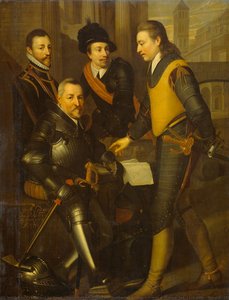
- Group Portrait of the Four Brothers of William I, Prince of Orange (workshop of), c. 1630: Demonstrates his skill in handling complex compositions and portraying multiple figures with individual distinction.
- Portrait of a Woman, probably Sophia Anna van Pipenpoy (c. 1618-70), Countess of Schellart, 1659: Exemplifies his refined technique and ability to convey social status through portraiture.
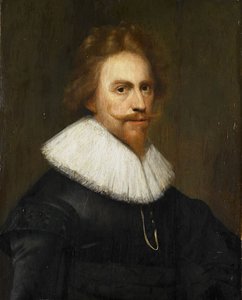
Wybrand Simonsz. de Geest
1592 - 1661 , Netherlands
Quick Facts
- Artistic Movement Or Style: Dutch Golden Age portraiture
- Artists Or Movements Influenced By This Artist: ['Jacob Adriaensz Backer']
- Artists Who Influenced This Artist:
- Abraham Bloemaert
- Leonard Bramer
- Date Of Birth: August 16, 1592
- Date Of Death: c. 1661
- Full Name: Wybrand Simonsz. de Geest
- Nationality: Dutch
- Notable Artworks:
- Self-portrait, 1629
- Hendrickje Uylenburgh, 1629
- Group Portrait of Nassau Brothers
- Place Of Birth: Leeuwarden, Netherlands