 Preview
 Send
Send Share
Share
 Details

 Download
 Similars
 X-Ray
X-Ray Diaporama
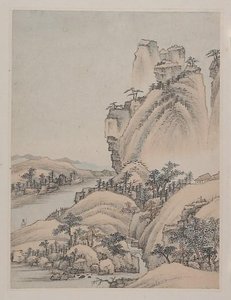
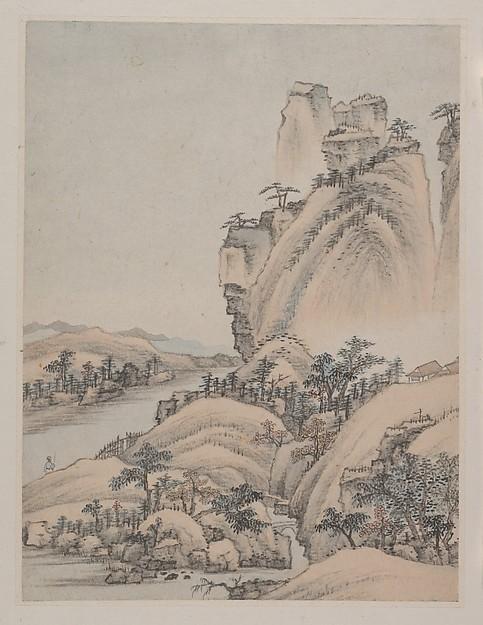
清 蕭雲從 山水圖 冊 Landscapes
 1668
1668 23.0 x 17.0 cm
 Read More
Hand Made Oil Reproduction
Hand-painted oil on canvas in your size and frame, made to order by our artists. ( Buy Print Buy Image)




































Pick from our preset sizes that match the artwork's original proportions.

You may enter your own dimensions to fit a specific frame or space. If your selected size does not match the original image's proportions, we will either crop the artwork or extend the painting with additional hand-painted elements. A digital mockup will be sent for your approval before production begins.
Please note that the on-screen preview does not reflect the actual cropping or extension. Only the mockup will accurately show the final composition.
While custom sizes are available, we recommend selecting a dimension from the predefined list to preserve the original proportions.
After order, ArtsDot.com team will email client for instructions and provide a mockup preview
Worldwide Delivery () in 3/4 weeks instead of standard 5 weeks. (31 August). No compromise on quality.

Free Worldwide Express Shipping

High-Quality Linen Canvas

Full Shipping Insurance

Customs Tax Refund Guarantee

True Color Matching Guarantee

60-Day Return Policy (Defects Only)

100% Money-Back Guarantee

Bulk Discount Offer
 Glass option is only available in size under 110 CM

清 蕭雲從 山水圖 冊 Landscapes
Reproduction Medium
Reproduction Size
-


Total Price
$ 263
Related Artworks






Artist Biography
The Architect of Dry Brushstrokes: The Life and Legacy of Xiao Yuncong
In the turbulent transition between the Ming and Qing dynasties, a period marked by profound political upheaval and shifting loyalties, the brush of Xiao Yuncong remained an unwavering testament to personal integrity and artistic revolution. Born around 1596 in Wuhu, Anhui Province, Xiao emerged not merely as a painter, but as a visionary who refused to be tethered to the established traditions of his predecessors. While many of his contemporaries sought solace in the meticulous imitation of ancient masters, Xiao looked toward the raw, unadorned essence of the natural world. This commitment to authenticity would eventually establish him as the progenitor of the Gushu school, a movement that prioritized the visceral energy of the landscape over mere decorative elegance.
Xiao’s early life was steeped in the scholarly traditions of the Hanlin Academy, an environment that provided him with a rigorous intellectual foundation and a deep reverence for Confucian ideals. This classical upbringing, however, did not lead him toward academic rigidity; instead, it fueled a lifelong quest for a more direct way of expressing truth through art. As he traveled through the vibrant artistic hubs of Nanjing and Yangzhou, Xiao engaged in profound dialogues with the literati of his time. These journeys were more than mere sightseeing; they were essential periods of absorption where he gathered the spiritual and technical fragments that would later coalesce into his signature style. His experiences as a print designer also played a subtle yet crucial role, honing his ability to balance intricate detail with structural clarity.
A Revolution in Texture and Tone
The true brilliance of Xiao Yuncong lies in his mastery of the gui shu pai technique—a method defined by dry, twisting brushstrokes that eschewed the lush, saturated palettes of earlier eras. By utilizing minimal pigment, Xiao allowed the very texture of the paper to breathe, creating a dialogue between the ink and the medium itself. This approach was revolutionary; it replaced the idealized, often soft-focus landscapes of the past with a sense of rugged immediacy and spontaneous vitality. In his hands, mountains were not merely shapes but textured entities, and water was not just a color but a movement captured in the tension of a drying stroke.
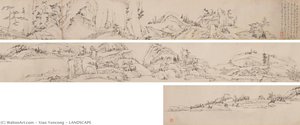
One of his most breathtaking achievements can be seen in works such as Pure Tones among Hills and Waters, a monumental handscroll painted when he was sixty-eight years old. This masterpiece, extending over twenty-three feet, exemplifies his mature style through its extraordinary marriage of fine, meticulous detail and bold, sweeping brushwork. The use of subtle bluish washes provides a haunting depth to the composition, proving that even within the constraints of a "dry" technique, there exists a profound capacity for atmospheric emotion. His ability to command such vast, complex compositions while maintaining a sense of singular focus remains one of the great feats of Chinese landscape painting.
The Spirit of Loyalty and Artistic Independence
Beyond the technical innovations of his brush, Xiao Yuncong’s life was defined by a quiet but resolute political stance. As a lifelong supporter of the fallen Ming dynasty, his art often carried an undercurrent of nostalgic longing and moral steadfastness. This sense of Ming loyalty infused his landscapes with a certain gravity; his mountains were not just scenery, but symbols of enduring strength and unyielding character. Even as he adopted various pseudonyms throughout his life—such as Chimu, Wumen Daoren, and Zhongshan Laoren—the core of his identity remained anchored in this historical and ethical continuity.
The historical significance of Xiao Yuncong cannot be overstated. By breaking away from the cycle of imitation, he opened a new chapter in the evolution of Chinese painting, proving that true innovation arises from the courage to observe nature without the veil of tradition. His legacy lives on through:
- The Gushu School: The establishment of a distinct lineage of painters focused on textural authenticity and structural vigor.
- Calligraphic Mastery: His contributions to the art of writing, notably seen in the Mei Hua Tang Posthumous manuscript.
- A New Aesthetic Language: The introduction of "dry" techniques that influenced subsequent generations of landscape artists seeking a more tactile and expressive medium.
Ultimately, Xiao Yuncong remains a singular figure—a poet of the brush who found beauty in the rugged, the sparse, and the unadorned, leaving behind a visual record of a soul that remained as steadfast as the mountains he so masterfully depicted.
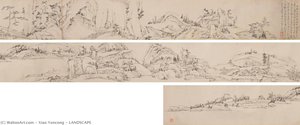
xiao yuncong
1596 - 1673
Quick Facts
- Artistic Movement Or Style: Gushu School
- Date Of Death: 1673
- Full Name: Xiao Yuncong
- Nationality: Chinese
- Notable Artworks: ['Taiping Shanshui Tu Hua']
- Place Of Birth: Wuhu, Anhui Province