 Preview
 Send
Send Share
Share
 Details

 Download
 Similars
 X-Ray
X-Ray Diaporama
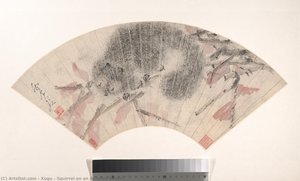
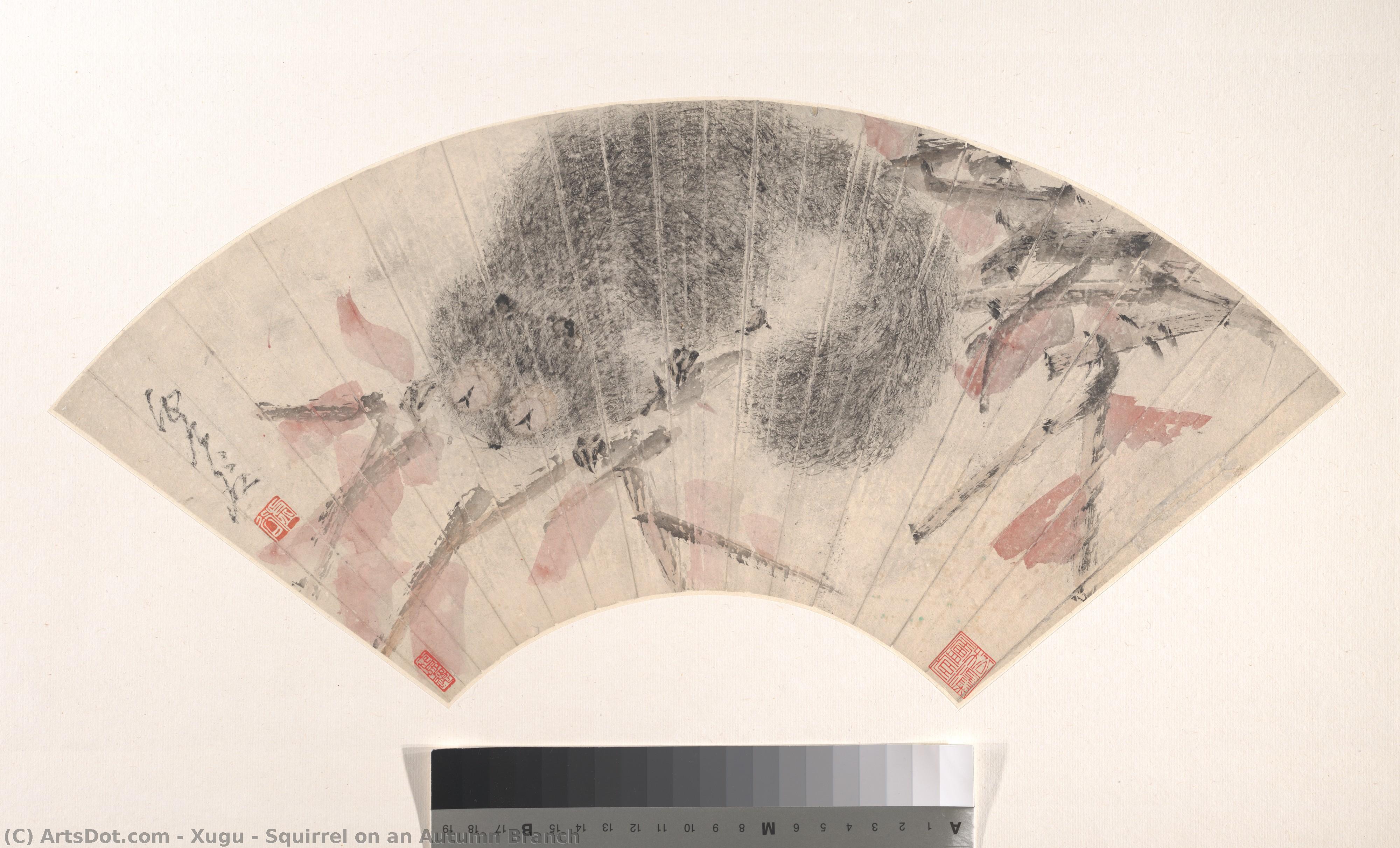
Squirrel on an Autumn Branch
 Chinese Landscape Painting
 1880
1880 18.0 x 48.0 cm
 Read More
Hand Made Oil Reproduction
Hand-painted oil on canvas in your size and frame, made to order by our artists. ( Buy Print Buy Image)




































Pick from our preset sizes that match the artwork's original proportions.

You may enter your own dimensions to fit a specific frame or space. If your selected size does not match the original image's proportions, we will either crop the artwork or extend the painting with additional hand-painted elements. A digital mockup will be sent for your approval before production begins.
Please note that the on-screen preview does not reflect the actual cropping or extension. Only the mockup will accurately show the final composition.
While custom sizes are available, we recommend selecting a dimension from the predefined list to preserve the original proportions.
After order, ArtsDot.com team will email client for instructions and provide a mockup preview
Worldwide Delivery () in 3/4 weeks instead of standard 5 weeks. (20 August). No compromise on quality.

Free Worldwide Express Shipping

High-Quality Linen Canvas

Full Shipping Insurance

Customs Tax Refund Guarantee

True Color Matching Guarantee

60-Day Return Policy (Defects Only)

100% Money-Back Guarantee

Bulk Discount Offer
 Glass option is only available in size under 110 CM

Squirrel on an Autumn Branch
Reproduction Medium
Reproduction Size
-


Total Price
$ 263
Artwork Description
Related Artworks
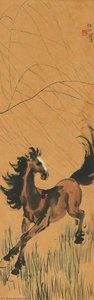
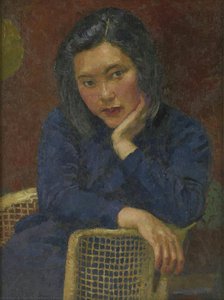
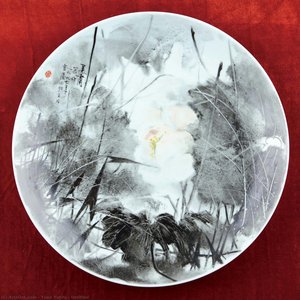
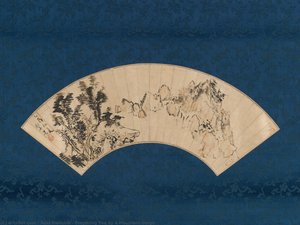

Artist Biography
From Officer to Monk: The Unexpected Path of Xugu
The story of Xugu (朱懷仁, 1823–1896) is one of remarkable transformation—a journey from the rigid discipline of a Qing dynasty army officer to the serene contemplation of a Buddhist monk and ultimately, to becoming a celebrated master of Chinese ink painting. Born in Xin’an, Anhui province, Xugu's early life offered little indication of the artistic path he would forge. He initially followed a conventional route, serving as a staff officer within the military ranks. However, this existence proved unsatisfying, and a profound spiritual awakening led him to embrace monastic life within the Chan (Zen) Buddhist sect. This pivotal decision irrevocably altered his trajectory, setting him on a course that would see him rise to prominence in the vibrant Shanghai art world of the late 19th century. The shift wasn’t merely a change of profession; it was an internal revolution reflected in every brushstroke he later laid upon paper.A Synthesis of Tradition and Innovation
Xugu's artistic development was characterized by a unique blend of reverence for tradition and a willingness to break new ground. He immersed himself in the classic repertoire of Chinese painting, demonstrating exceptional skill in bird-and-flower compositions—particularly his depictions of fish and squirrels—as well as landscapes and portraiture. Yet, he wasn’t content with mere imitation. His early studies focused on Boundary Painting, but he soon gravitated towards a more expressive style employing Dry Brush and Deflected Tip techniques. This allowed him to create works imbued with a distinctive naiveté, elegant coloring, and a dynamic interplay of empty space and form. He became known for his ability to capture the essence of his subjects—not just their physical appearance but also their underlying spirit. His brushwork, while seemingly spontaneous, was underpinned by meticulous observation and profound understanding of Chan Buddhist principles.The Four Masters and a Coldly Elegant Style
Xugu’s artistic circle was crucial to his success. He moved to Shanghai, becoming a central figure alongside Pu Hua (蒲華), Ren Bonian (任伯年), and Wu Changshuo (吳昌碩)—together they were known as the “Four Masters of the Shanghai School.” This group represented a new wave of Chinese painting, one that embraced both technical virtuosity and individual expression. Xugu distinguished himself through his uniquely "coldly elegant" style—a term often used to describe his works’ understated beauty and refined sensibility. He wasn't interested in flamboyant displays of skill; instead, he sought to convey a sense of quiet contemplation and spiritual depth. His compositions are marked by a deliberate simplicity, allowing the viewer to focus on the subtle nuances of form, texture, and color.Symbolism and Spiritual Resonance
The subjects Xugu chose were often laden with symbolic meaning. Squirrels, for example, represented abundance and prosperity, while fish embodied freedom and resilience. His landscapes weren’t simply depictions of natural scenery; they were expressions of his Chan Buddhist worldview—reflections on the impermanence of life and the interconnectedness of all things. Even his calligraphy, often executed in Clerical Script, was imbued with spiritual significance. He authored a *Poetry Record of Monk Xugu*, revealing a simple yet profound style that mirrored the directness of his paintings. His art wasn’t merely decorative; it was an invitation to contemplation—a means of connecting with the deeper truths of existence.A Lasting Legacy
Xugu's impact on Chinese painting is undeniable. He broke through traditional constraints, skillfully blending *Xieyi* (freehand brushwork) and Realism to create a style that was both innovative and deeply rooted in the past. Wu Changshuo famously declared that Xugu “with one punch, shattered the past, present, and future,” acknowledging his revolutionary approach. Though he remained somewhat obscure outside of Shanghai during his lifetime, his works are now highly sought after by collectors and museums worldwide, including The Art Institute of Chicago. His paintings continue to inspire awe and admiration for their technical brilliance, spiritual depth, and enduring beauty—a testament to the transformative power of art and the remarkable journey of a man who found enlightenment through the stroke of a brush.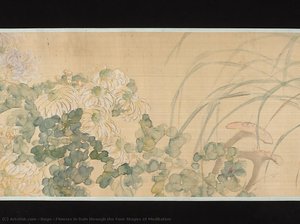
Quick Facts
- Artistic Movement Or Style: Shanghai School, Ink Wash
- Date Of Birth: 1823
- Date Of Death: Living
- Full Name: Xugu
- Nationality: Chinese
- Notable Artworks:
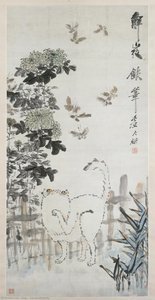
- Cat and Butterfly
- Flowers in Rain
- Squirrel on Branch
- Other Names: Zhu Huairen
- Place Of Birth: Xin’an, China
Related Articles
Ephemeral Expressions: Exploring the Nuances of Ink on Paper Through History & Contemporary Art
Explore the captivating world of ink wash painting – from its ancient origins to contemporary masters. Discover techniques, symbolism & conservation insights with ArtsDot.com.
The Beauty of Ink Wash: Discover Serene & Soulful Art for Your Home
Discover the tranquil beauty of ink wash painting. Explore how Sumi-e and monochrome landscapes bring Zen-inspired serenity and soulful elegance to your home decor through expert curation and timeless East Asian aesthetics.
Xie Zhiliu: A Legacy of Ink Wash Painting & Modern Chinese Literati Tradition
Explore the legacy of Xie Zhiliu, a master of Chinese ink wash painting & prominent figure in modern art. Discover his techniques, influences, and contributions to literati tradition. A guide for discerning collectors.
Timeless Elegance: Discovering the Soulful Beauty of Chinese Calligraphy for Sophisticated Home Interiors
Elevate your home with the serene beauty of Chinese calligraphy art. Explore our collection of hand-painted ink wash reproductions and bespoke commissions at ArtsDot.com. Discover museum-quality pieces designed to bring cultural elegance and tranquility to your modern interior.
Pu Xinyu's 'Puru': A Legacy of Literati Painting & Emotional Resonance
Explore the captivating world of Pu Xinyu (Puru), the last great literati painter. Discover his imperial heritage, masterful ink wash techniques & enduring legacy – a valuable addition to any discerning art collection.