 Preview
 Send
Send Share
Share
 Details

 Download
 Similars
 X-Ray
X-Ray Diaporama
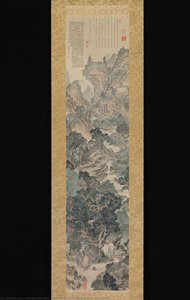
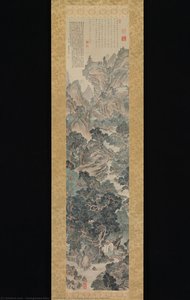
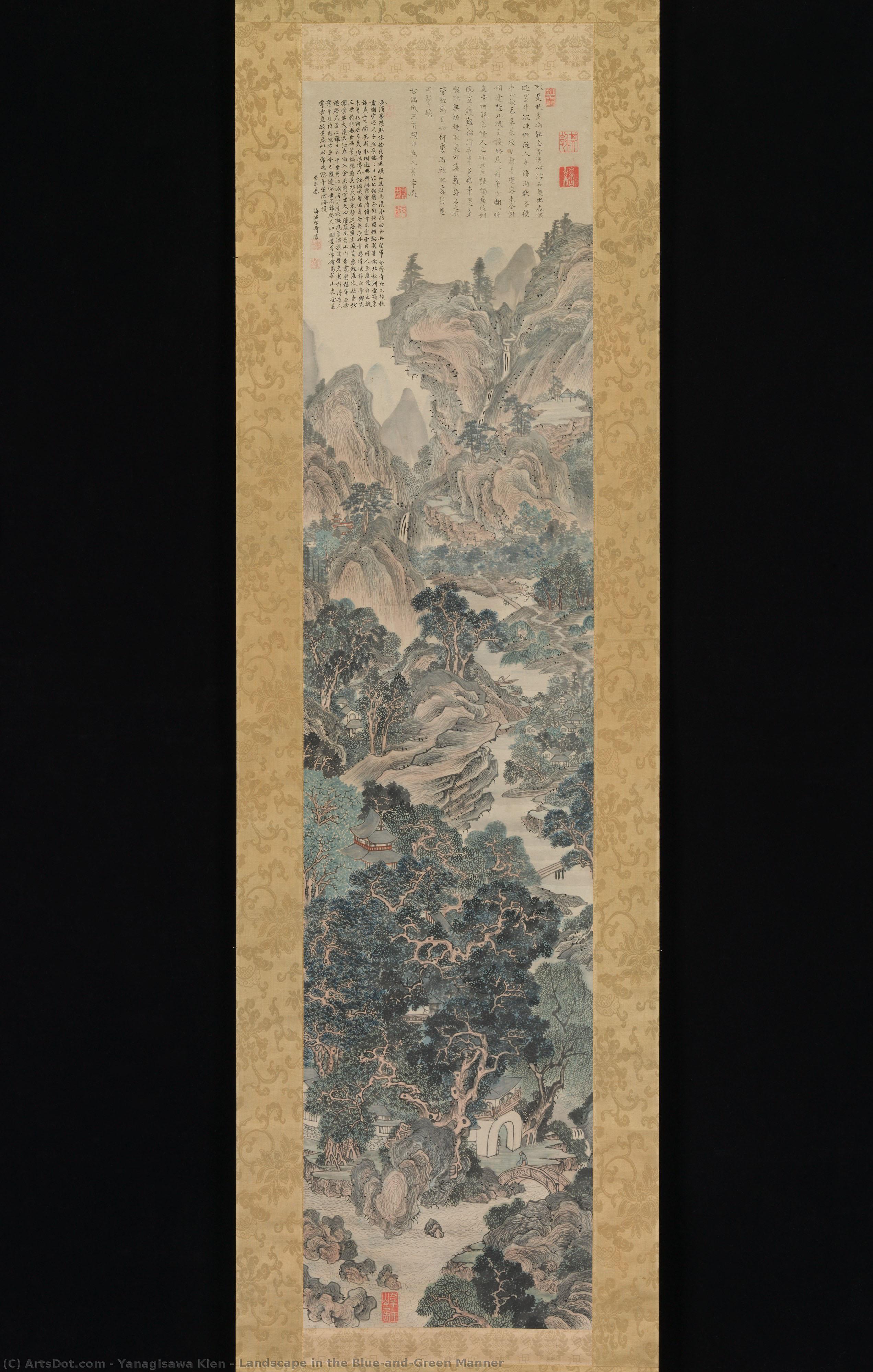
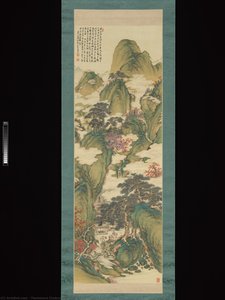
Landscape in the Blue-and-Green Manner
 701
701 137.0cm x 32.0cm
 Read More
Hand Made Oil Reproduction
Hand-painted oil on canvas in your size and frame, made to order by our artists. ( Buy Print Buy Image)




































Pick from our preset sizes that match the artwork's original proportions.

You may enter your own dimensions to fit a specific frame or space. If your selected size does not match the original image's proportions, we will either crop the artwork or extend the painting with additional hand-painted elements. A digital mockup will be sent for your approval before production begins.
Please note that the on-screen preview does not reflect the actual cropping or extension. Only the mockup will accurately show the final composition.
While custom sizes are available, we recommend selecting a dimension from the predefined list to preserve the original proportions.
After order, ArtsDot.com team will email client for instructions and provide a mockup preview
Worldwide Delivery () in 3/4 weeks instead of standard 5 weeks. (30 August). No compromise on quality.

Free Worldwide Express Shipping

High-Quality Linen Canvas

Full Shipping Insurance

Customs Tax Refund Guarantee

True Color Matching Guarantee

60-Day Return Policy (Defects Only)

100% Money-Back Guarantee

Bulk Discount Offer
 Glass option is only available in size under 110 CM

Landscape in the Blue-and-Green Manner
Reproduction Medium
Reproduction Size
-


Total Price
$ 263
Related Artworks








Artist Biography
The Soul of the Nanga Movement: The Life of Yanagisawa Kien
In the vibrant tapestry of Japan’s Edo period, few figures loom as gracefully as Yanagisawa Kien, an artist whose brushstrokes helped define the very essence of the nanga style. Born in 1703 within the prestigious atmosphere of Edo, Kien was far more than a mere painter; he was a true literati polymath, a man whose intellect and aesthetic sensibilities were deeply intertwined with the scholarly traditions of his era. Originally known by his given name, Rikyō, or Satotomo, his lineage placed him at the heart of influence, as his father held a prominent position within the Yanagisawa clan. This upbringing provided him with an early access to the finest cultural currents of Japan, fostering a lifelong devotion to the arts that would eventually see him master calligraphy, poetry, and the delicate nuances of the tea ceremony.
Kien’s artistic journey was one of profound evolution and diverse influences. While his initial training began within the rigorous and structured confines of the Kanō school, he soon found himself drawn to more expressive and personal modes of expression. His transition toward the nanga—or bunjinga—style was catalyzed by his discipleship under Watanabe Shūseki, a master of the Nagasaki-e woodcut tradition. This exposure to different mediums and perspectives allowed Kien to bridge the gap between formal Japanese traditions and the more fluid, scholarly influences arriving from the continent. His later studies under Gion Nankai further refined his ability to capture the spiritual essence of nature, moving beyond mere representation toward a poetic interpretation of the landscape.
A Mastery of Ink and Nature
The work of Yanagisawa Kien is characterized by a breathtaking synthesis of technical precision and emotional depth. He possessed a rare ability to command the medium of ink and color on paper, creating compositions that felt both structurally sound and ethereally light. One of his most celebrated specializations was the depiction of bamboo, a subject that allowed him to showcase his mastery of line and rhythm. However, it is in his expansive landscapes that his true genius as a nanga master shines brightest. In works such as his Landscape in the Blue-and-Green Manner, the viewer is not merely looking at a scene but is invited to embark on a spiritual journey through rugged terrain, following meandering streams and distant waterfalls that disappear into misty mountains.
Kien’s compositions often utilized the traditional "blue-and-green" palette, a technique rooted in classical Chinese landscape painting, yet he infused it with a uniquely Japanese sensitivity. His landscapes are frequently dense with detail—cliffs, boulders, and ancient trees—yet they maintain an airy, contemplative quality through the strategic use of negative space. This balance was often complemented by his own calligraphic inscriptions. As a skilled poet, Kien used text not just as a label, but as an integral part of the visual harmony, weaving his thoughts directly into the landscape to create a multi-sensory experience that engaged both the eye and the intellect.
Legacy and Historical Significance
The historical importance of Yanagisawa Kien extends far beyond the boundaries of his own canvas. He stands as a foundational pillar of the nanga movement, serving as a vital link between the early practitioners and the subsequent generations of literati artists. His role as a teacher was perhaps his most enduring contribution to the art world; by instructing young talents such as Ike Taiga and Kimura Kenkadō, he ensured that his philosophy of expressive, scholar-driven art would permeate the Japanese aesthetic for decades to come. Through these disciples, Kien’s influence rippled through the Edo period, shaping the way nature was perceived and rendered by the masters who followed him.
Though much of his physical oeuvre has been lost to time, with only a fraction of his works surviving today, his impact remains indelible. He embodied the ideal of the bunjin—the cultured scholar-artist who finds transcendence through the brush. His life, marked by a deep connection to the Zen traditions of the Ōbaku school and the philosophical rigor of Confucianist scholars like Ogyū Sorai, represents a unique moment in Japanese history where art, literature, and spirituality converged. To study Yanagisawa Kien is to encounter the very heartbeat of the Edo period’s intellectual and artistic renaissance.