 Preview
 Send
Send Share
Share
 Details

 Download
 Similars
 X-Ray
X-Ray Diaporama
 Stats
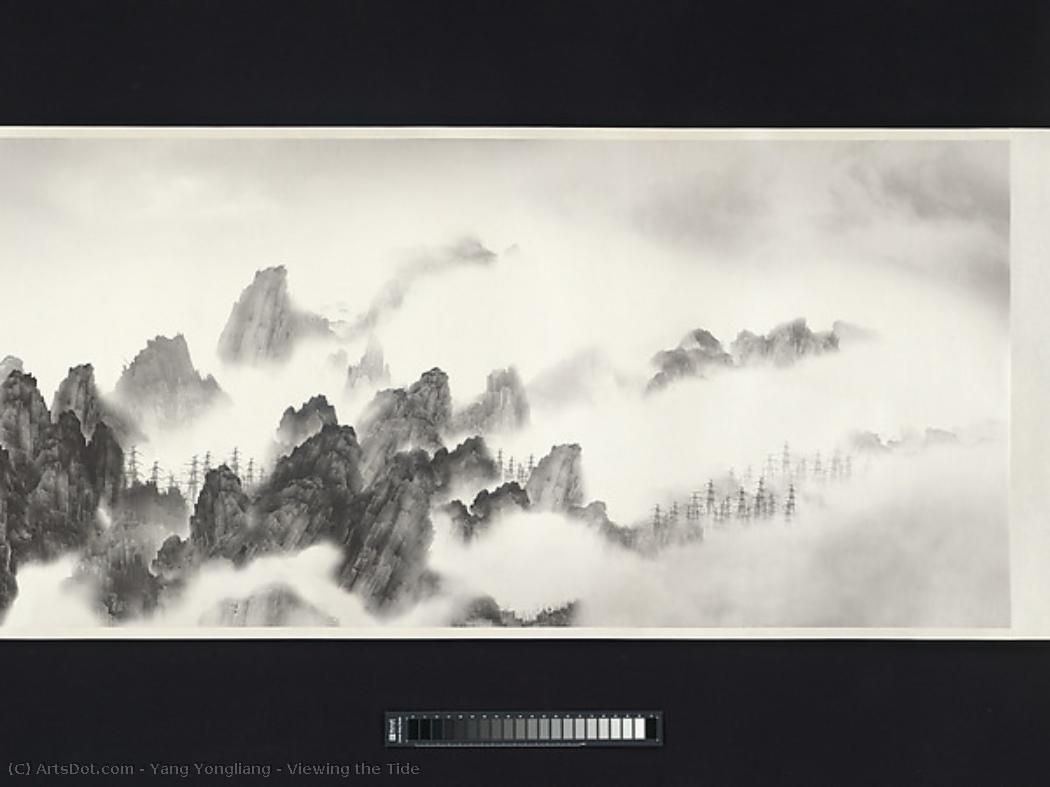
StatsViewing the Tide
 2008
2008 45.0 x 1000.0 cm
 Read More
Giclée / Art Print
Museum-quality giclée or canvas print with fast production and flexible finish options. ( Buy Hand Made Painting Switch to Digital Image)




































Pick from our preset sizes that match the artwork's original proportions.

You may enter your own dimensions to fit a specific frame or space. If your selected size does not match the original image's proportions, we will either crop the artwork or extend the image with a mirrored or solid-fill edge. A digital mockup will be sent for your approval before production begins.
Please note that the on-screen preview does not reflect the actual cropping or extension. Only the mockup will accurately show the final composition.
While custom sizes are available, we recommend selecting a dimension from the predefined list to preserve the original proportions.
Worldwide Delivery () in 2 weeks instead of standard 4/5 weeks. (8 September)

Free Worldwide Express Shipping

High-Quality Linen Canvas

Full Shipping Insurance

Customs Tax Refund Guarantee

True Color Matching Guarantee

100-Day Return Policy (Defects Only)

100% Money-Back Guarantee

Bulk Discount Offer
 Glass option is only available in size under 110 CM

Viewing the Tide
Giclée / Art Print
Reproduction Size
-


Total Price
$ 63
Related Artworks






Artist Biography
Early Life and Artistic Foundations
Yang Yongliang, born in 1980 in the historic Old Town of Jiading, Shanghai, embodies a fascinating synthesis of tradition and modernity within his artistic practice. His journey began not in the digital realm he would later master, but steeped in the ancient art forms of Chinese calligraphy and painting. From childhood, he immersed himself in these disciplines, cultivating a deep understanding of brushwork, composition, and the philosophical underpinnings that have shaped East Asian aesthetics for centuries. This early training wasn’t merely technical; it instilled within him a reverence for nature, a sensitivity to nuance, and an appreciation for the power of suggestion—qualities that would become hallmarks of his distinctive style. Later formal studies at the China Art Academy broadened his horizons, introducing him to computer imaging techniques which he would soon skillfully blend with his traditional foundations. This unique combination set the stage for a career dedicated to “creating new forms of contemporary art,” as he himself states, and marked the beginning of an exploration into the complex relationship between cultural heritage and rapid societal change.The Emergence of Phantom Landscapes
Yang Yongliang’s breakthrough came with his *Phantom Landscape* series (2006-2007). These weren't simply paintings; they were meticulously constructed digital compositions that initially appeared as serene, classical Chinese landscapes. However, a closer examination revealed a startling truth: the majestic mountains and tranquil forests were formed from dense layers of urban imagery—skyscrapers, construction cranes, industrial symbols, and financial charts. This juxtaposition was profoundly unsettling, forcing viewers to confront the relentless march of urbanization in China and its impact on collective memory and cultural identity. The series wasn’t a condemnation of progress, but rather a poignant meditation on loss, transformation, and the ephemeral nature of existence. It spoke to a generation grappling with the rapid dismantling of traditional ways of life and the rise of a new, hyper-modern reality. The power of these works lay in their ability to simultaneously evoke beauty and anxiety, prompting reflection on what is gained and lost in the pursuit of development.Technique and Symbolism: A Dialogue Between Past and Present
Yang Yongliang’s technique is as compelling as the concepts it serves. He doesn't simply *depict* landscapes; he builds them, layer upon painstaking layer, using digital tools to recreate the delicate brushstrokes and atmospheric effects of traditional ink painting. This process is incredibly time-consuming, reflecting a dedication to craftsmanship that honors his artistic roots. The choice of imagery is equally significant. The recurring motifs—skyscrapers replacing mountains, cranes substituting for trees—are potent symbols of China’s economic boom and its attendant social consequences. The inclusion of map symbols and financial data further underscores the pervasive influence of globalization and the commodification of culture. He often incorporates elements of Yin and Yang philosophy, creating visual harmonies that suggest a delicate balance between opposing forces—nature and technology, tradition and modernity, destruction and creation. His works are not merely representations of physical spaces but allegorical landscapes reflecting the internal tensions within a rapidly evolving society.International Recognition and Continued Evolution
Since his early successes with *Phantom Landscape*, Yang Yongliang’s work has garnered international acclaim, exhibited in prestigious institutions worldwide including the Metropolitan Museum of Art in New York, the British Museum in London, and the Ullens Center for Contemporary Art in Beijing. He has been recognized with awards such as the Asia Society's Asia Arts Game Changer Awards, solidifying his position as a leading voice in contemporary Chinese art. His artistic exploration hasn’t remained static; he continues to push boundaries, experimenting with new media like virtual reality and video installation while remaining deeply committed to his core themes. Recent projects, such as *Vanishing Shore* and *Glows in the Arctic*, demonstrate an expanding concern for environmental issues and the fragility of our planet.- His work has been acquired by numerous institutions globally.
- He continues to explore new media while maintaining his core themes.
Historical Significance and Lasting Impact
Yang Yongliang’s contribution to contemporary art lies in his ability to bridge the gap between tradition and innovation, East and West. He doesn't simply appropriate traditional forms; he reinterprets them through a distinctly modern lens, creating works that are both visually stunning and intellectually stimulating. His art serves as a powerful commentary on the complexities of globalization, urbanization, and cultural identity in the 21st century. He has redefined the landscape painting genre, transforming it from a nostalgic representation of nature into a dynamic reflection of contemporary society. His work resonates with audiences worldwide because it speaks to universal themes of change, loss, and the search for meaning in an increasingly fragmented world. Yang Yongliang’s legacy will undoubtedly be as an artist who not only captured the spirit of his time but also challenged us to reconsider our relationship with the past, present, and future.
yang yongliang
1980 - , China
Quick Facts
- Artistic Movement Or Style: Contemporary Art, Digital Landscapes
- Date Of Birth: 1980
- Full Name: Yang Yongliang
- Nationality: Chinese
- Notable Artworks:
- Taigu Descendants
- Viewing the Tide
- Phantom Landscape Series
- Place Of Birth: Jingjiang, China