 Preview
 Send
Send Share
Share
 Details

 Download
 Similars
 X-Ray
X-Ray Diaporama
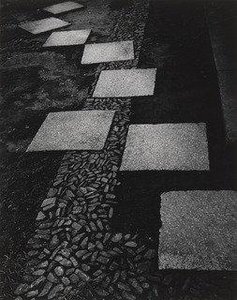
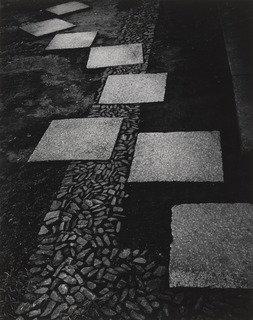
Stepping Stones beside the Onrindo, Katsura
 1954
1954 19.0 x 24.0 cm
 Read More
Hand Made Oil Reproduction
Hand-painted oil on canvas in your size and frame, made to order by our artists. ( Buy Print Buy Image)




































Pick from our preset sizes that match the artwork's original proportions.

You may enter your own dimensions to fit a specific frame or space. If your selected size does not match the original image's proportions, we will either crop the artwork or extend the painting with additional hand-painted elements. A digital mockup will be sent for your approval before production begins.
Please note that the on-screen preview does not reflect the actual cropping or extension. Only the mockup will accurately show the final composition.
While custom sizes are available, we recommend selecting a dimension from the predefined list to preserve the original proportions.
After order, ArtsDot.com team will email client for instructions and provide a mockup preview
Worldwide Delivery () in 3/4 weeks instead of standard 5 weeks. (29 August). No compromise on quality.

Free Worldwide Express Shipping

High-Quality Linen Canvas

Full Shipping Insurance

Customs Tax Refund Guarantee

True Color Matching Guarantee

60-Day Return Policy (Defects Only)

100% Money-Back Guarantee

Bulk Discount Offer
 Glass option is only available in size under 110 CM

Stepping Stones beside the Onrindo, Katsura
Reproduction Medium
Reproduction Size
-


Total Price
$ 263
Related Artworks






Artist Biography
The Visionary Lens of Yasuhiro Ishimoto
Yasuhiro Ishimoto (1921–2012) occupied a singular space in the history of twentieth-century photography, acting as a profound bridge between the disciplined aesthetics of Japanese tradition and the experimental fervor of American modernism. Born in San Francisco, his early life was marked by a complex movement between cultures; though born in the United States, his formative years were spent in Kochi Prefecture, Japan. This dual identity—rooted in the meticulous craftsmanship of Japanese heritage yet shaped by the expansive, often turbulent landscape of mid-century America—became the very foundation of his artistic gaze. His journey was not without profound hardship, as the experience of internment during World War II instilled a deep sense of resilience and a keen awareness of displacement, themes that would subtly echo through the quiet, structured compositions of his later work.
The evolution of Ishimoto’s style is inseparable from his academic pursuits in the United States. After studying architecture at Northwestern University, he found his true calling at the Chicago Institute of Design, a bastion of Bauhaus-inspired thought. Under the mentorship of luminaries such as Harry M. Callahan and Aaron Siskind, Ishimoto learned to see beyond the surface of the tangible world. He embraced a humanist aesthetic that sought out the extraordinary within the ordinary, utilizing the camera to uncover geometric abstractions in everyday objects and textures. His training allowed him to merge the architectural precision of spatial design with a poetic sensitivity to light and shadow, creating images that felt both structurally sound and emotionally resonant.
A Dialogue Between Tradition and Modernity
Perhaps Ishimoto’s most enduring contribution to the photographic canon is his ability to document the intersection of historical permanence and modern innovation. He possessed a rare capacity to capture the "abstract in the everyday," finding formal purity in both the concrete fixtures of urban life and the organic rhythms of nature. His work often functioned as a transnational dialogue, bringing the nuanced beauty of Japanese architectural modernism to a global audience. This was most famously realized in his celebrated documentation of the Katsura Imperial Villa. Through his lens, the villa’s structural details were transformed into studies of geometric purity and atmospheric depth, proving that tradition could be viewed through a contemporary, modernist eye.
His photographic repertoire was remarkably diverse, ranging from the quiet, contemplative study of nature to the kinetic energy of the street. His career saw him capturing the following:
- Architectural Masterpieces: His profound explorations of the Katsura Imperial Villa, which helped stimulate global discourse on the relationship between modernism and tradition.
- Urban Chronicles: Evocative street photography that captured the quiet anxieties and rhythmic pulses of life in both Tokyo and Chicago.
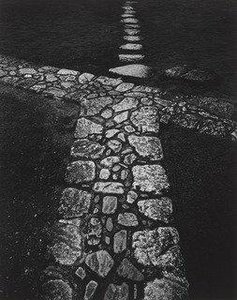
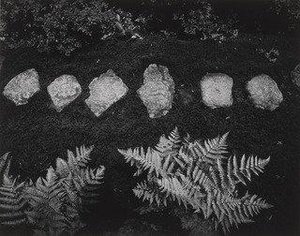
- Abstracted Nature: A focus on organic forms, such as stepping stones and natural textures, where the boundary between the man-made and the natural world begins to blur.
- The Human Element: His participation in monumental exhibitions like The Family of Man, showcasing his ability to document the shared human experience through a modernist lens.
Legacy of a Transnational Master
Ishimoto’s significance extends far beyond the borders of a single nation or movement. As a "transnational interlocutor," he facilitated a visual exchange between East and West, ensuring that the architectural and cultural nuances of Japan were understood within the context of international modernism. His published works, such as the seminal Katsura: Tradition and Creation in Japanese Architecture—which featured essays by legends like Walter Gropius and Kenzō Tange—remain essential texts for scholars of both design and photography. By finding the abstract within the concrete and the eternal within the fleeting, Yasuhiro Ishimoto left behind a legacy that continues to inspire those who seek beauty in the balance of structure and soul.
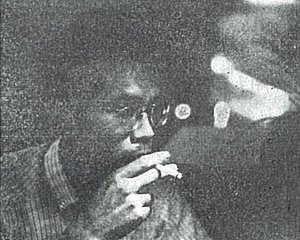
Yasuhiro Ishimoto
1921 - 2012
Quick Facts
- Artistic Movement Or Style: Modernist photography
- Artists Or Movements Influenced By This Artist: ['Bauhaus']
- Artists Who Influenced This Artist:
- Harry M. Callahan
- Aaron Siskind
- Date Of Birth: June 14, 1921
- Date Of Death: February 6, 2012
- Full Name: Yasuhiro Ishimoto
- Nationality: Japanese-American
- Notable Artworks: ['Katsura: Tradition and Creation in Japanese Architecture']
- Place Of Birth: San Francisco, California