 Preview
 Send
Send Share
Share
 Details

 Download
 Similars
 X-Ray
X-Ray Diaporama
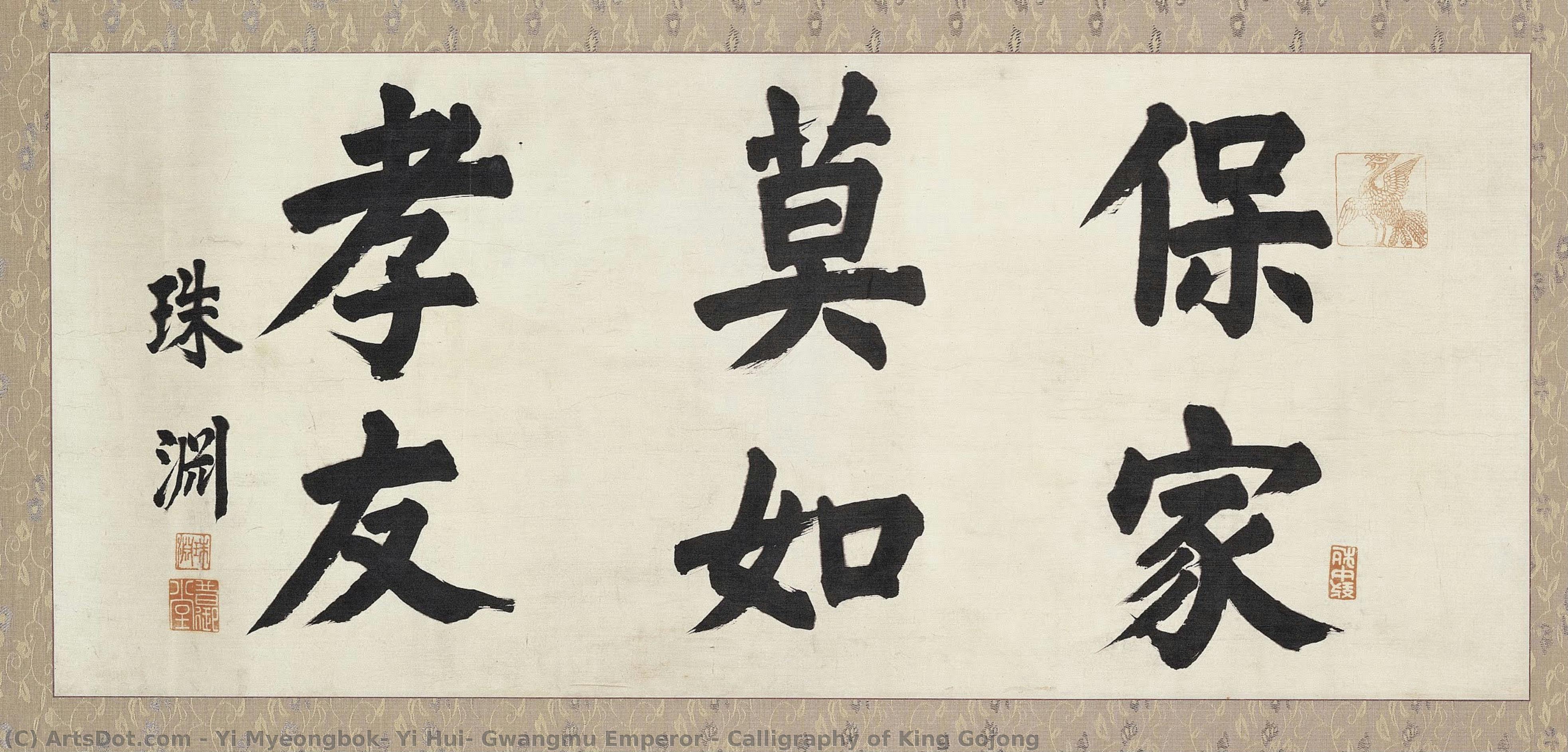
Calligraphy of King Gojong
 88.0 x 39.0 cm
 Seokdang Museum of Dong-A University
 Read More
Hand Made Oil Reproduction
Hand-painted oil on canvas in your size and frame, made to order by our artists. ( Buy Print Buy Image)




































Pick from our preset sizes that match the artwork's original proportions.

You may enter your own dimensions to fit a specific frame or space. If your selected size does not match the original image's proportions, we will either crop the artwork or extend the painting with additional hand-painted elements. A digital mockup will be sent for your approval before production begins.
Please note that the on-screen preview does not reflect the actual cropping or extension. Only the mockup will accurately show the final composition.
While custom sizes are available, we recommend selecting a dimension from the predefined list to preserve the original proportions.
After order, ArtsDot.com team will email client for instructions and provide a mockup preview
Worldwide Delivery () in 3/4 weeks instead of standard 5 weeks. (28 August). No compromise on quality.

Free Worldwide Express Shipping

High-Quality Linen Canvas

Full Shipping Insurance

Customs Tax Refund Guarantee

True Color Matching Guarantee

60-Day Return Policy (Defects Only)

100% Money-Back Guarantee

Bulk Discount Offer
 Glass option is only available in size under 110 CM

Calligraphy of King Gojong
Reproduction Medium
Reproduction Size
-


Total Price
$ 263
Related Artworks









Artist Biography
The Reluctant Emperor: Yi Myeongbok and the Art of a Vanishing Dynasty
Yi Myeongbok, better known as Gojong, stands as a poignant figure in Korean history—a monarch who navigated a treacherous path between tradition and modernity, independence and colonization. Born in Seoul in 1852, his life unfolded against a backdrop of increasing foreign pressure on the isolated Joseon Kingdom. Ascending to the throne at the tender age of twelve, Gojong’s early reign was largely guided by his father, Heungseon Daewongun, a powerful regent who pursued a policy of strengthening Korea through internal reforms and staunch resistance to outside influence. However, this isolationist stance proved unsustainable in the face of burgeoning Western and Japanese ambitions. While often portrayed as indecisive or weak, Gojong’s actions were those of a ruler desperately attempting to preserve his nation's sovereignty amidst impossible odds. He was not merely a passive observer but an active participant in a complex political dance, seeking alliances and initiating reforms that would ultimately prove insufficient against the tide of Japanese expansionism.A King’s Pursuit of Modernization: The Gwangmu Reforms
The turning point in Gojong's rule came with his assumption of direct power in 1874. Recognizing the need to adapt, he embarked on a series of ambitious reforms known as the Gwangmu Reforms (1896-1898). These weren’t simply cosmetic changes; they represented a genuine effort to modernize Korea's military, industry, education system, and legal framework. The establishment of new schools, the adoption of Western technology, and attempts to create a more centralized government were all hallmarks of this period. Gojong understood that survival depended on transforming Korea into a credible force capable of defending itself against external threats. He even declared the Korean Empire in 1897, elevating himself to Emperor—a symbolic act intended to assert equality with other world powers and break free from centuries of Chinese suzerainty. This bold move, however, only served to further provoke Japan, which saw Korea as a vital stepping stone in its own imperial ambitions.The Calligrapher King: Artistic Expression Amidst Political Turmoil
Beyond his political endeavors, Gojong was a cultivated and accomplished artist, particularly renowned for his calligraphy. In an era where artistic skill was often intertwined with scholarly refinement and leadership qualities, Gojong’s mastery of the brush reflected his intellectual depth and aesthetic sensibility. His calligraphic works are characterized by their elegant strokes, balanced compositions, and profound sense of tranquility—a stark contrast to the turbulent political landscape he inhabited. He practiced various styles, demonstrating a deep understanding of both traditional Korean techniques and Chinese influences. His calligraphy wasn’t merely a personal pursuit but also served as a form of diplomatic exchange and cultural assertion. Through his art, Gojong sought to project an image of strength, sophistication, and continuity—a message aimed at both domestic audiences and the international community.The Shadow of Japanese Influence and Forced Abdication
Despite his best efforts, Gojong’s reforms were hampered by internal divisions, corruption, and relentless pressure from Japan. The assassination of Empress Myeongseong in 1895 – a brutal act orchestrated by Japanese agents – sent shockwaves through Korea and further eroded public trust in the government. As Japan tightened its grip on the peninsula, Gojong found himself increasingly isolated and powerless. In 1907, he was forced to abdicate the throne in favor of his son, Sunjong, effectively ending centuries of Joseon dynasty rule. Confined to Deoksugung Palace, Gojong continued to resist Japanese control, making several attempts to rally international support and establish a government-in-exile. These efforts proved futile, and he died in 1919 under suspicious circumstances—rumors of poisoning by the Japanese persist to this day.A Legacy of Resilience: The Catalyst for Independence
Gojong’s death served as a powerful catalyst for the March 1st Movement of 1919 – a nationwide uprising against Japanese colonial rule. His unwavering commitment to Korean independence, even in the face of overwhelming adversity, inspired generations of activists and patriots. While his reign ultimately ended in tragedy, Gojong’s legacy endures as a symbol of resilience, cultural pride, and the enduring spirit of the Korean people. His calligraphy remains a testament to his artistic talent and intellectual depth, while his political struggles serve as a cautionary tale about the dangers of foreign intervention and the importance of national sovereignty. He was a ruler caught in the crosscurrents of history, a reluctant emperor who fought valiantly—though ultimately unsuccessfully—to preserve the identity and independence of his beloved nation.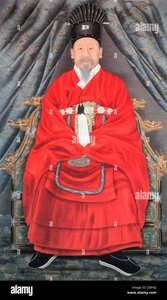
yi myeongbok, yi hui, gwangmu emperor
1852 - 1919 , South Korea
Quick Facts
- Artistic Movement Or Style: Calligraphy
- Date Of Birth: September 8, 1852
- Date Of Death: January 21, 1919
- Full Name: Yi Myeongbok / Yi Hui / Gojong
- Nationality: Korean
- Notable Artworks: ['Calligraphy of King Gojong']
- Place Of Birth: Seoul, South Korea