 Preview
 Send
Send Share
Share
 Details

 Download
 Similars
 X-Ray
X-Ray Diaporama
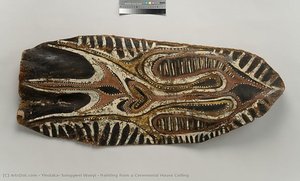
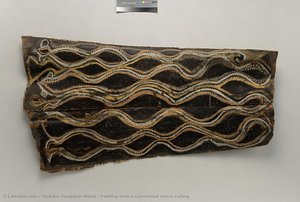
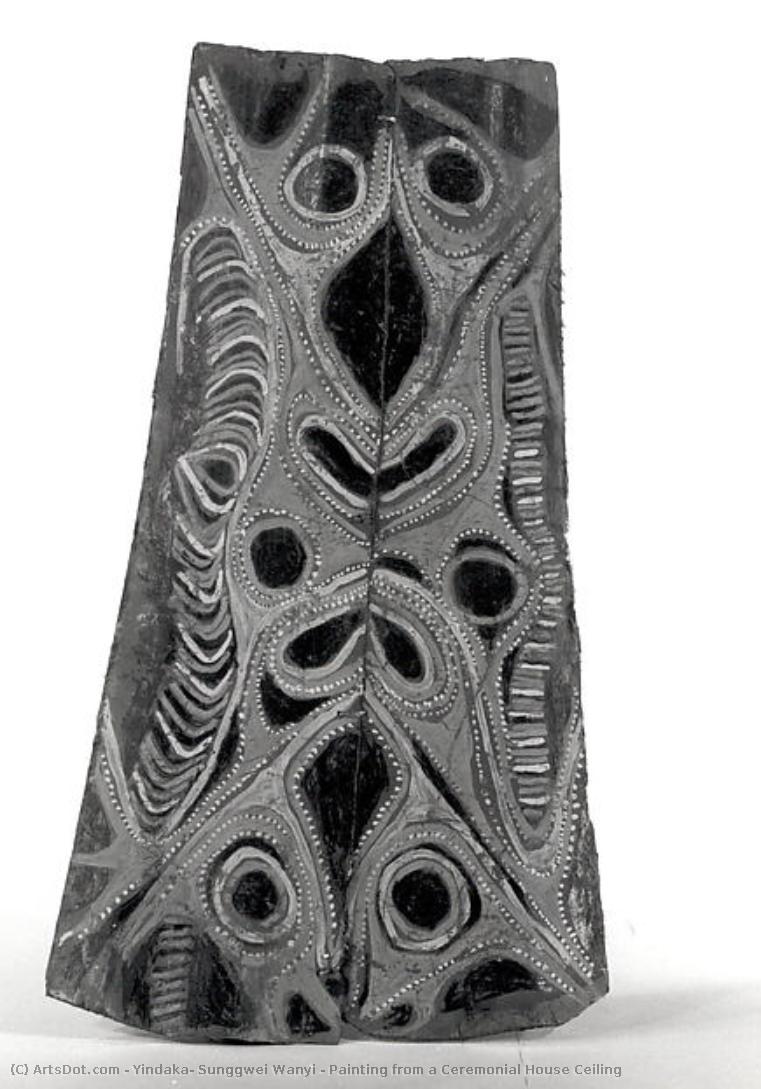
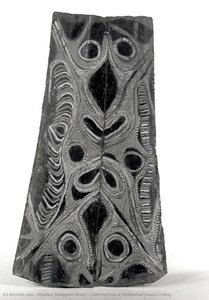
Painting from a Ceremonial House Ceiling

 Read More
Hand Made Oil Reproduction
Hand-painted oil on canvas in your size and frame, made to order by our artists. ( Buy Print Buy Image)




































Pick from our preset sizes that match the artwork's original proportions.

You may enter your own dimensions to fit a specific frame or space. If your selected size does not match the original image's proportions, we will either crop the artwork or extend the painting with additional hand-painted elements. A digital mockup will be sent for your approval before production begins.
Please note that the on-screen preview does not reflect the actual cropping or extension. Only the mockup will accurately show the final composition.
While custom sizes are available, we recommend selecting a dimension from the predefined list to preserve the original proportions.
After order, ArtsDot.com team will email client for instructions and provide a mockup preview
Worldwide Delivery () in 3/4 weeks instead of standard 5 weeks. (26 August). No compromise on quality.

Free Worldwide Express Shipping

High-Quality Linen Canvas

Full Shipping Insurance

Customs Tax Refund Guarantee

True Color Matching Guarantee

60-Day Return Policy (Defects Only)

100% Money-Back Guarantee

Bulk Discount Offer
 Glass option is only available in size under 110 CM

Painting from a Ceremonial House Ceiling
Reproduction Medium
Reproduction Size
-


Total Price
$ 388
Artwork Description
Related Artworks





Artist Biography
The Echoes of the Sepik: Unveiling the World of yindaka, sunggwei wanyi
Born in Ahiparika, a remote village nestled within the upper reaches of Papua New Guinea’s majestic Sepik River, yindaka, sunggwei wanyi is an artist whose work transcends mere representation; it's a vibrant tapestry woven from the threads of Kwoma culture and ancestral memory. His art isn’t simply painted onto canvas—it emerges directly from the walls of ceremonial houses, imbued with the spirit of generations past. This unique origin profoundly shapes his artistic practice, grounding him deeply within a tradition that reveres storytelling through visual narratives.
The Kwoma people, whose territory encompasses the upper Sepik region, are renowned for their intricate and highly symbolic art. For centuries, these paintings have served as vital records of history, mythology, social structures, and spiritual beliefs. Ceremonial houses, or *walawu*, stand at the heart of Kwoma society, acting as repositories of knowledge and focal points for communal gatherings. The walls of these sacred spaces are adorned with elaborate panels depicting ancestral figures, creation myths, and significant events – a visual chronicle passed down through countless generations. yindaka’s work directly engages with this tradition, inheriting and continuing the legacy of Kwoma painting.
A Legacy of Wall Paintings: Technique and Symbolism
yindaka's distinctive style is immediately recognizable—a bold, graphic approach characterized by simplified forms, intense colors, and a remarkable economy of line. Unlike Western artistic conventions that prioritize detailed realism, yindaka’s paintings embrace abstraction, prioritizing the conveyance of meaning over meticulous representation. He employs a technique rooted in the Kwoma tradition: applying pigment directly to the wall surface with a comb-like tool, creating a textured, almost sculptural effect. This method ensures the paint becomes an integral part of the wall itself, blurring the boundaries between artwork and architecture.
The symbolism within his paintings is incredibly rich and complex. Figures are often depicted in profile, their bodies stylized to emphasize key characteristics – strength, wisdom, or lineage. Animals—particularly crocodiles, snakes, and birds—play prominent roles, each carrying specific symbolic weight. The crocodile, for instance, represents both danger and fertility, while the bird embodies spiritual ascension. Geometric patterns, such as lines and circles, further contribute to the narrative, acting as visual keys to unlocking deeper layers of meaning. It’s crucial to note that understanding these symbols requires a deep immersion in Kwoma cultural context – knowledge passed down orally within the community.
The 1973 Commission: A Window into a Sacred Space
A pivotal moment in yindaka's artistic journey occurred in 1973, when he was commissioned to paint a section of a ceremonial house ceiling. This single painting offers an invaluable glimpse into the world of Kwoma belief and practice. The artwork depicts a complex narrative involving ancestral figures, mythical creatures, and scenes from daily life. The vibrant colors—deep reds, yellows, blues, and blacks—are not merely decorative; they are believed to possess inherent power and significance.
Two distinct versions of this painting exist (as evidenced by the available artworks on ArtsDot), offering a fascinating study in artistic evolution. The first version, showcased at /en/art/yindaka-sunggwei-wanyi-painting-from-a-ceremonial-house-ceiling-D2TUMK-en/, presents a more densely packed composition, with numerous figures vying for space on the wall. The second version, found at /en/art/yindaka-sunggwei-wanyi-painting-from-a-ceremonial-house-ceiling-D32HUE-en/, adopts a slightly looser style, allowing for greater breathing room between the figures and creating a more dynamic visual flow. Both versions, however, retain the artist’s signature bold lines and symbolic language.
A Living Tradition: yindaka's Continuing Practice
Despite his growing international recognition, yindaka remains deeply rooted in his Kwoma heritage. He continues to live and work in Ahiparika, actively participating in the traditions of his community. His art is not simply a product of his individual creativity; it’s an ongoing dialogue with the past, a testament to the enduring power of oral storytelling and visual representation within Kwoma culture. His commitment to preserving this vital artistic tradition ensures that the echoes of the Sepik River—the voices of ancestors, the wisdom of generations—will continue to resonate for years to come.
To explore more of yindaka’s captivating work, please visit /en/artists/yindaka-sunggwei-wanyi-en/.
yindaka, sunggwei wanyi
1973 - , Papua New Guinea
Quick Facts
- Artistic Movement Or Style: Ceremonial house painting
- Date Of Birth: Ahiparika, Papua New Guinea (1973)
- Full Name: yindaka, sunggwei wanyi
- Nationality: Papua New Guinean
- Notable Artworks: ['Painting from a Ceremonial House Ceiling']
- Place Of Birth: Ahiparika, Papua New Guinea