 Preview
 Send
Send Share
Share
 Details

 Download
 Similars
 X-Ray
X-Ray Diaporama
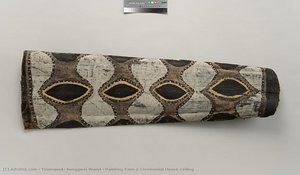
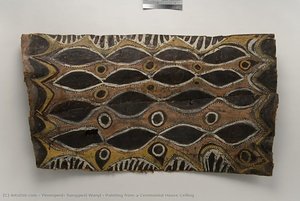
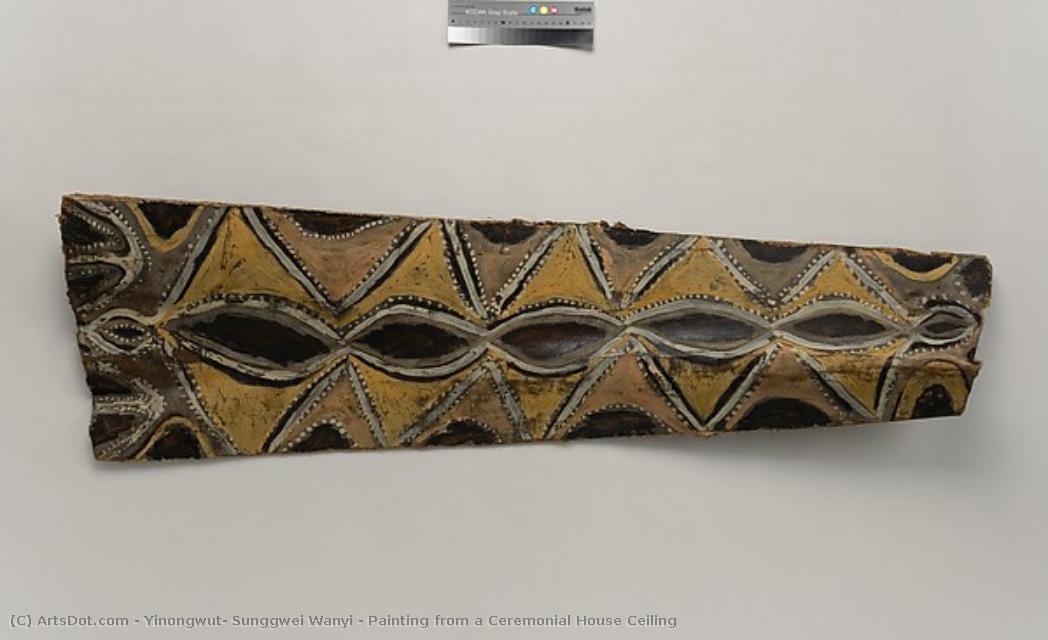
Painting from a Ceremonial House Ceiling
 1973
1973 126.0 x 38.0 cm
 Read More
Giclée / Art Print
Museum-quality giclée or canvas print with fast production and flexible finish options. ( Buy Hand Made Painting Buy Image)




































Pick from our preset sizes that match the artwork's original proportions.

You may enter your own dimensions to fit a specific frame or space. If your selected size does not match the original image's proportions, we will either crop the artwork or extend the image with a mirrored or solid-fill edge. A digital mockup will be sent for your approval before production begins.
Please note that the on-screen preview does not reflect the actual cropping or extension. Only the mockup will accurately show the final composition.
While custom sizes are available, we recommend selecting a dimension from the predefined list to preserve the original proportions.
Worldwide Delivery () in 2 weeks instead of standard 4/5 weeks. (27 August)

Free Worldwide Express Shipping

High-Quality Linen Canvas

Full Shipping Insurance

Customs Tax Refund Guarantee

True Color Matching Guarantee

60-Day Return Policy (Defects Only)

100% Money-Back Guarantee

Bulk Discount Offer
 Glass option is only available in size under 110 CM

Painting from a Ceremonial House Ceiling
Giclée / Art Print
Reproduction Size
-


Total Price
$ 63
Collectible Description
Related Artworks









Artist Biography
Yinongwut Sunggwei Wanyi: Echoes of Kwoma Tradition
Yinongwut Sunggwei Wanyi, born in Mariweli Village, Papua New Guinea, stands as a pivotal figure in the realm of Melanesian art, specifically renowned for his mesmerizing paintings adorning ceremonial house ceilings within the Kwoma culture. His artistic journey began amidst the rich tapestry of ancestral beliefs and practices—a heritage that profoundly shaped his distinctive visual language. While biographical details remain somewhat sparse, Wanyi’s contribution to documenting Kwoma artistry has cemented his place as a crucial voice in preserving cultural traditions.- Early Life & Artistic Roots: Limited information exists regarding Wanyi's formative years. However, he emerged from Mariweli Village, a region deeply connected to the Kwoma people and their intricate ceremonial rituals. The Kwoma tradition emphasizes storytelling through visual representations—patterns woven into ceilings serve as conduits for conveying clan histories, myths, and spiritual narratives.
- The Art of Kwoma Ceiling Paintings: Geometric Complexity & Symbolism: Wanyi’s paintings exemplify the hallmark style of Kwoma art: geometric abstraction overlaid with stylized animal motifs. These patterns aren't merely decorative; they are imbued with deep symbolic meaning, representing clan affiliations, ancestral spirits, and cosmological concepts. The repetition and interlocking shapes mirror the interconnectedness of Kwoma society.
- Technique & Materials: Traditionally, Wanyi utilizes natural pigments derived from plants and minerals—primarily ochre reds and yellows—applied to bark canvases using brushes crafted from animal hair. This painstaking process reflects a reverence for the environment and embodies centuries of artistic expertise passed down through generations.
- Recognition & Exhibitions: Notable Achievements: Wanyi’s artwork gained international acclaim following its inclusion in exhibitions at prestigious institutions such as The Metropolitan Museum of Art. This recognition underscores the significance of Kwoma art on a global scale and contributes to fostering appreciation for indigenous artistic traditions.
- Legacy & Continuing Influence: Wanyi's work serves as an invaluable record of Kwoma culture—a testament to the enduring power of visual storytelling. His paintings continue to inspire artists and scholars alike, prompting ongoing research into Kwoma symbolism and promoting dialogue between Melanesian art and Western artistic discourse.
Exploring Kwoma Symbolism: Patterns as Narrative
The geometric patterns found in Wanyi’s ceiling paintings are far from random; they constitute a sophisticated system of visual communication. Researchers have identified recurring motifs—circles, spirals, triangles—that correspond to specific clan affiliations and spiritual concepts. For instance, concentric circles often represent the cosmos, symbolizing unity and continuity across generations. Spirals evoke journeys into the underworld and ascendancy towards the heavens, reflecting Kwoma beliefs about death and rebirth.- Clan Representation: Each clan maintains a distinct visual identity—expressed through patterns that differentiate its members from others. These patterns are meticulously crafted to honor ancestral spirits and commemorate significant events within the clan’s history.
- Cosmological Significance: Beyond Clan Identity, The geometric shapes convey broader cosmological ideas. Circles symbolize wholeness, mirroring the cyclical nature of life and death—a core element of Kwoma spirituality. Spirals represent journeys into realms beyond our everyday perception, highlighting the Kwoma reverence for the supernatural.
The Role of Bark Canvas: Tradition Embodied
Bark canvases—prepared from Eucalyptus grandis trees—represent a cornerstone of Kwoma artistic practice. The process of preparing the bark involves meticulous scraping and sanding to create a smooth surface receptive to pigment application. This technique has been practiced for centuries, ensuring that Kwoma art retains its connection to ancestral traditions.- Sustainable Materials: Bark canvases utilize readily available natural resources—demonstrating Kwoma’s harmonious relationship with the environment. The bark is treated with beeswax and resin to provide waterproofing and durability, safeguarding the artwork for posterity.
- Brushmaking Expertise: Craftsmanship & Technique, Wanyi employs brushes crafted from animal hair—a skill passed down through generations of Kwoma artisans. These brushes are painstakingly shaped and smoothed to achieve optimal precision—essential for executing intricate geometric patterns with remarkable accuracy.
Recognition at The Metropolitan Museum of Art: A Global Showcase
The inclusion of Wanyi’s paintings in exhibitions at The Metropolitan Museum of Art marked a pivotal moment in elevating Kwoma art onto the international stage. This prestigious recognition underscores the significance of preserving indigenous artistic traditions and fostering intercultural dialogue.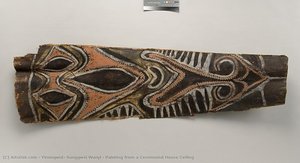
yinongwut, sunggwei wanyi
Papua New Guinea
Quick Facts
- Artistic Movement Or Style: Kwoma Art
- Date Of Birth: Living
- Full Name: Yinongwut Sunggwei Wanyi
- Nationality: Papua New Guinean
- Notable Artworks: ['Painting from a Ceremonial House Ceiling']
- Place Of Birth: Mariweli Village, Papua New Guinea