 Preview
 Send
Send Share
Share
 Details

 Download
 Similars
 X-Ray
X-Ray Diaporama
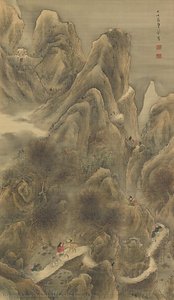
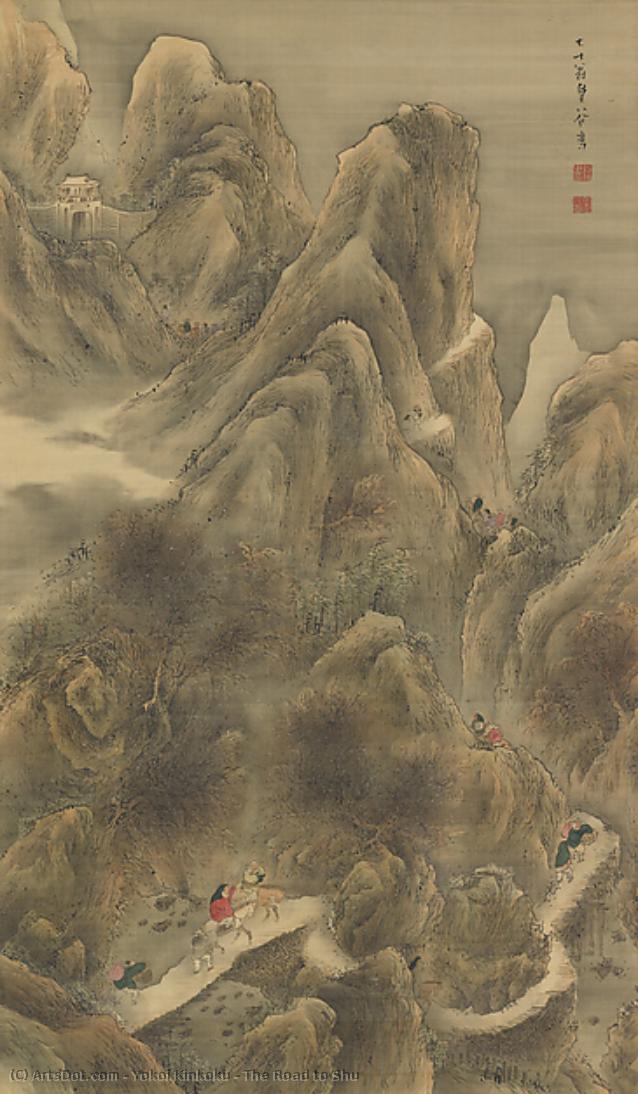
The Road to Shu
 1830
1830 141.0 x 83.0 cm
 Read More
Giclée / Art Print
Museum-quality giclée or canvas print with fast production and flexible finish options. ( Buy Hand Made Painting Buy Image)




































Pick from our preset sizes that match the artwork's original proportions.

You may enter your own dimensions to fit a specific frame or space. If your selected size does not match the original image's proportions, we will either crop the artwork or extend the image with a mirrored or solid-fill edge. A digital mockup will be sent for your approval before production begins.
Please note that the on-screen preview does not reflect the actual cropping or extension. Only the mockup will accurately show the final composition.
While custom sizes are available, we recommend selecting a dimension from the predefined list to preserve the original proportions.
Worldwide Delivery () in 2 weeks instead of standard 4/5 weeks. (21 August)

Free Worldwide Express Shipping

High-Quality Linen Canvas

Full Shipping Insurance

Customs Tax Refund Guarantee

True Color Matching Guarantee

60-Day Return Policy (Defects Only)

100% Money-Back Guarantee

Bulk Discount Offer
 Glass option is only available in size under 110 CM

The Road to Shu
Giclée / Art Print
Reproduction Size
-


Total Price
$ 63
Collectible Description
Related Artworks

Artist Biography
Yokoi Kinkoku: The Wandering Monk and Master of Winter’s Soul
Yokoi Kinkoku (1761 – 1832) remains a captivating enigma in the history of Japanese art. More than just a painter, he was a wandering monk, a scholar steeped in multiple disciplines—Buddhist philosophy, Confucianism, Sanskrit, and even jōruri music—and a man perpetually caught between the ascetic ideals of his monastic upbringing and the alluring temptations of the world. His life, marked by both profound spiritual seeking and considerable misbehavior, profoundly shaped his artistic vision, resulting in a body of work that is uniquely characterized by its evocative depictions of winter landscapes, imbued with a melancholic beauty and a deep sense of solitude. Kinkoku’s art isn't merely representation; it’s an exploration of the human condition—a reflection on impermanence, longing, and the search for meaning amidst the harsh realities of existence.
Early Life and Spiritual Awakening
Born Hayamatsu in Ōmi Province (modern-day Shiga Prefecture) in 1761, Kinkoku’s early life was relatively unremarkable. However, at the age of thirteen, he entered the Buddhist order, taking the name Sōyo Myōdō, and began his training as a monk. This initial commitment to monastic discipline was abruptly shattered when a fire destroyed his temple, forcing him to abandon his vows. This event, coupled with his penchant for mischief and disregard for traditional monastic rules—including frequent visits to pleasure quarters – led to his expulsion from several temples throughout Japan. Despite these setbacks, Kinkoku’s intellectual curiosity remained undiminished. He immersed himself in the study of various disciplines, including Confucianism, Sanskrit, and calligraphy, demonstrating a remarkable breadth of knowledge that would later inform his artistic style.
The Influence of Yosa Buson and Southern School Techniques
A pivotal moment in Kinkoku’s artistic development occurred when he encountered the renowned painter Yosa Buson. While the exact nature of their relationship remains somewhat shrouded in mystery—Kinkoku himself downplayed this connection in his autobiography—it is widely believed that Kinkoku deeply admired and emulated Buson's style, particularly his use of *sumi* ink to create atmospheric landscapes. However, unlike Buson’s refined elegance, Kinkoku’s work possesses a rawness and immediacy, reflecting his own turbulent life experiences. He absorbed elements from the Southern School of Chinese painting—characterized by its emphasis on landscape, brushwork, and a sense of melancholy—and skillfully integrated them with Japanese aesthetics. This synthesis resulted in a distinctive style that prioritized emotional resonance over meticulous detail.
Winter Landscapes: A Meditation on Solitude and Impermanence
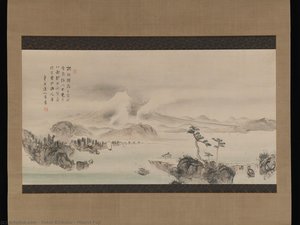
Kinkoku’s most celebrated works depict winter landscapes, often featuring Mount Fuji as the central subject. These paintings are not simply topographical representations; they are profound meditations on solitude, impermanence, and the beauty of decay. The stark white snow, the bare branches of trees, and the muted colors evoke a sense of isolation and vulnerability. His use of *sumi* ink is particularly striking—he employed loose, expressive brushstrokes to capture the fleeting effects of light and shadow, conveying a feeling of transience and the inevitability of change. The figures he occasionally included in these scenes – often solitary travelers or monks – further emphasized the themes of loneliness and spiritual quest. Notably, Kinkoku’s winter landscapes are rarely celebratory; instead, they carry an undercurrent of melancholy and introspection.
Legacy and Historical Significance
Yokoi Kinkoku's legacy is one of a complex and contradictory figure—a monk who embraced worldly pleasures, a painter who mastered both Japanese and Chinese techniques, and an artist whose work continues to resonate with viewers today. His paintings are prized for their emotional depth, atmospheric quality, and unique perspective on the natural world. Kinkoku’s life story – a blend of spiritual seeking, artistic innovation, and personal struggles – offers a compelling glimpse into the cultural landscape of Edo-period Japan. He stands as a testament to the power of art to express profound human experiences, even amidst chaos and uncertainty. His work is now housed in major museums worldwide, including the British Museum and the Metropolitan Museum of Art, ensuring that his evocative winter scenes will continue to captivate audiences for generations to come.
yokoi kinkoku
1761 - 1832
Quick Facts
- Artistic Movement Or Style: Southern School Painting
- Artists Or Movements Influenced By This Artist: ['Jōdo-shū Buddhism']
- Artists Who Influenced This Artist: ['Yosa Buson']
- Date Of Birth: 1761
- Date Of Death: 1832
- Full Name: Yokoi Kinkoku
- Nationality: Japanese
- Notable Artworks:
- Mount Fuji
- Spring Cleaning
- The Road to Shu
- Place Of Birth: Ōtsu, Japan